
Произведения этого художника в общем каталоге
Биография и творчество
Оноре Домье (1808–1879) — французский литограф, карикатурист, живописец и скульптор. Родился в Марселе, в 1816 году перебрался вслед за отцом в Париж. Учился у Александра Ленуара, посещал Академию Сюиса и изучал старых мастеров в Лувре. С 1830 года зарабатывал рисунками для сатирической печати, сотрудничая с изданиями Шарля Филипона La Caricature и Le Charivari.
Политическая сатира привела Домье в тюрьму: в 1832 году его наказали за карикатуру на Луи-Филиппа. Позднее объектами наблюдения стали буржуазные привычки, профессиональная среда, суды и общественное неравенство. Для Le Charivari он создал около четырёх тысяч литографий. Поддерживал отношения с Делакруа, Милле и Коро, однако его живопись при жизни получала меньше признания, чем графика. В картинах обращался к более вневременным и литературным темам, включая Дон Кихота. С 1872 года зрение художника ухудшалось; последние годы он провёл в Вальмондуа. Его наследие объединяет острую общественную наблюдательность с выразительным рисунком и пластикой.
Место рождения: Марсель. Художественные направления, указанные в справочных источниках: реализм. Место смерти: Вальмондуа.
В подборке представлено произведение «The Grandmother». Собрание: Национальная галерея искусства. Подпись и источник изображения приведены ниже: они позволяют перейти к исходной записи и уточнить сведения о работе.
Места профессиональной работы художника: Le Charivari; La Silhouette; Карикатура.
В числе направлений, к которым относят творчество художника, — реализм.
Подготовлено редакцией салона по материалам указанных источников. Открыть основной источник биографии.
Обновлено
- Годы жизни
- 1808 — 1879
- Место рождения
- Марсель
- Направления
- реализм
- Место смерти
- Вальмондуа
Хронология
1822 — Стал протеже Александра Ленуара. Источник
Собрания и коллекции
- The Metropolitan Museum of Art, New York
- National Gallery of Art, Washington
- Музей Бойманса-ван Бёнингена
- галерея Бельведер
- Штеделевский художественный институт
- Миннеаполисский институт искусства
- Чикагский институт искусств
- Музей искусств Нельсона-Аткинса
- Auckland Art Gallery
- Финская национальная галерея
- Музей Гетти
- Национальная галерея Виктории
- Национальная галерея искусства
- Национальный музей Швеции
- Национальная галерея Канады
- Национальный музей изобразительных искусств
- Художественный музей Филадельфии
- Метрополитен-музей
- Музей изящных искусств
- Музей Крёллер-Мюллер
- Рейксмюсеум
- Национальные галереи Шотландии
- National Museum of Fine Arts of Algiers
- Базельский художественный музей
- Баварские государственные собрания картин
- Musée des Beaux-Arts de la ville de Paris
- Музей искусств Далласа
- Галерея Альбертина
- Художественный музей Бриджстоун
- Национальный музей изящных искусств
- Художественный музей Уолтерса
- Бруклинский музей
- Музей изобразительных искусств Сан-Франциско
- Государственный музей искусств
- Новая глиптотека Карлсберга
- The Phillips Collection
- Национальный музей западного искусства
- Лионский музей изобразительных искусств
- Музей Соумайя
- Лондонская национальная галерея
- Hugh Lane Gallery
- Эрмитаж
- Фонд Барнса
- Галерея Коркоран
- Художественный музей Цинциннати
- Художественный музей Сан-Паулу
- Художественный музей Кливленда
- Музей Фолькванг
- Музей Род-Айлендской школы дизайна
- Детройтский институт искусств
- Художественный музей Принстонского университета
- Мангеймский кунстхалле
- Музей Орсе
- Художественная галерея Олбрайт-Нокс
- Национальная картинная галерея Армении
- Музей искусств Толедо
- Демойнский центр искусства
- Коллекция Бемберга
- Музей Мохамеда Махмуда Халиля
- The Mesdag Collection
- Художественный музей Сан-Диего
- Burrell Collection
- Художественная галерея и музей Келвингроув
- Музей изящных искусств Бостона
- Музей Эшмола
- Ам Рёмерхольц
- Villa Flora
- Гамбургский кунстхалле
- Musée des beaux-arts de La Chaux-de-Fonds
- Utah Museum of Fine Arts
- Mildred Lane Kemper Art Museum
- Vanderbilt Museum of Art
- Государственный кунстхалле Карлсруэ
- Институт искусств Стерлинга и Франсин Кларк
- Пражская национальная галерея
- Museum Arnhem
- Карнавале
- Думбартон-Окс
- Гарвардский художественный музей
- Художественный музей Фогга
- Lyman Allyn Art Museum
- Старая национальная галерея
- Musea Brugge
- Национальный музей Уэльса
- Музей искусства и истории (Невшатель)
- Музей изящных искусств (Реймс)
- Musée Angladon
- Picker Art Gallery
- Национальный музей Кардиффа
- Манчестерская художественная галерея
- Коллекция печатных изданий
- Von der Heydt Museum
- Монреальский музей изящных искусств
- Музей Нортона Саймона
- Музей современного искусства
- Художественная галерея Thiel
- Собрание Фонда Эмиля Бюрле
- Женевский музей искусства и истории
- Кунстхаус Цюрих
- Королевский музей изящных искусств
- Itami City Museum of Art, History and Culture
- Wellcome Collection
- Национальный музей Сербии
- Glasgow Museums Resource Centre
- Museum Ordrupgaard
- Музей изящных искусств Дижона
- Музей судоходства (Амстердам)
- Музей Хаммера
- Музей Маньин
- Музей Винсента ван Гога
- Michael C. Carlos Museum
- Национальная галерея искусства, Вашингтон
- Метрополитен-музей, Нью-Йорк
Сведения о собраниях приведены по указанным источникам. Наличие в коллекции не означает, что произведение находится в открытой экспозиции. Доступность уточняйте у владельца собрания.
Произведения и каталожные записи
В справочнике 4 251 каталожных записей, связанных с художником. Здесь показана подборка; открыть все записи в каталоге.
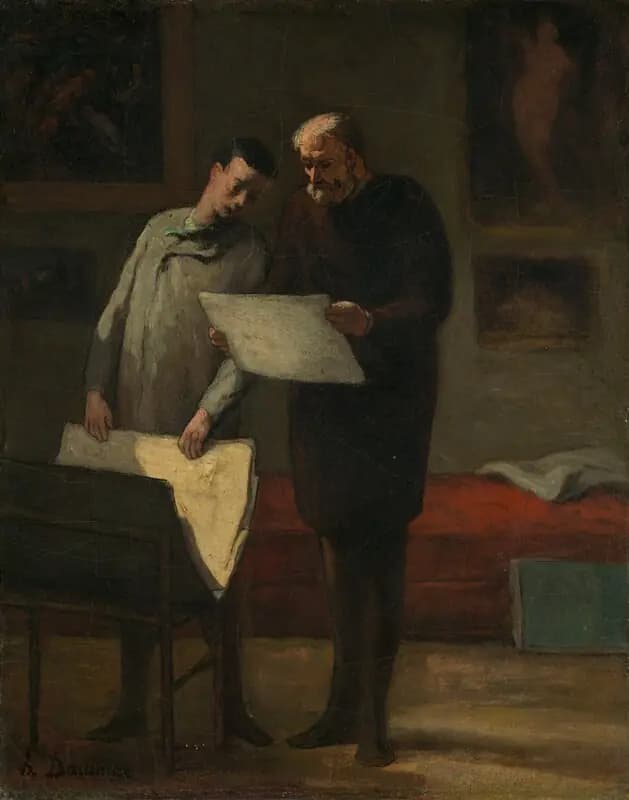
Advice to a Young ArtistНациональная галерея искусства, Вашингтон. Gift of Duncan Phillips · Источник изображения · Open Access NGA: изображение без ограничений использования (openaccess=1). Advice to a Young Artist
Атрибуция источника: Honoré Daumier
История бытования по музейному каталогу
Jean-Baptiste-Camille Corot [1796-1875], Paris; (his estate sale, Hôtel Drouot, Paris, part III, 7-9 June 1875, no. 665); purchased by Arthur Stevens.[1] Guillotin, Paris, by 1901. Adolphe A. Tavernier, Paris, by 1901.[2] [Ernest?] Cronier, by 1904. Goerg [or Georg], Reims, by 1905. A. Bergeaud, Paris, in 1910.[3] (Alex Reid & Lefèvre, Ltd., Glasgow and London), by 1927; sold to D.W.T. Cargill [1872-1939], Glasgow. (M. Knoedler & Co., New York), by 1928.[4] (Galerie Étienne Bignou, New York); sold 1941 to Duncan Phillips [1886-1966], Washington, D.C.; gift 1941 to NGA. [1] Annotated copy of Corot sale catalogue gives "Stevens" as purchaser; Jean Adhémar, _Daumier_, Paris, 1954, no. 79, gives collection "Arthur Stevens." [2] Lent by Tavernier to 1901 Daumier exhibition in Paris at the Ecole des Beaux-Arts, no. 76. [3] Lent by Bergeaud to _Chefs-d'oeuvre de l'école française: Vingt peintre du XIX siècle_ at Galeries Georges Petit, Paris, in 1910, no. 40. [4] See letter dated 24 August 1966, in NGA curatorial files, which documents the sale by Alex Reid & Lefèvre to D.W.T. Cargill, Glasgow. Lent by Cargill to Knoedler's 1928 exhibition in New York.
1865/1868 · oil on canvas · overall: 41.3 x 33 cm (16 1/4 x 13 in.) framed: 65.7 x 57.5 cm (25 7/8 x 22 5/8 in.) · Национальная галерея искусства, Вашингтон · 1941.6.1
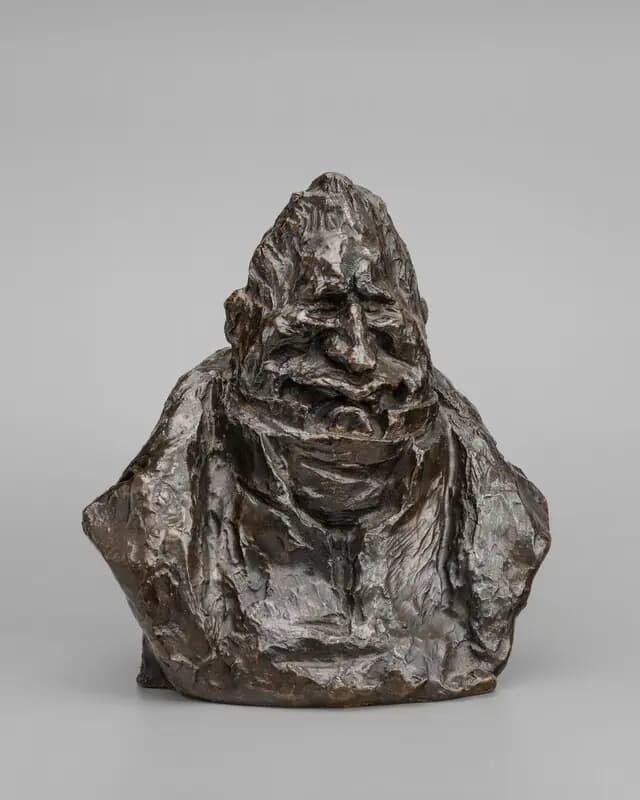
Joseph, Baron de PodenasНациональная галерея искусства, Вашингтон. Rosenwald Collection · Источник изображения · Open Access NGA: изображение без ограничений использования (openaccess=1). Joseph, Baron de Podenas
Атрибуция источника: Honoré Daumier
История бытования по музейному каталогу
Sold 1 July 1930 through (Charles Sessler, Philadelphia) to Lessing Julius Rosenwald, Jenkintown, Pennsylvania;[1] gift 1943 to NGA. [1] Charles Philipon, editor of _La Caricature_, having commissioned and paid Daumier to execute maquettes for a gallery of busts to be printed as lithographs, owned the clay figures outright, and they remained with his family after he died in 1862. They were purchased in 1927 from Philipon's descendants by dealer-publisher Maurice Le Garrec, who commissioned the Barbedienne foundry in Paris to cast the full set of thirty-six figures, twelve busts at a time. The first set was made available by subscription in 1929-1930, the second set apparently in early 1940, and the final set by around 1950. Lessing Rosenwald purchased each of his three groups of twelve shortly after they were made available. The Barbedienne foundry returned the orginal clays and plaster molds to Le Garrec's widow when it ceased operation in the early 1950s. Subsequently Madame Le Garrec commissioned three full sets of the busts from another foundry, Valsuani, and the clays and molds were destroyed when this edition was completed in March 1965. (See the complete discussion of the busts by Suzanne Glover Lindsay in the NGA systematic catalogue, _European Sculpture of the Nineteenth Century_, Washington, D.C., 2000: 119-125.)
model c. 1832/1835, cast 1929/1930 · bronze · overall: 20.6 x 19.4 x 11.8 cm (8 1/8 x 7 5/8 x 4 5/8 in.) · Национальная галерея искусства, Вашингтон · 1943.3.1
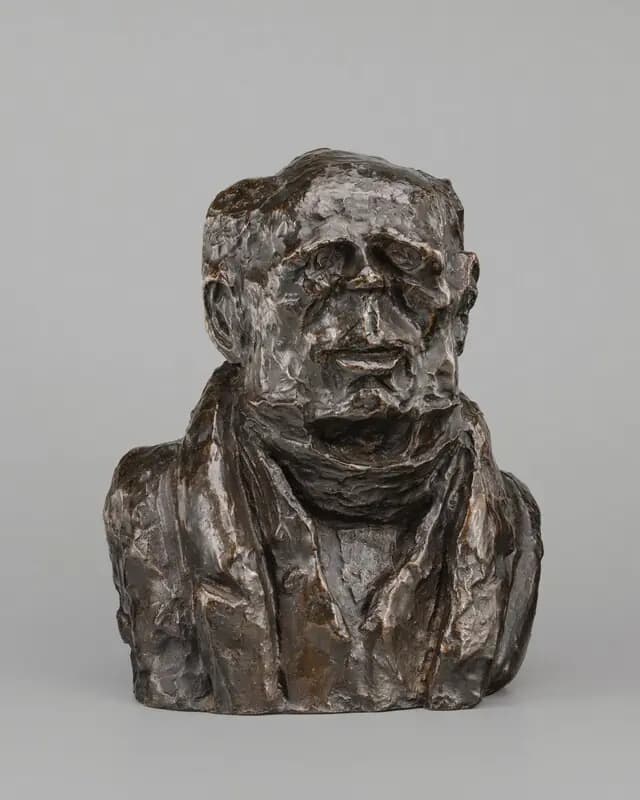
Benjamin DelessertНациональная галерея искусства, Вашингтон. Rosenwald Collection · Источник изображения · Open Access NGA: изображение без ограничений использования (openaccess=1). Benjamin Delessert
Атрибуция источника: Honoré Daumier
История бытования по музейному каталогу
Sold 1 July 1930 through (Charles Sessler, Philadelphia) to Lessing Julius Rosenwald, Jenkintown, Pennsylvania;[1] gift 1943 to NGA. [1] Charles Philipon, editor of _La Caricature_, having commissioned and paid Daumier to execute maquettes for a gallery of busts to be printed as lithographs, owned the clay figures outright, and they remained with his family after he died in 1862. They were purchased in 1927 from Philipon's descendants by dealer-publisher Maurice Le Garrec, who commissioned the Barbedienne foundry in Paris to cast the full set of thirty-six figures, twelve busts at a time. The first set was made available by subscription in 1929-1930, the second set apparently in early 1940, and the final set by around 1950. Lessing Rosenwald purchased each of his three groups of twelve shortly after they were made available. The Barbedienne foundry returned the orginal clays and plaster molds to Le Garrec's widow when it ceased operation in the early 1950s. Subsequently Madame Le Garrec commissioned three full sets of the busts from another foundry, Valsuani, and the clays and molds were destroyed when this edition was completed in March 1965. (See the complete discussion of the busts by Suzanne Glover Lindsay in the NGA systematic catalogue, _European Sculpture of the Nineteenth Century_, Washington, D.C., 2000: 119-125.)
model c. 1832/1835, cast 1929/1930 · bronze · overall: 17.5 x 14.3 x 10.2 cm (6 7/8 x 5 5/8 x 4 in.) · Национальная галерея искусства, Вашингтон · 1943.3.2
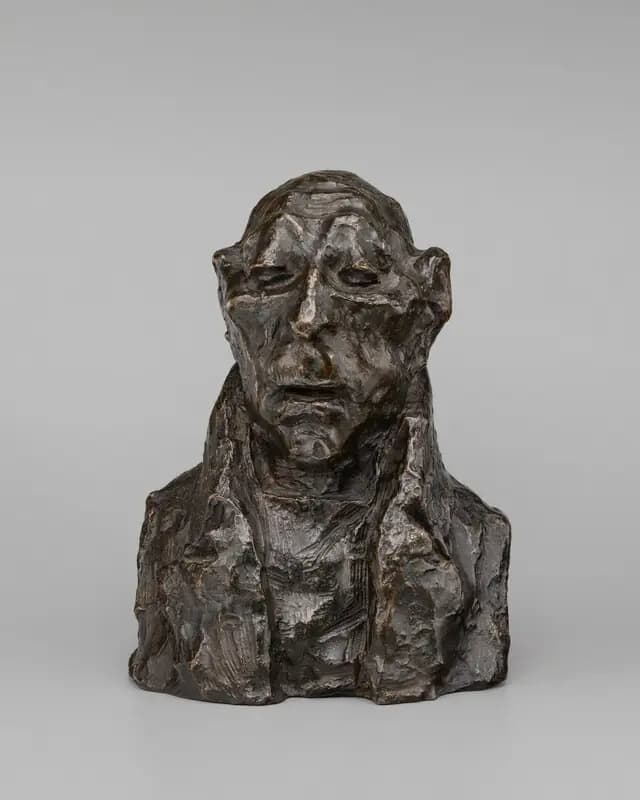
Jean-Claude FulchironНациональная галерея искусства, Вашингтон. Rosenwald Collection · Источник изображения · Open Access NGA: изображение без ограничений использования (openaccess=1). Jean-Claude Fulchiron
Атрибуция источника: Honoré Daumier
История бытования по музейному каталогу
Sold 1 July 1930 through (Charles Sessler, Philadelphia) to Lessing Julius Rosenwald, Jenkintown, Pennsylvania;[1] gift 1943 to NGA. [1] Charles Philipon, editor of _La Caricature_, having commissioned and paid Daumier to execute maquettes for a gallery of busts to be printed as lithographs, owned the clay figures outright, and they remained with his family after he died in 1862. They were purchased in 1927 from Philipon's descendants by dealer-publisher Maurice Le Garrec, who commissioned the Barbedienne foundry in Paris to cast the full set of thirty-six figures, twelve busts at a time. The first set was made available by subscription in 1929-1930, the second set apparently in early 1940, and the final set by around 1950. Lessing Rosenwald purchased each of his three groups of twelve shortly after they were made available. The Barbedienne foundry returned the orginal clays and plaster molds to Le Garrec's widow when it ceased operation in the early 1950s. Subsequently Madame Le Garrec commissioned three full sets of the busts from another foundry, Valsuani, and the clays and molds were destroyed when this edition was completed in March 1965. (See the complete discussion of the busts by Suzanne Glover Lindsay in the NGA systematic catalogue, _European Sculpture of the Nineteenth Century_, Washington, D.C., 2000: 119-125.)
model c. 1832/1835, cast 1929/1930 · bronze · overall: 16.2 x 12.4 x 11.1 cm (6 3/8 x 4 7/8 x 4 3/8 in.) · Национальная галерея искусства, Вашингтон · 1943.3.3
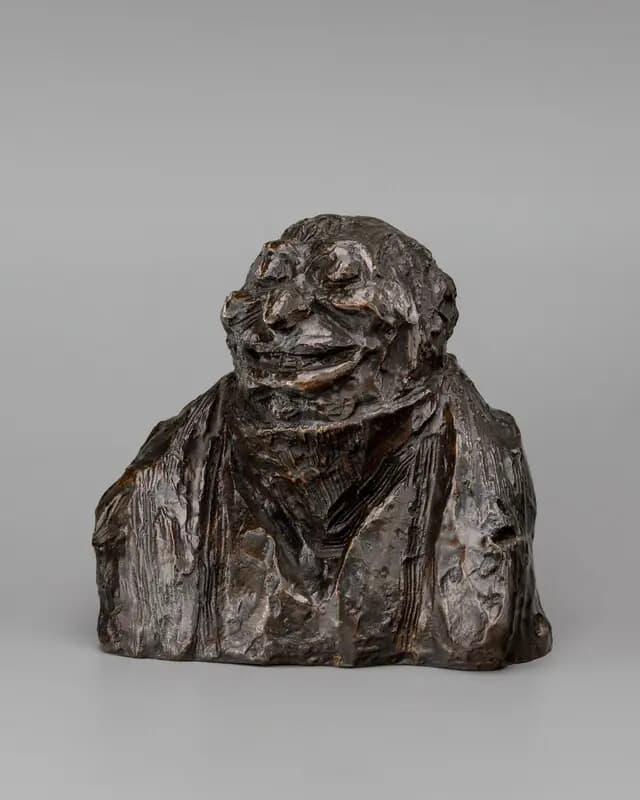
Auguste-Hilarion, Comte de KératryНациональная галерея искусства, Вашингтон. Rosenwald Collection · Источник изображения · Open Access NGA: изображение без ограничений использования (openaccess=1). Auguste-Hilarion, Comte de Kératry
Атрибуция источника: Honoré Daumier
История бытования по музейному каталогу
Sold 1 July 1930 through (Charles Sessler, Philadelphia) to Lessing Julius Rosenwald, Jenkintown, Pennsylvania;[1] gift 1943 to NGA. [1] Charles Philipon, editor of _La Caricature_, having commissioned and paid Daumier to execute maquettes for a gallery of busts to be printed as lithographs, owned the clay figures outright, and they remained with his family after he died in 1862. They were purchased in 1927 from Philipon's descendants by dealer-publisher Maurice Le Garrec, who commissioned the Barbedienne foundry in Paris to cast the full set of thirty-six figures, twelve busts at a time. The first set was made available by subscription in 1929-1930, the second set apparently in early 1940, and the final set by around 1950. Lessing Rosenwald purchased each of his three groups of twelve shortly after they were made available. The Barbedienne foundry returned the orginal clays and plaster molds to Le Garrec's widow when it ceased operation in the early 1950s. Subsequently Madame Le Garrec commissioned three full sets of the busts from another foundry, Valsuani, and the clays and molds were destroyed when this edition was completed in March 1965. (See the complete discussion of the busts by Suzanne Glover Lindsay in the NGA systematic catalogue, _European Sculpture of the Nineteenth Century_, Washington, D.C., 2000: 119-125.)
model c. 1832/1835, cast 1929/1930 · bronze · overall: 12.1 x 13.3 x 9.2 cm (4 3/4 x 5 1/4 x 3 5/8 in.) · Национальная галерея искусства, Вашингтон · 1943.3.4
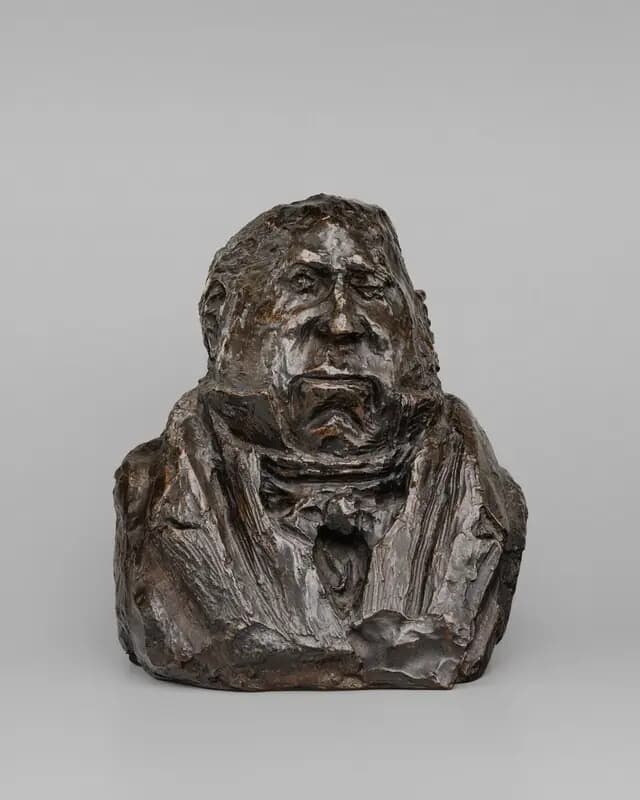
Félix BartheНациональная галерея искусства, Вашингтон. Rosenwald Collection · Источник изображения · Open Access NGA: изображение без ограничений использования (openaccess=1). Félix Barthe
Атрибуция источника: Honoré Daumier
История бытования по музейному каталогу
Sold 1 July 1930 through (Charles Sessler, Philadelphia) to Lessing Julius Rosenwald, Jenkintown, Pennsylvania;[1] gift 1943 to NGA. [1] Charles Philipon, editor of _La Caricature_, having commissioned and paid Daumier to execute maquettes for a gallery of busts to be printed as lithographs, owned the clay figures outright, and they remained with his family after he died in 1862. They were purchased in 1927 from Philipon's descendants by dealer-publisher Maurice Le Garrec, who commissioned the Barbedienne foundry in Paris to cast the full set of thirty-six figures, twelve busts at a time. The first set was made available by subscription in 1929-1930, the second set apparently in early 1940, and the final set by around 1950. Lessing Rosenwald purchased each of his three groups of twelve shortly after they were made available. The Barbedienne foundry returned the orginal clays and plaster molds to Le Garrec's widow when it ceased operation in the early 1950s. Subsequently Madame Le Garrec commissioned three full sets of the busts from another foundry, Valsuani, and the clays and molds were destroyed when this edition was completed in March 1965. (See the complete discussion of the busts by Suzanne Glover Lindsay in the NGA systematic catalogue, _European Sculpture of the Nineteenth Century_, Washington, D.C., 2000: 119-125.)
model c. 1832/1835, cast 1929/1930 · bronze · overall: 16.5 x 14.6 x 13 cm (6 1/2 x 5 3/4 x 5 1/8 in.) · Национальная галерея искусства, Вашингтон · 1943.3.5
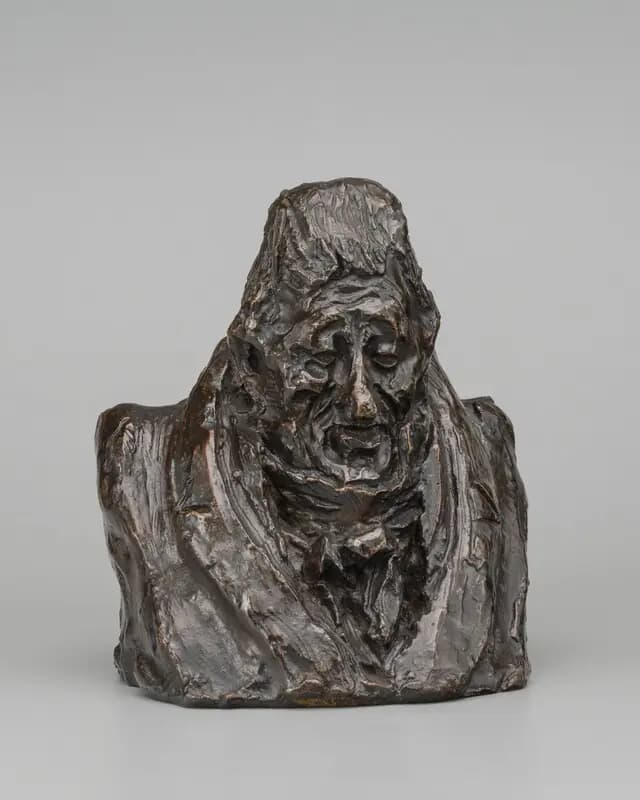
Pierre-Paul Royer-CollardНациональная галерея искусства, Вашингтон. Rosenwald Collection · Источник изображения · Open Access NGA: изображение без ограничений использования (openaccess=1). Pierre-Paul Royer-Collard
Атрибуция источника: Honoré Daumier
История бытования по музейному каталогу
Sold 1 July 1930 through (Charles Sessler, Philadelphia) to Lessing Julius Rosenwald, Jenkintown, Pennsylvania;[1] gift 1943 to NGA. [1] Charles Philipon, editor of _La Caricature_, having commissioned and paid Daumier to execute maquettes for a gallery of busts to be printed as lithographs, owned the clay figures outright, and they remained with his family after he died in 1862. They were purchased in 1927 from Philipon's descendants by dealer-publisher Maurice Le Garrec, who commissioned the Barbedienne foundry in Paris to cast the full set of thirty-six figures, twelve busts at a time. The first set was made available by subscription in 1929-1930, the second set apparently in early 1940, and the final set by around 1950. Lessing Rosenwald purchased each of his three groups of twelve shortly after they were made available. The Barbedienne foundry returned the orginal clays and plaster molds to Le Garrec's widow when it ceased operation in the early 1950s. Subsequently Madame Le Garrec commissioned three full sets of the busts from another foundry, Valsuani, and the clays and molds were destroyed when this edition was completed in March 1965. (See the complete discussion of the busts by Suzanne Glover Lindsay in the NGA systematic catalogue, _European Sculpture of the Nineteenth Century_, Washington, D.C., 2000: 119-125.)
model c. 1832/1835, cast 1929/1930 · bronze · overall: 13 x 11.8 x 8.9 cm (5 1/8 x 4 5/8 x 3 1/2 in.) · Национальная галерея искусства, Вашингтон · 1943.3.6
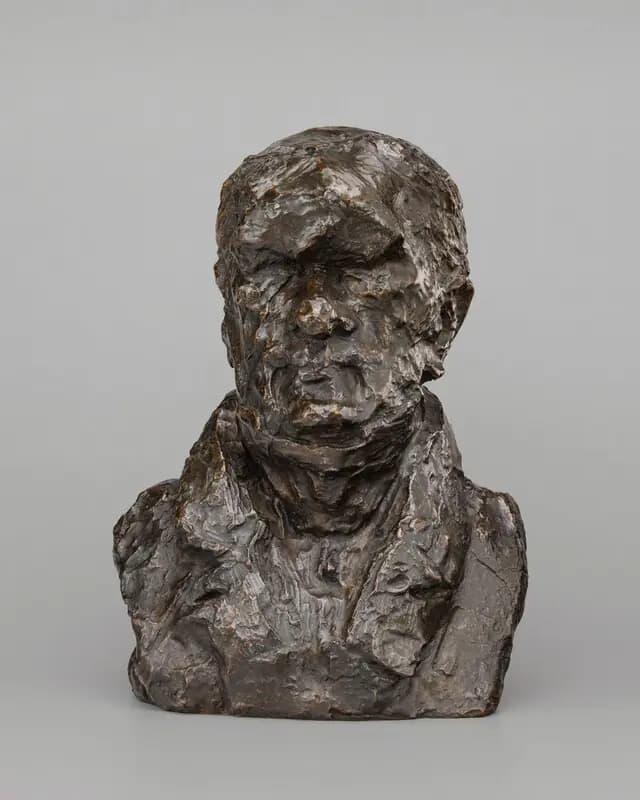
Auguste-Hippolyte GanneronНациональная галерея искусства, Вашингтон. Rosenwald Collection · Источник изображения · Open Access NGA: изображение без ограничений использования (openaccess=1). Auguste-Hippolyte Ganneron
Атрибуция источника: Honoré Daumier
История бытования по музейному каталогу
Sold 1 July 1930 through (Charles Sessler, Philadelphia) to Lessing Julius Rosenwald, Jenkintown, Pennsylvania;[1] gift 1943 to NGA. [1] Charles Philipon, editor of _La Caricature_, having commissioned and paid Daumier to execute maquettes for a gallery of busts to be printed as lithographs, owned the clay figures outright, and they remained with his family after he died in 1862. They were purchased in 1927 from Philipon's descendants by dealer-publisher Maurice Le Garrec, who commissioned the Barbedienne foundry in Paris to cast the full set of thirty-six figures, twelve busts at a time. The first set was made available by subscription in 1929-1930, the second set apparently in early 1940, and the final set by around 1950. Lessing Rosenwald purchased each of his three groups of twelve shortly after they were made available. The Barbedienne foundry returned the orginal clays and plaster molds to Le Garrec's widow when it ceased operation in the early 1950s. Subsequently Madame Le Garrec commissioned three full sets of the busts from another foundry, Valsuani, and the clays and molds were destroyed when this edition was completed in March 1965. (See the complete discussion of the busts by Suzanne Glover Lindsay in the NGA systematic catalogue, _European Sculpture of the Nineteenth Century_, Washington, D.C., 2000: 119-125.)
model c. 1832/1835, cast 1929/1930 · bronze · overall: 18.1 x 13 x 10.5 cm (7 1/8 x 5 1/8 x 4 1/8 in.) · Национальная галерея искусства, Вашингтон · 1943.3.7
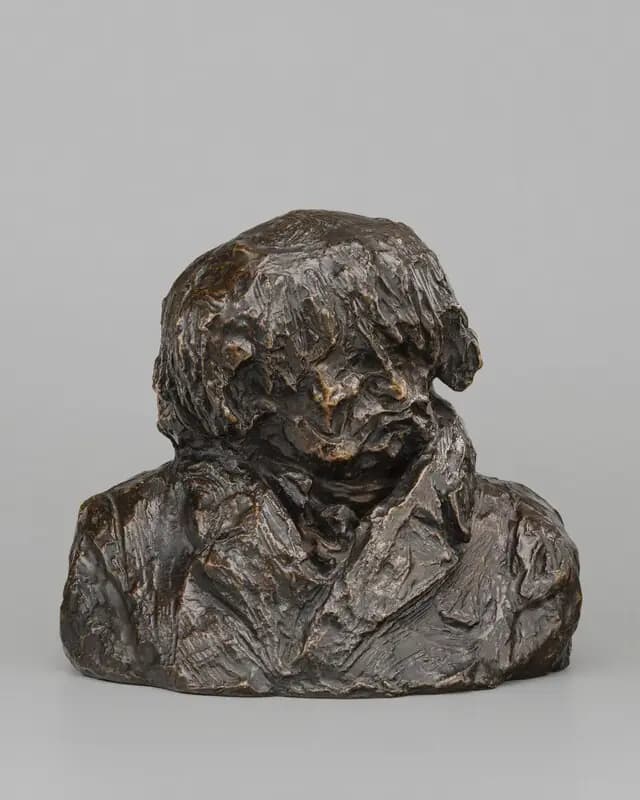
Dr. Clément-François-Victor-Gabriel PrunelleНациональная галерея искусства, Вашингтон. Rosenwald Collection · Источник изображения · Open Access NGA: изображение без ограничений использования (openaccess=1). Dr. Clément-François-Victor-Gabriel Prunelle
Атрибуция источника: Honoré Daumier
История бытования по музейному каталогу
Sold 1 July 1930 through (Charles Sessler, Philadelphia) to Lessing Julius Rosenwald, Jenkintown, Pennsylvania;[1] gift 1943 to NGA. [1] Charles Philipon, editor of _La Caricature_, having commissioned and paid Daumier to execute maquettes for a gallery of busts to be printed as lithographs, owned the clay figures outright, and they remained with his family after he died in 1862. They were purchased in 1927 from Philipon's descendants by dealer-publisher Maurice Le Garrec, who commissioned the Barbedienne foundry in Paris to cast the full set of thirty-six figures, twelve busts at a time. The first set was made available by subscription in 1929-1930, the second set apparently in early 1940, and the final set by around 1950. Lessing Rosenwald purchased each of his three groups of twelve shortly after they were made available. The Barbedienne foundry returned the orginal clays and plaster molds to Le Garrec's widow when it ceased operation in the early 1950s. Subsequently Madame Le Garrec commissioned three full sets of the busts from another foundry, Valsuani, and the clays and molds were destroyed when this edition was completed in March 1965. (See the complete discussion of the busts by Suzanne Glover Lindsay in the NGA systematic catalogue, _European Sculpture of the Nineteenth Century_, Washington, D.C., 2000: 119-125.)
model c. 1832/1835, cast 1929/1930 · bronze · overall: 13 x 14.9 x 10.5 cm (5 1/8 x 5 7/8 x 4 1/8 in.) · Национальная галерея искусства, Вашингтон · 1943.3.8
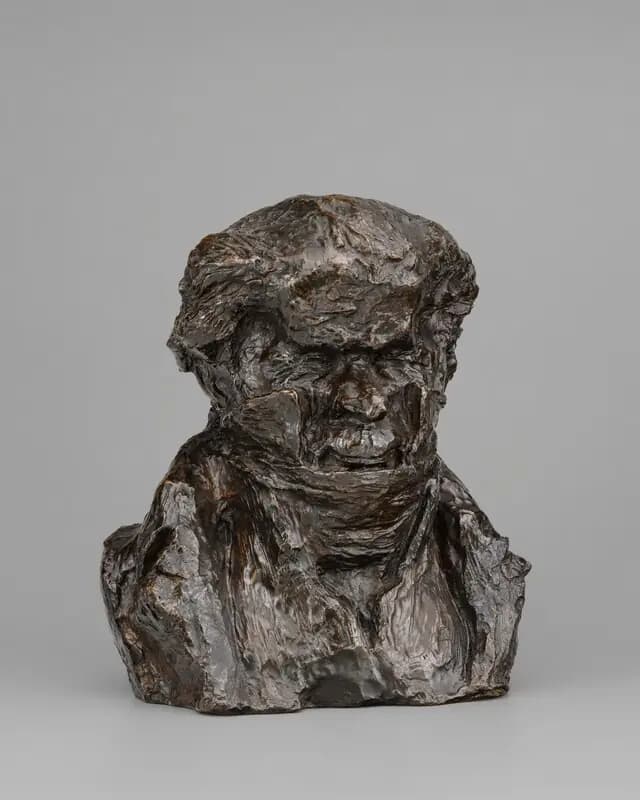
Jean-Pons-Guillaume ViennetНациональная галерея искусства, Вашингтон. Rosenwald Collection · Источник изображения · Open Access NGA: изображение без ограничений использования (openaccess=1). Jean-Pons-Guillaume Viennet
Атрибуция источника: Honoré Daumier
История бытования по музейному каталогу
Sold 1 July 1930 through (Charles Sessler, Philadelphia) to Lessing Julius Rosenwald, Jenkintown, Pennsylvania;[1] gift 1943 to NGA. [1] Charles Philipon, editor of _La Caricature_, having commissioned and paid Daumier to execute maquettes for a gallery of busts to be printed as lithographs, owned the clay figures outright, and they remained with his family after he died in 1862. They were purchased in 1927 from Philipon's descendants by dealer-publisher Maurice Le Garrec, who commissioned the Barbedienne foundry in Paris to cast the full set of thirty-six figures, twelve busts at a time. The first set was made available by subscription in 1929-1930, the second set apparently in early 1940, and the final set by around 1950. Lessing Rosenwald purchased each of his three groups of twelve shortly after they were made available. The Barbedienne foundry returned the orginal clays and plaster molds to Le Garrec's widow when it ceased operation in the early 1950s. Subsequently Madame Le Garrec commissioned three full sets of the busts from another foundry, Valsuani, and the clays and molds were destroyed when this edition was completed in March 1965. (See the complete discussion of the busts by Suzanne Glover Lindsay in the NGA systematic catalogue, _European Sculpture of the Nineteenth Century_, Washington, D.C., 2000: 119-125.)
model c. 1832/1835, cast 1929/1930 · bronze · overall: 19.7 x 15.9 x 12.7 cm (7 3/4 x 6 1/4 x 5 in.) · Национальная галерея искусства, Вашингтон · 1943.3.9
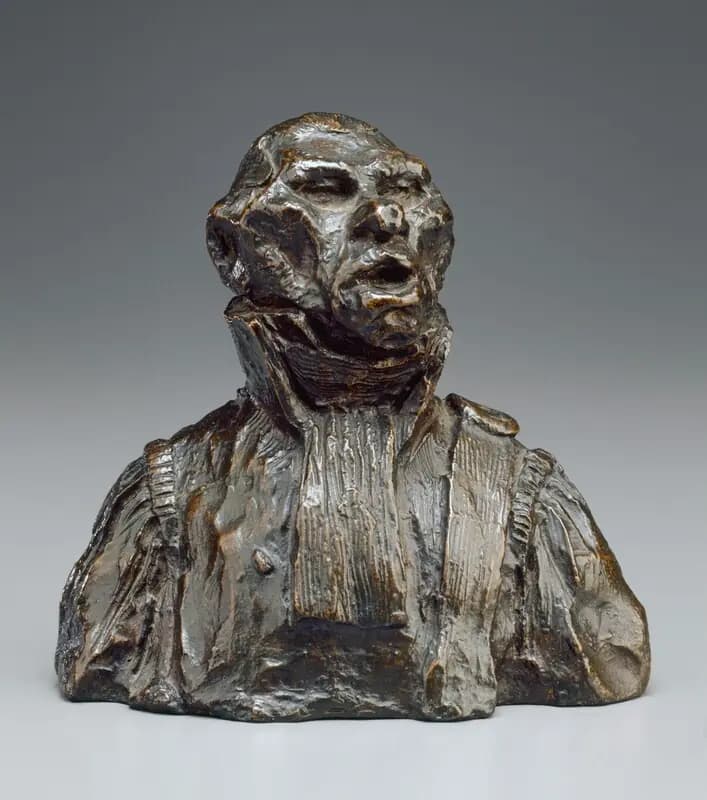
André-Marie-Jean-Jacques Dupin AînéНациональная галерея искусства, Вашингтон. Rosenwald Collection · Источник изображения · Open Access NGA: изображение без ограничений использования (openaccess=1). André-Marie-Jean-Jacques Dupin Aîné
Атрибуция источника: Honoré Daumier
История бытования по музейному каталогу
Sold 1 July 1930 through (Charles Sessler, Philadelphia) to Lessing Julius Rosenwald, Jenkintown, Pennsylvania;[1] gift 1943 to NGA. [1] Charles Philipon, editor of _La Caricature_, having commissioned and paid Daumier to execute maquettes for a gallery of busts to be printed as lithographs, owned the clay figures outright, and they remained with his family after he died in 1862. They were purchased in 1927 from Philipon's descendants by dealer-publisher Maurice Le Garrec, who commissioned the Barbedienne foundry in Paris to cast the full set of thirty-six figures, twelve busts at a time. The first set was made available by subscription in 1929-1930, the second set apparently in early 1940, and the final set by around 1950. Lessing Rosenwald purchased each of his three groups of twelve shortly after they were made available. The Barbedienne foundry returned the orginal clays and plaster molds to Le Garrec's widow when it ceased operation in the early 1950s. Subsequently Madame Le Garrec commissioned three full sets of the busts from another foundry, Valsuani, and the clays and molds were destroyed when this edition was completed in March 1965. (See the complete discussion of the busts by Suzanne Glover Lindsay in the NGA systematic catalogue, _European Sculpture of the Nineteenth Century_, Washington, D.C., 2000: 119-125.)
model c. 1832/1835, cast 1929/1930 · bronze · overall: 14.6 x 14.9 x 9.2 cm (5 3/4 x 5 7/8 x 3 5/8 in.) · Национальная галерея искусства, Вашингтон · 1943.3.10
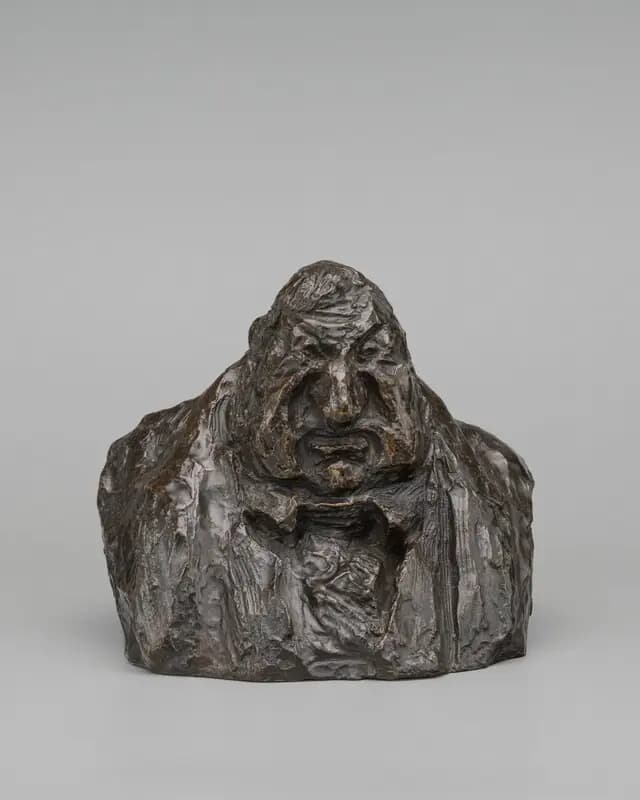
Jean-Marie FruchardНациональная галерея искусства, Вашингтон. Rosenwald Collection · Источник изображения · Open Access NGA: изображение без ограничений использования (openaccess=1). Jean-Marie Fruchard
Атрибуция источника: Honoré Daumier
История бытования по музейному каталогу
Sold 1 July 1930 through (Charles Sessler, Philadelphia) to Lessing Julius Rosenwald, Jenkintown, Pennsylvania;[1] gift 1943 to NGA. [1] Charles Philipon, editor of _La Caricature_, having commissioned and paid Daumier to execute maquettes for a gallery of busts to be printed as lithographs, owned the clay figures outright, and they remained with his family after he died in 1862. They were purchased in 1927 from Philipon's descendants by dealer-publisher Maurice Le Garrec, who commissioned the Barbedienne foundry in Paris to cast the full set of thirty-six figures, twelve busts at a time. The first set was made available by subscription in 1929-1930, the second set apparently in early 1940, and the final set by around 1950. Lessing Rosenwald purchased each of his three groups of twelve shortly after they were made available. The Barbedienne foundry returned the orginal clays and plaster molds to Le Garrec's widow when it ceased operation in the early 1950s. Subsequently Madame Le Garrec commissioned three full sets of the busts from another foundry, Valsuani, and the clays and molds were destroyed when this edition was completed in March 1965. (See the complete discussion of the busts by Suzanne Glover Lindsay in the NGA systematic catalogue, _European Sculpture of the Nineteenth Century_, Washington, D.C., 2000: 119-125.)
model c. 1832/1835, cast 1929/1930 · bronze · overall: 12.7 x 14.5 x 11.8 cm (5 x 5 11/16 x 4 5/8 in.) · Национальная галерея искусства, Вашингтон · 1943.3.11
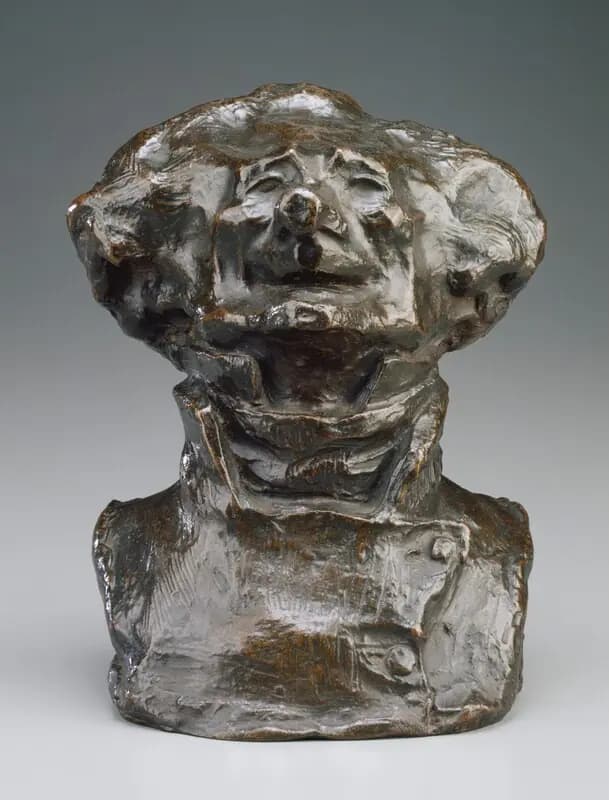
Charles PhiliponНациональная галерея искусства, Вашингтон. Rosenwald Collection · Источник изображения · Open Access NGA: изображение без ограничений использования (openaccess=1). Charles Philipon
Атрибуция источника: Honoré Daumier
История бытования по музейному каталогу
Sold 1 July 1930 through (Charles Sessler, Philadelphia) to Lessing Julius Rosenwald, Jenkintown, Pennsylvania;[1] gift 1943 to NGA. [1] Charles Philipon, editor of _La Caricature_, having commissioned and paid Daumier to execute maquettes for a gallery of busts to be printed as lithographs, owned the clay figures outright, and they remained with his family after he died in 1862. They were purchased in 1927 from Philipon's descendants by dealer-publisher Maurice Le Garrec, who commissioned the Barbedienne foundry in Paris to cast the full set of thirty-six figures, twelve busts at a time. The first set was made available by subscription in 1929-1930, the second set apparently in early 1940, and the final set by around 1950. Lessing Rosenwald purchased each of his three groups of twelve shortly after they were made available. The Barbedienne foundry returned the orginal clays and plaster molds to Le Garrec's widow when it ceased operation in the early 1950s. Subsequently Madame Le Garrec commissioned three full sets of the busts from another foundry, Valsuani, and the clays and molds were destroyed when this edition was completed in March 1965. (See the complete discussion of the busts by Suzanne Glover Lindsay in the NGA systematic catalogue, _European Sculpture of the Nineteenth Century_, Washington, D.C., 2000: 119-125.)
model c. 1832/1835, cast 1929/1930 · bronze · overall: 15.6 x 13.7 x 10.2 cm (6 1/8 x 5 3/8 x 4 in.) · Национальная галерея искусства, Вашингтон · 1943.3.12
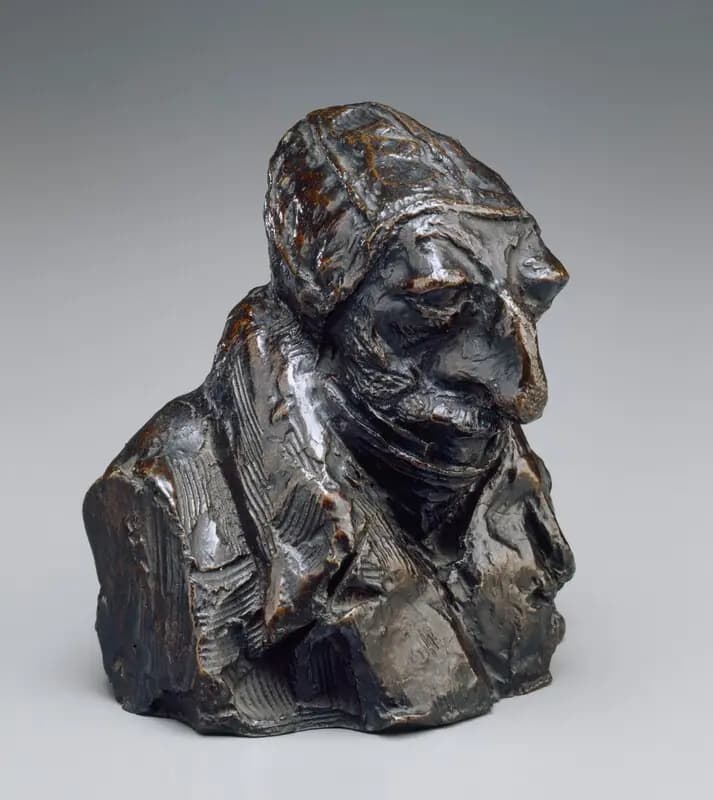
François, Marquis de Barbé-Marbois (?)Национальная галерея искусства, Вашингтон. Rosenwald Collection · Источник изображения · Open Access NGA: изображение без ограничений использования (openaccess=1). François, Marquis de Barbé-Marbois (?)
Атрибуция источника: Honoré Daumier
История бытования по музейному каталогу
Sold 12 March 1940 through (Charles Sessler, Philadelphia) to Lessing Julius Rosenwald, Jenkintown, Pennsylvania;[1] gift 1943 to NGA. [1] Charles Philipon, editor of _La Caricature_, having commissioned and paid Daumier to execute maquettes for a gallery of busts to be printed as lithographs, owned the clay figures outright, and they remained with his family after he died in 1862. They were purchased in 1927 from Philipon's descendants by dealer-publisher Maurice Le Garrec, who commissioned the Barbedienne foundry in Paris to cast the full set of thirty-six figures, twelve busts at a time. The first set was made available by subscription in 1929-1930, the second set apparently in early 1940, and the final set by around 1950. Lessing Rosenwald purchased each of his three groups of twelve shortly after they were made available. The Barbedienne foundry returned the orginal clays and plaster molds to Le Garrec's widow when it ceased operation in the early 1950s. Subsequently Madame Le Garrec commissioned three full sets of the busts from another foundry, Valsuani, and the clays and molds were destroyed when this edition was completed in March 1965. (See the complete discussion of the busts by Suzanne Glover Lindsay in the NGA systematic catalogue, _European Sculpture of the Nineteenth Century_, Washington, D.C., 2000: 119-125.)
model c. 1832/1835, cast 1929/1940 · bronze · overall: 14 x 12.7 x 10.8 cm (5 1/2 x 5 x 4 1/4 in.) · Национальная галерея искусства, Вашингтон · 1943.3.13
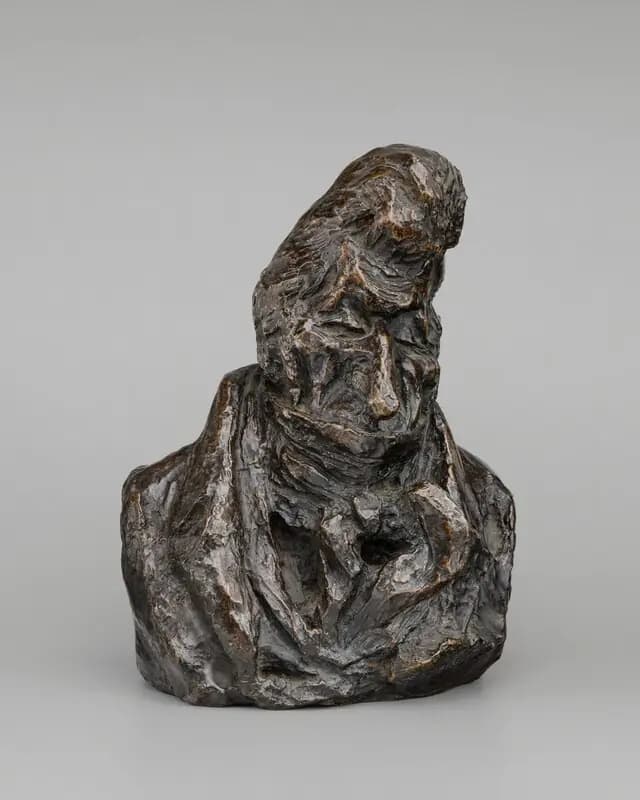
Jean-Auguste Chevandier de ValdromeНациональная галерея искусства, Вашингтон. Rosenwald Collection · Источник изображения · Open Access NGA: изображение без ограничений использования (openaccess=1). Jean-Auguste Chevandier de Valdrome
Атрибуция источника: Honoré Daumier
История бытования по музейному каталогу
Sold 12 March 1940 through (Charles Sessler, Philadelphia) to Lessing Julius Rosenwald, Jenkintown, Pennsylvania;[1] gift 1943 to NGA. [1] Charles Philipon, editor of _La Caricature_, having commissioned and paid Daumier to execute maquettes for a gallery of busts to be printed as lithographs, owned the clay figures outright, and they remained with his family after he died in 1862. They were purchased in 1927 from Philipon's descendants by dealer-publisher Maurice Le Garrec, who commissioned the Barbedienne foundry in Paris to cast the full set of thirty-six figures, twelve busts at a time. The first set was made available by subscription in 1929-1930, the second set apparently in early 1940, and the final set by around 1950. Lessing Rosenwald purchased each of his three groups of twelve shortly after they were made available. The Barbedienne foundry returned the orginal clays and plaster molds to Le Garrec's widow when it ceased operation in the early 1950s. Subsequently Madame Le Garrec commissioned three full sets of the busts from another foundry, Valsuani, and the clays and molds were destroyed when this edition was completed in March 1965. (See the complete discussion of the busts by Suzanne Glover Lindsay in the NGA systematic catalogue, _European Sculpture of the Nineteenth Century_, Washington, D.C., 2000: 119-125.)
model c. 1832/1835, cast 1929/1940 · bronze · overall: 18.4 x 14.3 x 12.1 cm (7 1/4 x 5 5/8 x 4 3/4 in.) · Национальная галерея искусства, Вашингтон · 1943.3.14
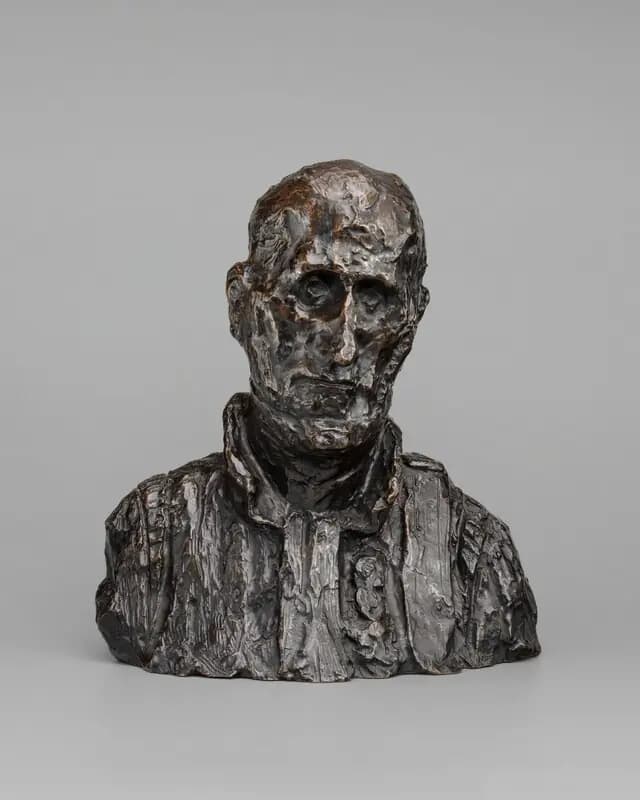
Jean-Charles PersilНациональная галерея искусства, Вашингтон. Rosenwald Collection · Источник изображения · Open Access NGA: изображение без ограничений использования (openaccess=1). Jean-Charles Persil
Атрибуция источника: Honoré Daumier
История бытования по музейному каталогу
Sold 12 March 1940 through (Charles Sessler, Philadelphia) to Lessing Julius Rosenwald, Jenkintown, Pennsylvania;[1] gift 1943 to NGA. [1] Charles Philipon, editor of _La Caricature_, having commissioned and paid Daumier to execute maquettes for a gallery of busts to be printed as lithographs, owned the clay figures outright, and they remained with his family after he died in 1862. They were purchased in 1927 from Philipon's descendants by dealer-publisher Maurice Le Garrec, who commissioned the Barbedienne foundry in Paris to cast the full set of thirty-six figures, twelve busts at a time. The first set was made available by subscription in 1929-1930, the second set apparently in early 1940, and the final set by around 1950. Lessing Rosenwald purchased each of his three groups of twelve shortly after they were made available. The Barbedienne foundry returned the orginal clays and plaster molds to Le Garrec's widow when it ceased operation in the early 1950s. Subsequently Madame Le Garrec commissioned three full sets of the busts from another foundry, Valsuani, and the clays and molds were destroyed when this edition was completed in March 1965. (See the complete discussion of the busts by Suzanne Glover Lindsay in the NGA systematic catalogue, _European Sculpture of the Nineteenth Century_, Washington, D.C., 2000: 119-125.)
model c. 1832/1835, cast 1929/1940 · bronze · overall: 19.1 x 16.8 x 10.2 cm (7 1/2 x 6 5/8 x 4 in.) · Национальная галерея искусства, Вашингтон · 1943.3.15
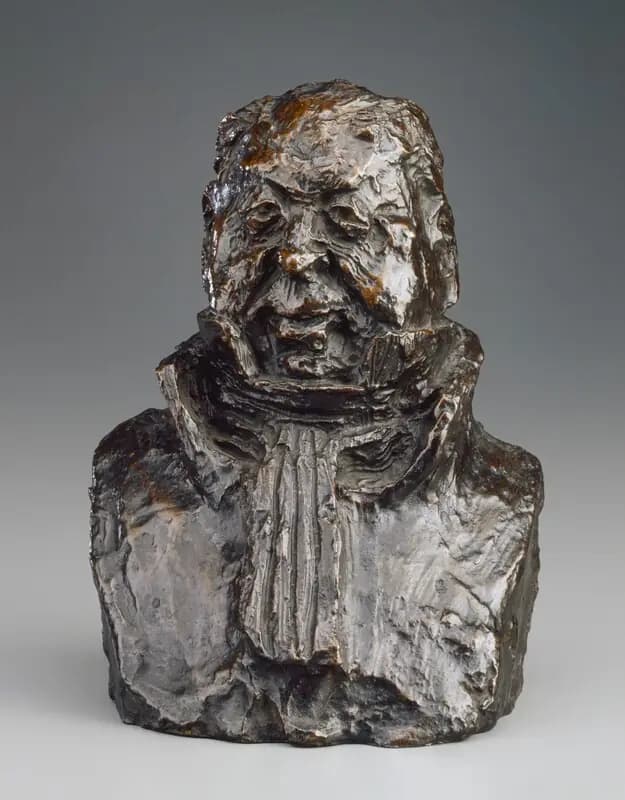
Alexandre LecomteНациональная галерея искусства, Вашингтон. Rosenwald Collection · Источник изображения · Open Access NGA: изображение без ограничений использования (openaccess=1). Alexandre Lecomte
Атрибуция источника: Honoré Daumier
История бытования по музейному каталогу
Sold 12 March 1940 through (Charles Sessler, Philadelphia) to Lessing Julius Rosenwald, Jenkintown, Pennsylvania;[1] gift 1943 to NGA. [1] Charles Philipon, editor of _La Caricature_, having commissioned and paid Daumier to execute maquettes for a gallery of busts to be printed as lithographs, owned the clay figures outright, and they remained with his family after he died in 1862. They were purchased in 1927 from Philipon's descendants by dealer-publisher Maurice Le Garrec, who commissioned the Barbedienne foundry in Paris to cast the full set of thirty-six figures, twelve busts at a time. The first set was made available by subscription in 1929-1930, the second set apparently in early 1940, and the final set by around 1950. Lessing Rosenwald purchased each of his three groups of twelve shortly after they were made available. The Barbedienne foundry returned the orginal clays and plaster molds to Le Garrec's widow when it ceased operation in the early 1950s. Subsequently Madame Le Garrec commissioned three full sets of the busts from another foundry, Valsuani, and the clays and molds were destroyed when this edition was completed in March 1965. (See the complete discussion of the busts by Suzanne Glover Lindsay in the NGA systematic catalogue, _European Sculpture of the Nineteenth Century_, Washington, D.C., 2000: 119-125.)
model c. 1832/1835, cast 1929/1940 · bronze · overall: 17.2 x 12.7 x 12.1 cm (6 3/4 x 5 x 4 3/4 in.) · Национальная галерея искусства, Вашингтон · 1943.3.16
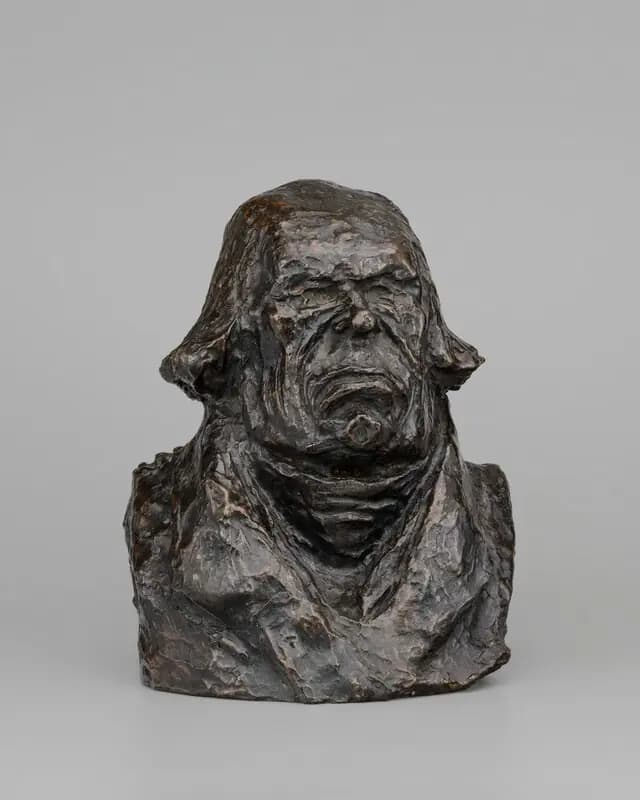
Antoine OdierНациональная галерея искусства, Вашингтон. Rosenwald Collection · Источник изображения · Open Access NGA: изображение без ограничений использования (openaccess=1). Antoine Odier
Атрибуция источника: Honoré Daumier
История бытования по музейному каталогу
Sold 12 March 1940 through (Charles Sessler, Philadelphia) to Lessing Julius Rosenwald, Jenkintown, Pennsylvania;[1] gift 1943 to NGA. [1] Charles Philipon, editor of _La Caricature_, having commissioned and paid Daumier to execute maquettes for a gallery of busts to be printed as lithographs, owned the clay figures outright, and they remained with his family after he died in 1862. They were purchased in 1927 from Philipon's descendants by dealer-publisher Maurice Le Garrec, who commissioned the Barbedienne foundry in Paris to cast the full set of thirty-six figures, twelve busts at a time. The first set was made available by subscription in 1929-1930, the second set apparently in early 1940, and the final set by around 1950. Lessing Rosenwald purchased each of his three groups of twelve shortly after they were made available. The Barbedienne foundry returned the orginal clays and plaster molds to Le Garrec's widow when it ceased operation in the early 1950s. Subsequently Madame Le Garrec commissioned three full sets of the busts from another foundry, Valsuani, and the clays and molds were destroyed when this edition was completed in March 1965. (See the complete discussion of the busts by Suzanne Glover Lindsay in the NGA systematic catalogue, _European Sculpture of the Nineteenth Century_, Washington, D.C., 2000: 119-125.)
model c. 1832/1835, cast 1929/1940 · bronze · overall: 14.3 x 11.4 x 9.8 cm (5 5/8 x 4 1/2 x 3 7/8 in.) · Национальная галерея искусства, Вашингтон · 1943.3.17
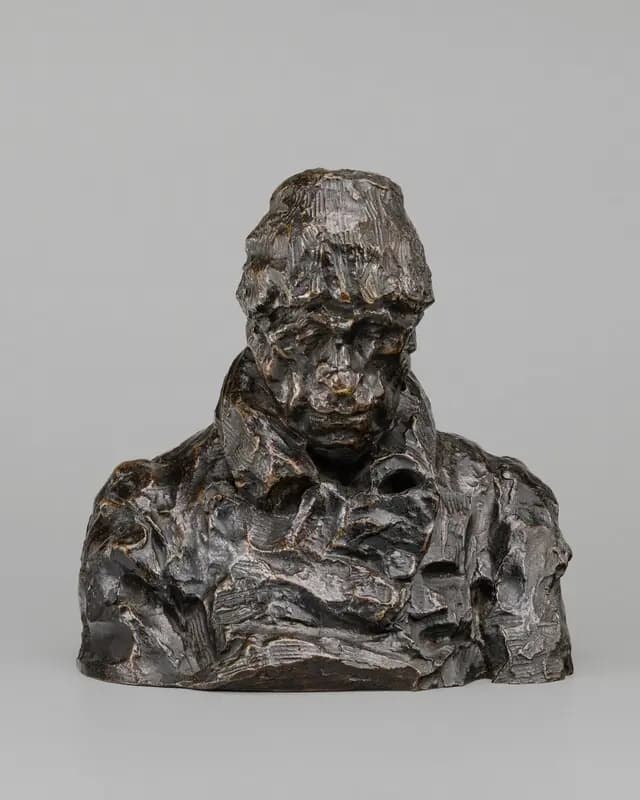
Charles-Malo-François, Comte de LamethНациональная галерея искусства, Вашингтон. Rosenwald Collection · Источник изображения · Open Access NGA: изображение без ограничений использования (openaccess=1). Charles-Malo-François, Comte de Lameth
Атрибуция источника: Honoré Daumier
История бытования по музейному каталогу
Sold 12 March 1940 through (Charles Sessler, Philadelphia) to Lessing Julius Rosenwald, Jenkintown, Pennsylvania;[1] gift 1943 to NGA. [1] Charles Philipon, editor of _La Caricature_, having commissioned and paid Daumier to execute maquettes for a gallery of busts to be printed as lithographs, owned the clay figures outright, and they remained with his family after he died in 1862. They were purchased in 1927 from Philipon's descendants by dealer-publisher Maurice Le Garrec, who commissioned the Barbedienne foundry in Paris to cast the full set of thirty-six figures, twelve busts at a time. The first set was made available by subscription in 1929-1930, the second set apparently in early 1940, and the final set by around 1950. Lessing Rosenwald purchased each of his three groups of twelve shortly after they were made available. The Barbedienne foundry returned the orginal clays and plaster molds to Le Garrec's widow when it ceased operation in the early 1950s. Subsequently Madame Le Garrec commissioned three full sets of the busts from another foundry, Valsuani, and the clays and molds were destroyed when this edition was completed in March 1965. (See the complete discussion of the busts by Suzanne Glover Lindsay in the NGA systematic catalogue, _European Sculpture of the Nineteenth Century_, Washington, D.C., 2000: 119-125.)
model c. 1832/1835, cast 1929/1940 · bronze · overall: 14.6 x 14.3 x 8.3 cm (5 3/4 x 5 5/8 x 3 1/4 in.) · Национальная галерея искусства, Вашингтон · 1943.3.18
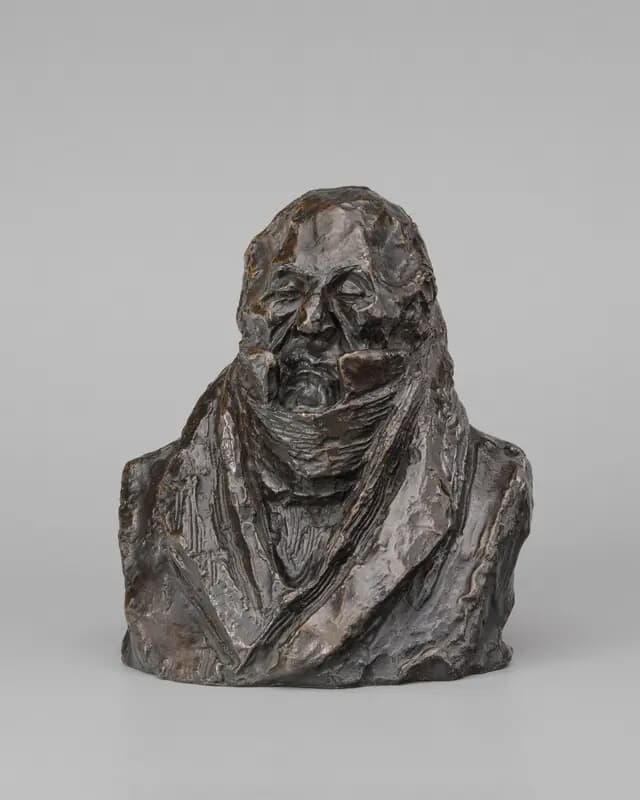
Horace-François-Bastien Sébastiani (?)Национальная галерея искусства, Вашингтон. Rosenwald Collection · Источник изображения · Open Access NGA: изображение без ограничений использования (openaccess=1). Horace-François-Bastien Sébastiani (?)
Атрибуция источника: Honoré Daumier
История бытования по музейному каталогу
Sold 12 March 1940 through (Charles Sessler, Philadelphia) to Lessing Julius Rosenwald, Jenkintown, Pennsylvania;[1] gift 1943 to NGA. [1] Charles Philipon, editor of _La Caricature_, having commissioned and paid Daumier to execute maquettes for a gallery of busts to be printed as lithographs, owned the clay figures outright, and they remained with his family after he died in 1862. They were purchased in 1927 from Philipon's descendants by dealer-publisher Maurice Le Garrec, who commissioned the Barbedienne foundry in Paris to cast the full set of thirty-six figures, twelve busts at a time. The first set was made available by subscription in 1929-1930, the second set apparently in early 1940, and the final set by around 1950. Lessing Rosenwald purchased each of his three groups of twelve shortly after they were made available. The Barbedienne foundry returned the orginal clays and plaster molds to Le Garrec's widow when it ceased operation in the early 1950s. Subsequently Madame Le Garrec commissioned three full sets of the busts from another foundry, Valsuani, and the clays and molds were destroyed when this edition was completed in March 1965. (See the complete discussion of the busts by Suzanne Glover Lindsay in the NGA systematic catalogue, _European Sculpture of the Nineteenth Century_, Washington, D.C., 2000: 119-125.)
model c. 1832/1835, cast 1929/1940 · bronze · overall: 13 x 11.8 x 10.2 cm (5 1/8 x 4 5/8 x 4 in.) · Национальная галерея искусства, Вашингтон · 1943.3.19
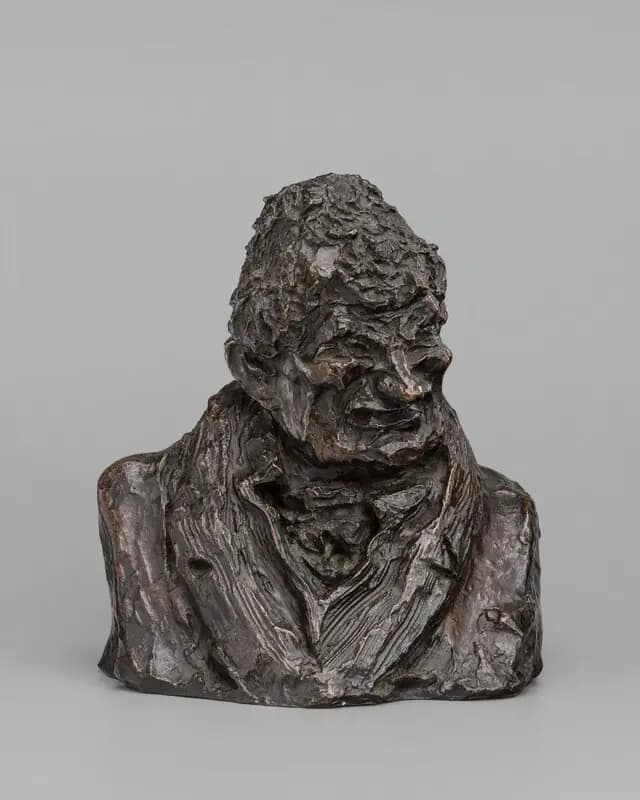
Charles Henry Verhuel, Count of Sevenaar (?)Национальная галерея искусства, Вашингтон. Rosenwald Collection · Источник изображения · Open Access NGA: изображение без ограничений использования (openaccess=1). Charles Henry Verhuel, Count of Sevenaar (?)
Атрибуция источника: Honoré Daumier
История бытования по музейному каталогу
Sold 12 March 1940 through (Charles Sessler, Philadelphia) to Lessing Julius Rosenwald, Jenkintown, Pennsylvania;[1] gift 1943 to NGA. [1] Charles Philipon, editor of _La Caricature_, having commissioned and paid Daumier to execute maquettes for a gallery of busts to be printed as lithographs, owned the clay figures outright, and they remained with his family after he died in 1862. They were purchased in 1927 from Philipon's descendants by dealer-publisher Maurice Le Garrec, who commissioned the Barbedienne foundry in Paris to cast the full set of thirty-six figures, twelve busts at a time. The first set was made available by subscription in 1929-1930, the second set apparently in early 1940, and the final set by around 1950. Lessing Rosenwald purchased each of his three groups of twelve shortly after they were made available. The Barbedienne foundry returned the orginal clays and plaster molds to Le Garrec's widow when it ceased operation in the early 1950s. Subsequently Madame Le Garrec commissioned three full sets of the busts from another foundry, Valsuani, and the clays and molds were destroyed when this edition was completed in March 1965. (See the complete discussion of the busts by Suzanne Glover Lindsay in the NGA systematic catalogue, _European Sculpture of the Nineteenth Century_, Washington, D.C., 2000: 119-125.)
model c. 1832/1835, cast 1929/1940 · bronze · overall: 12.7 x 11.4 x 8.9 cm (5 x 4 1/2 x 3 1/2 in.) · Национальная галерея искусства, Вашингтон · 1943.3.20
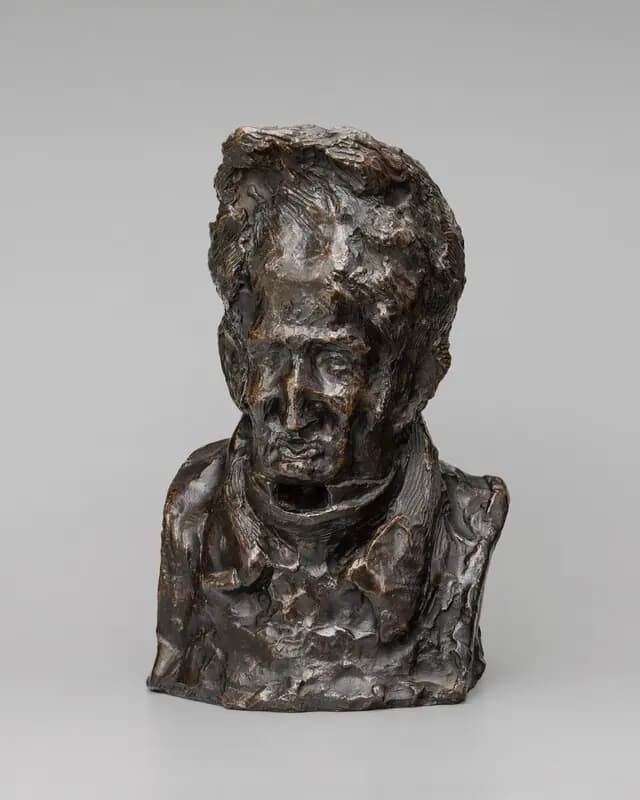
Charles-Léonard Gallois (?)Национальная галерея искусства, Вашингтон. Rosenwald Collection · Источник изображения · Open Access NGA: изображение без ограничений использования (openaccess=1). Charles-Léonard Gallois (?)
Атрибуция источника: Honoré Daumier
История бытования по музейному каталогу
Sold 12 March 1940 through (Charles Sessler, Philadelphia) to Lessing Julius Rosenwald, Jenkintown, Pennsylvania;[1] gift 1943 to NGA. [1] Charles Philipon, editor of _La Caricature_, having commissioned and paid Daumier to execute maquettes for a gallery of busts to be printed as lithographs, owned the clay figures outright, and they remained with his family after he died in 1862. They were purchased in 1927 from Philipon's descendants by dealer-publisher Maurice Le Garrec, who commissioned the Barbedienne foundry in Paris to cast the full set of thirty-six figures, twelve busts at a time. The first set was made available by subscription in 1929-1930, the second set apparently in early 1940, and the final set by around 1950. Lessing Rosenwald purchased each of his three groups of twelve shortly after they were made available. The Barbedienne foundry returned the orginal clays and plaster molds to Le Garrec's widow when it ceased operation in the early 1950s. Subsequently Madame Le Garrec commissioned three full sets of the busts from another foundry, Valsuani, and the clays and molds were destroyed when this edition was completed in March 1965. (See the complete discussion of the busts by Suzanne Glover Lindsay in the NGA systematic catalogue, _European Sculpture of the Nineteenth Century_, Washington, D.C., 2000: 119-125.)
model c. 1832/1835 or c. 1849, cast 1929/1940 · bronze · overall: 21.3 x 13.7 x 10.8 cm (8 3/8 x 5 3/8 x 4 1/4 in.) · Национальная галерея искусства, Вашингтон · 1943.3.21
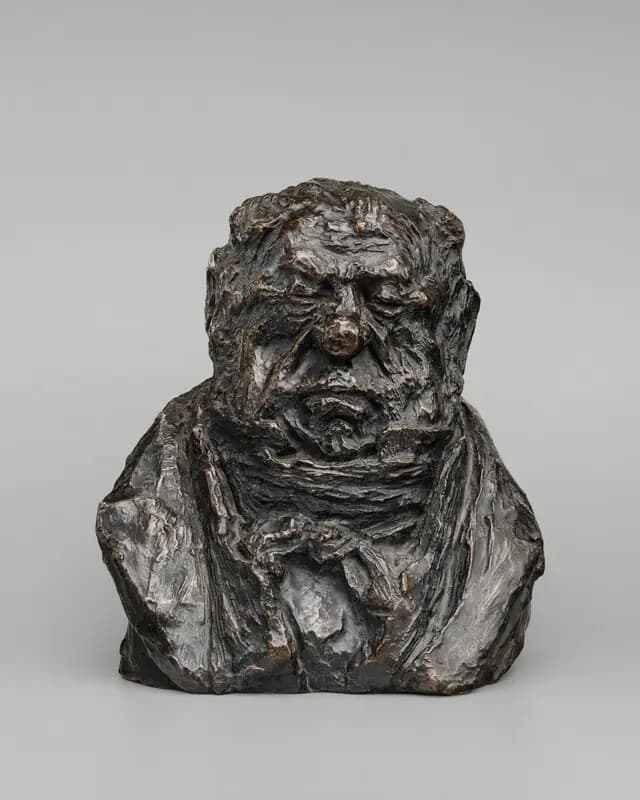
Claude BailliotНациональная галерея искусства, Вашингтон. Rosenwald Collection · Источник изображения · Open Access NGA: изображение без ограничений использования (openaccess=1). Claude Bailliot
Атрибуция источника: Honoré Daumier
История бытования по музейному каталогу
Sold 12 March 1940 through (Charles Sessler, Philadelphia) to Lessing Julius Rosenwald, Jenkintown, Pennsylvania;[1] gift 1943 to NGA. [1] Charles Philipon, editor of _La Caricature_, having commissioned and paid Daumier to execute maquettes for a gallery of busts to be printed as lithographs, owned the clay figures outright, and they remained with his family after he died in 1862. They were purchased in 1927 from Philipon's descendants by dealer-publisher Maurice Le Garrec, who commissioned the Barbedienne foundry in Paris to cast the full set of thirty-six figures, twelve busts at a time. The first set was made available by subscription in 1929-1930, the second set apparently in early 1940, and the final set by around 1950. Lessing Rosenwald purchased each of his three groups of twelve shortly after they were made available. The Barbedienne foundry returned the orginal clays and plaster molds to Le Garrec's widow when it ceased operation in the early 1950s. Subsequently Madame Le Garrec commissioned three full sets of the busts from another foundry, Valsuani, and the clays and molds were destroyed when this edition was completed in March 1965. (See the complete discussion of the busts by Suzanne Glover Lindsay in the NGA systematic catalogue, _European Sculpture of the Nineteenth Century_, Washington, D.C., 2000: 119-125.)
model c. 1832/1835, cast 1929/1940 · bronze · overall: 17.2 x 15.9 x 13 cm (6 3/4 x 6 1/4 x 5 1/8 in.) · Национальная галерея искусства, Вашингтон · 1943.3.22
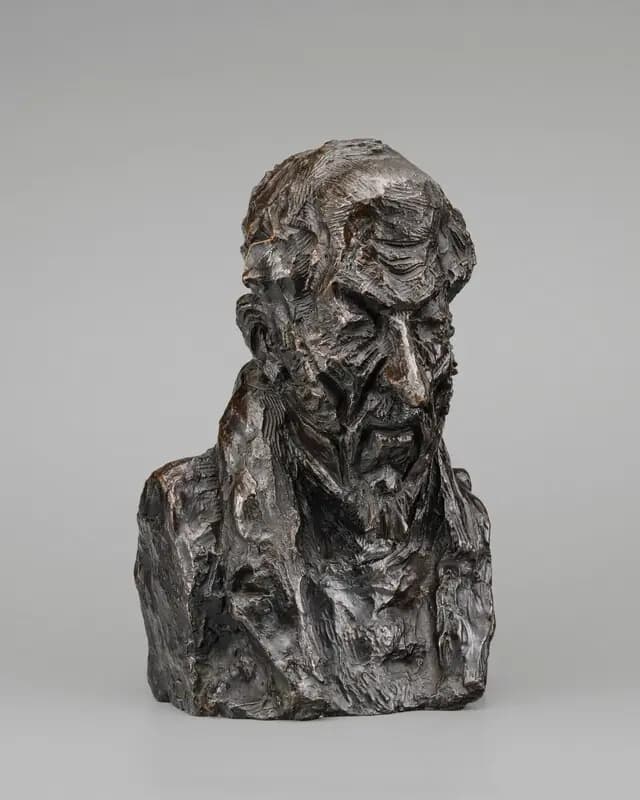
Alfred-Frédéric-Pierre, Comte de FallouxНациональная галерея искусства, Вашингтон. Rosenwald Collection · Источник изображения · Open Access NGA: изображение без ограничений использования (openaccess=1). Alfred-Frédéric-Pierre, Comte de Falloux
Атрибуция источника: Honoré Daumier
История бытования по музейному каталогу
Sold 12 March 1940 through (Charles Sessler, Philadelphia) to Lessing Julius Rosenwald, Jenkintown, Pennsylvania;[1] gift 1943 to NGA. [1] Charles Philipon, editor of _La Caricature_, having commissioned and paid Daumier to execute maquettes for a gallery of busts to be printed as lithographs, owned the clay figures outright, and they remained with his family after he died in 1862. They were purchased in 1927 from Philipon's descendants by dealer-publisher Maurice Le Garrec, who commissioned the Barbedienne foundry in Paris to cast the full set of thirty-six figures, twelve busts at a time. The first set was made available by subscription in 1929-1930, the second set apparently in early 1940, and the final set by around 1950. Lessing Rosenwald purchased each of his three groups of twelve shortly after they were made available. The Barbedienne foundry returned the orginal clays and plaster molds to Le Garrec's widow when it ceased operation in the early 1950s. Subsequently Madame Le Garrec commissioned three full sets of the busts from another foundry, Valsuani, and the clays and molds were destroyed when this edition was completed in March 1965. (See the complete discussion of the busts by Suzanne Glover Lindsay in the NGA systematic catalogue, _European Sculpture of the Nineteenth Century_, Washington, D.C., 2000: 119-125.)
model possibly 1848/1850, cast 1929/1940 · bronze · overall: 22.9 x 14 x 13.7 cm (9 x 5 1/2 x 5 3/8 in.) · Национальная галерея искусства, Вашингтон · 1943.3.23
Дата подготовки справки: 11 ноября 2026 г..
Литература для дальнейшего исследования
- Eitner, Lorenz. French Paintings of the Nineteenth Century, Part I: Before Impressionism. The Collections of the National Gallery of Art Systematic Catalogue. Washington, D.C., 2000: 150-153. Источник библиографической записи
- Butler, Ruth, and Suzanne Glover Lindsay, with Alison Luchs, Douglas Lewis, Cynthia J. Mills, and Jeffrey Weidman. European Sculpture of the Nineteenth Century. The Collections of the National Gallery of Art Systematic Catalogue. Washington, D.C., 2000: 117-119. Источник библиографической записи
- Papet, Edouard. 4 essays. In Daumier 1808-1879. Exh. cat. Musée des Beaux-Arts du Canada, Ottawa; Galeries nationales du Grand Palais, Paris; The Phillips Collection, Washington, D.C. Paris, 1999: 46-59, 84-161, 282-287, 288-295. Источник библиографической записи
- Nordisk familjebok Источник библиографической записи
- Billy Ireland Cartoon Library & Museum biographical files Источник библиографической записи
- Цифровая библиотека Европейской библиотеки по информации и культуре Источник библиографической записи
- Энциклопедический словарь Брокгауза и Ефрона, 1890—1907 Источник библиографической записи
- Нуттоллова энциклопедия Источник библиографической записи
- Малый энциклопедический словарь Брокгауза и Ефрона Источник библиографической записи
- Британская энциклопедия, 1910—1911 Источник библиографической записи
- Искусство стран и народов мира. Том 5 Источник библиографической записи
- Дрезденский блокнот Источник библиографической записи
- Калитина Н. Н. Домье. М., Искусство, 1955. Источник библиографической записи
- Пассерон Р. Домье: свидетель своей эпохи. М., Изобразительное искусство, 1984. Источник библиографической записи
- Прокопьева С. И. Образ зрителя в театральных сценах Домье // Материалы XI научной конференции в память проф. М. В. Доброклонского. СПб., 1998. Источник библиографической записи
- Рыков А. В. Общество спектакля. «Драма» Оноре Домье // Studia Culturae. 2018. Вып. 4 (38). С. 62-69. Источник библиографической записи
- Аккерман А. Домье -наш…: Оноре Домье в СССР в 1920—1940-е годы / Постижение Запада. Иностранная литература в советской литературе, искусстве и теории. 1917—1941 гг. Исследования и архивные материалы. Отв. ред. Е. Д. Гальцева. М.: ИМРЛИ РАН, 2015. С. 815—828. Источник библиографической записи
- Щербакова Н. Оноре Домье: от политической карикатуры к маске // Искусствознание. 2014, № 3-4. С. 184—199. Источник библиографической записи
- Яворская Н. В. Оноре Домье. — Л.: Издательство Ленинградского областного союза советских художников, 1935 (Художественное наследие. Западноевропейское искусство). — 156 с.: 46 ил. Источник библиографической записи
- Harper Paula. Daumier Clowns: Les Saltimbanques et les Parades. New York-London, 1981. Источник библиографической записи
- Childs E. C. Daumier and Exotocism. Satirising the French and the Foreign. New York, Peter Lang Publishing Inc., 2004. Источник библиографической записи
Источники исследования
- The Metropolitan Museum of Art — открытые данные коллекции (CC0)
- National Gallery of Art — открытые данные коллекции (CC0)
- Wikidata — сведения об образовании, профессиональных связях и собраниях
- Википедия — полный текст статьи
- Национальная галерея искусства: открытые каталожные данные (CC0)
- Метрополитен-музей: открытые каталожные данные (CC0)
Условия использования метаданных приведены в источниках. Лицензия каждого изображения указана у репродукции.
Произведения
Справочные примеры творчества. Эти произведения не предлагаются к продаже нашим салоном.

Если у вас есть произведение этого автора
Для предварительного обсуждения подготовьте общий вид предмета, фотографии подписи, оборота или основания, размеры и сведения о происхождении. Музейные записи помогут уточнить творческий контекст автора.
Сотрудники салона рассмотрят материалы и обсудят необходимые дальнейшие исследования. На оценку влияют авторство, техника, время создания, сохранность и история владения.
Источники
Биографический текст подготовлен редакцией по указанным исследованиям и каталогам; справочные сведения и изображения сопровождаются отдельными источниками. Исторические сведения и атрибуция могут уточняться; исходные записи доступны по ссылкам.
- Биографические сведения — Wikidata
- Запись произведения — Wikidata
- Дополнительный источник: www.nationalgallery.org.uk
- Дополнительный источник: www.boijmans.nl
- Дополнительный источник: www.musee-orsay.fr
- Дополнительный источник: ru.wikipedia.org
Структурированные данные Wikidata — CC0. Лицензия каждого изображения указана под ним. Портрет может быть живописным изображением или исторической фотографией.
Справочные фрагменты из статей Википедии и их авторов доступны на условиях CC BY-SA 4.0. Выполнены отбор, сокращение и редакционная обработка; ссылки на статьи приведены у соответствующих материалов. Лицензии изображений указаны отдельно.
 WhatsApp
 Telegram
 MAX