
Произведения этого художника в общем каталоге
Биография и творчество
Фра Беато Анджелико родился около 1395 года и до вступления в монастырь носил имя Гвидо ди Пьетро. Большую часть жизни был известен как Фра Джованни — имя, принятое в доминиканском монастыре Сан-Доменико во Фьезоле. Документы упоминают его как живописца уже в 1417 году. Работая для религиозной среды, он создавал алтарные образы, небольшие повествовательные сцены и фрески, соединяя созерцательный характер искусства с новыми пространственными средствами Раннего Возрождения.
К 1430-м годам в его живописи усилилось внимание к объёму фигуры, естественности и линейной перспективе. Наибольшую известность получили росписи флорентийского монастыря Сан-Марко, над которыми он работал после 1436 года при поддержке Козимо Медичи. В поздние годы мастер находился в Риме и выполнял церковные заказы; с этим периодом связывают части алтаря для Санта-Мария-сопра-Минерва. Он умер в Риме в 1455 году и был похоронен в этой доминиканской церкви. Прозвище Анджелико закрепилось посмертно.
Место рождения: Виккьо. Художественные направления, указанные в справочных источниках: Раннее Возрождение, итальянское Возрождение. Место смерти: Рим.
В подборке представлено произведение «Cortona Triptych» (1437). Собрание: Diocesan Museum in Cortona. Подпись и источник изображения приведены ниже: они позволяют перейти к исходной записи и уточнить сведения о работе.
Среди учителей художника — Лоренцо Монако; Герардо Старнина; Ambrogio di Baldese.
В числе направлений, к которым относят творчество художника, — итальянское Возрождение; Раннее Возрождение.
Подготовлено редакцией салона по материалам указанных источников. Открыть основной источник биографии.
Обновлено
- Годы жизни
- ок. 1395–1400 — 1455
- Место рождения
- Виккьо
- Направления
- Раннее Возрождение; итальянское Возрождение
- Место смерти
- Рим
Хронология
Собрания и коллекции
- The Metropolitan Museum of Art, New York
- National Gallery of Art, Washington
- Музей Бойманса-ван Бёнингена
- Штеделевский художественный институт
- Миннеаполисский институт искусства
- Прадо
- Музей Тиссена-Борнемисы
- Музей Гетти
- Национальная галерея Виктории
- Национальная галерея искусства
- Национальный музей Швеции
- Метрополитен-музей
- Королевский музей изящных искусств
- Сан-Марко (Флоренция)
- Ватиканская пинакотека
- Diocesan Museum in Cortona
- Уффици
- Museo della Basilica di Santa Maria delle Grazie
- Музей Сан-Маттео
- Galleria Nazionale d'Arte Antica di Palazzo Corsini
- Музей изящных искусств Бостона
- Художественный музей Сан-Диего
- National Gallery of Umbria
- Национальный музей искусства Каталонии
- Художественный музей Фогга
- Баварские государственные собрания картин
- Национальная галерея Ирландии
- Гарвардский художественный музей
- Берлинская картинная галерея
- Художественный музей Филадельфии
- Музей Линденау
- Музей изобразительных искусств Сан-Франциско
- Kimbell Art Museum
- Эрмитаж
- Рейксмюсеум
- Чикагский институт искусств
- Галерея старых мастеров Штросмайера
- Лондонская национальная галерея
- Художественный музей Индианаполиса
- Музей изящных искусств
- Музей изобразительных искусств
- Музей Изабеллы Стюарт Гарднер
- Художественная галерея Йельского университета
- Государственные художественные собрания Дрездена
- convent of San Domenico
- Музей изящных искусств Тома Анри
- Детройтский институт искусств
- Художественный музей Кливленда
- Музей Конде
- Художественный музей Принстонского университета
- Музей Боде
- Старая пинакотека
- Уодсворт Атенеум
- Musée du Petit Palais
- Contini Bonacossi collection
- Cini Palace Gallery
- Музей Арпа
- Galleria nazionale di Parma
- Галерея Курто
- Музей Эшмола
- Музей изящных искусств Ренна
- Сабауда
- Firing Line: Cardiff Castle Museum of the Welsh Soldier
- Музей Бандини
- Pinacoteca Civica di Forlì
- Ливорнский собор
- Институт искусства Курто
- Королевская коллекция
- Национальная галерея искусства, Вашингтон
- Метрополитен-музей, Нью-Йорк
Сведения о собраниях приведены по указанным источникам. Наличие в коллекции не означает, что произведение находится в открытой экспозиции. Доступность уточняйте у владельца собрания.
Произведения и каталожные записи
В справочнике 39 каталожных записей, связанных с художником. Здесь показана подборка; открыть все записи в каталоге.
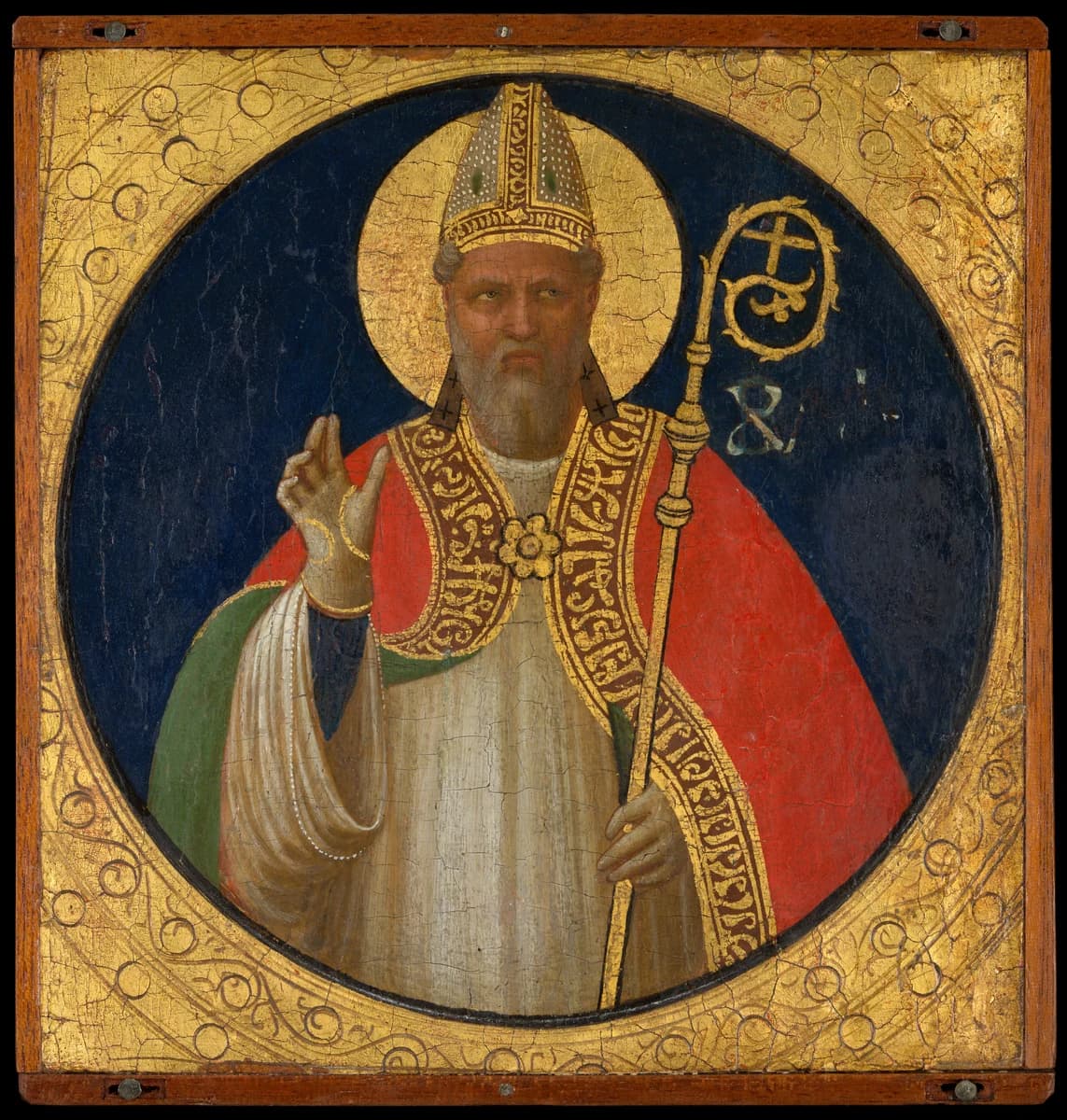
Saint AlexanderFra Angelico (Guido di Pietro). Saint Alexander. ca. 1425. The Metropolitan Museum of Art. 1991.27.2. Bequest of Lucy G. Moses, 1990 · Источник изображения · CC0 Saint Alexander
Атрибуция источника: Artist — Fra Angelico (Guido di Pietro)
ca. 1425 · Tempera on wood, gold ground · Overall 6 1/4 x 6 1/8 in. (15.9 x 15.6 cm); diameter of roundel 5 7/8 in. (14.9 cm) · The Metropolitan Museum of Art, New York · 1991.27.2
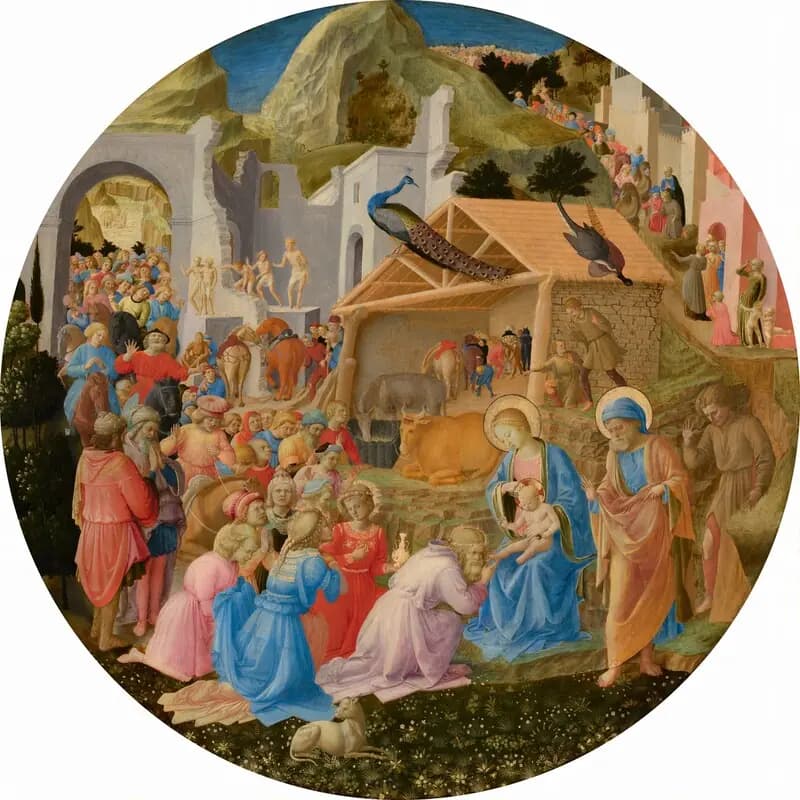
The Adoration of the MagiНациональная галерея искусства, Вашингтон. Samuel H. Kress Collection · Источник изображения · Open Access NGA: изображение без ограничений использования (openaccess=1). The Adoration of the Magi
Атрибуция источника: Fra Angelico and Fra Filippo Lippi
История бытования по музейному каталогу
Probably commissioned by a member of the Medici family, Florence; by inheritance to Lorenzo de' Medici [1449-1492], Florence.[1] probably Marchese Piero Guicciardini [1569-1626]; his widow, Marchesa Simona Machiavelli [1584-1658], Florence;[2] by inheritance to her great-nephew, Count Francesco Guicciardini [1618-1677], Florence; by inheritance to his son, Count Lorenzo Guicciardini [1652-1710], Florence; by inheritance to his son, Count Francesco Gaetano Guicciardini [1699-1780], Florence; by inheritance to his son, Count Lorenzo Guicciardini [1743-1812], Florence; by inheritance to his sons, Count Francesco [1776-1838] and Colonel Ferdinando [1782-1833] Guicciardini, Florence, in 1803;[3] sold July 1810 to Chevalier François-Honoré Dubois, Florence and Paris, as by Botticelli.[4] (Samuel Woodburn, London), by 1826, as by Fra Angelico.[5] William Coningham [1815-1884], London; (his sale, Christie & Manson, London, 9 June 1849, no. 34, as by Filippo Lippi).[6] Alexander Barker [c. 1797-1873], London, by 1851;[7] (his sale, Christie, Manson & Woods, London, 6 June 1874, no. 42, as by Filippino Lippi);[8] purchased by (Giovanni Calvetti [d. 1875], London) for Sir Francis Cook, 1st bt. [1817-1901], Doughty House, Richmond, Surrey; by inheritance to his son, Sir Frederick Lucas Cook, 2nd bt. [1844-1920], Doughty House; by inheritance to his son, Sir Herbert Frederick Cook, 3rd bt. [1868-1939], Doughty House; by inheritance to his son, Sir Francis Ferdinand Maurice Cook, 4th bt. [1907-1978], Doughty House, and Cothay Manor, Somerset; sold February 1947 through (Francis A. Drey, London) to the Samuel H. Kress Foundation, New York, as by Filippo Lippi;[9] gift 1952 to NGA. [1] The inventory drawn up after the death of Lorenzo the Magnificent is known today from a copy made on 23 December 1512, in the Archivio di Stato in Florence; see E. Müntz, _Les Collections des Médicis au XVe siècle_, Paris and London, 1888: 60 (fol. 6 of the manuscript): "Nella chamera grande terrena detta chamera di Lorenzo...uno tondo grande...la nostra Donna e nostro Signore e e' Magi che vanno a offerire, di mano di fra Giovanni, f. 100" ("In the large ground-floor bedroom called Lorenzo's bedroom...a large tondo...our Lady and our Lord and the Magi who come to bring offerings, from the hand of Fra Giovanni, f. 100"). The high value assigned to the panel (considering that the three famous panels of the _Battle of San Romano_ by Paolo Uccello as well as two other paintings by Uccello and a sixth by Pesellino, all in that same room, were estimated as worth 300 florins collectively) leads us to believe that the painting described was compositionally quite elaborate; this offers some--albeit slender--evidence for identifying the Medici tondo as NGA 1952.2.2. [2] The Washington tondo and another tondo of the same subject (now in the National Gallery, London) are apparently recorded in an inventory verified on 20 April 1643 by Simona Machiavelli, the widow of Piero Guicciardini, and confirmed by her great-nephew Francesco Guicciardini on 31 July 1665 (Archivio Guicciardini, filza XLIV, ins. 7). In Valentina Fallani's study of Piero's important collection of paintings (Valentina Fallani, "Piero Guicciardini e la sua quadreria fidecommissaria nella Firenze medicea del Seicento" [diss., Università degli Studi di Firenze, 1992]), the inventory is transcribed (172-185) and hypothesized to be a record of the paintings Piero entailed on his heirs (99). The dimensions given for two round paintings depicting the Adoration of the Magi, 2 2/3 and 3 1/3 braccia, somewhat exceed those of the Washington and London pictures, but the discrepancy is probably due to the inclusion of the frames, which are described, in the measurements (as suggested in a letter from Burton Fredericksen to Nicholas Penny of 14 August 2000, copy in NGA curatorial files). An undated inventory made sometime after the 1658 death of Simona Machiavelli seems to record the Washington painting specifically: "Adorazione de' Magi in tondo, del beato Giovanni Angelico domenicano" ("Adoration of the Magi, a tondo, by the Blessed Giovanni Angelico, Dominican") (Archivio Guicciardinni, filza XLIV, ins. 5; transcribed in Fallani, "Piero Guicciardini," 187-189). The tondi stayed together, and the memory of their Guicciardini provenance remained alive, until the middle of the nineteenth century, when they become convincingly identifiable with the Washington and London tondi (see notes 4 and 5). If Piero did own the Washington picture, it could have passed from the Medici to the Guicciardini through Piero's father, Agnolo (1506-1581), who had close ties to the Medici (personal communication from Valentina Fallani to Elon Danziger, 13 April 2002). For a complete reconstruction of the early history of the painting see Elon Danziger, "Round Pictures of the Adoration of the Magi from Early Renaissance Florence," _Association for Art History Newsletter_ 2, no. 2 (spring 2002): 5-7. [3] According to Paolo Guicciardini, _Cusona_, 2 vols., Florence, 1939: 1:295, Francesco and Ferdinando were "emancipati" and given possession of their inheritance in 1803, while their parents were still living. [4] An inventory of the Guicciardini gallery, dated 1 September 1807 (Archivio Guicciardini, filza XXXV seconda, n. 5; transcribed in Gino Corti, "Due quadrerie in Firenze: la collezione Lorenzi, prima metà del Settecento, e la collezione Guicciardini, 1807," _Paragone_ 35, no. 417 [November 1984]: 94-101, and in Fallani 1992: 239-243), was transformed into a bill of sale when "M. Dubois" bought the entire contents (at about two-thirds assessed value) in July 1810. The two tondi were valued at 50 zecchini each. Certain unusual paintings from the Guicciardini gallery reappear at a 17 and 18 March 1813 Paris auction of paintings owned by "Dubois, commissaire de la police à Florence," allowing a more precise identification of the tondi's buyer. Police commissioner for Napoleonic Florence until 1811, Dubois left behind many letters valuable for the history of Florence under French dominion. His title and name are found in Duane Koenig's "The Napoleonic Regime in Tuscany, 1807-1814," Ph.D. diss., University of Wisconsin, 1942: 93. [5] Burton Fredericksen has discovered a 25 March 1826 private-treaty sale catalogue of the stock of Messrs. Woodburn (copies in the Bodleian Library, Oxford; Royal Library, Brussels; and Bibliothèque de l'art et d'archéologie, Paris). It includes two Adoration of the Magi tondi, both with a Guicciardini provenance, attributed to Fra Angelico (no. 1) and Botticelli (no. 2), with diameters nearly identical to those of the Washington and London pictures. They probably went unsold since, as Fredericksen points out (letter to David Alan Brown, 11 July 2000, in NGA curatorial files), J.D. Passavant mentions "older pictures by Fiesole, Sandro Botticelli, and others" that he had seen in the Woodburn gallery in 1831 (Johann David Passavant, _Kunstreise durch England und Belgien_, Frankfurt am Main, 1833: 113, and English ed., _Tour of a German Artist in England_, 2 vols., London, 1836: I:250); these were probably the tondi since (Fredericksen continues) "works by either artist were very rare on the London market at this time." Fredericksen speculates that since Woodburn indicates in the introduction of the catalogue that almost all of the paintings in it had been acquired during recent trips to Italy, France, and Holland, the two tondi may well have been acquired directly from Dubois. He also suggests that "Coningham bought them directly from Samuel Woodburn sometime thereafter since Woodburn regularly advised Coningham on his purchases." [6] "The Wise Men of the East offering their Presents to the Infant Christ in the lap of the Virgin, who is seated before a wooden building, with numerous figures around...From the Guicciardini Palace in Florence." Fra Filippo Lippi is suggested as the author. The sale also included the other Guicciardini tondo (no. 38), which was attributed to Filippino Lippi--a reference that makes it almost certain that the panel is to be identified, as Martin Davies thought, with Botticelli's tondo (no. 1033) in the London National Gallery (Martin Davies, _National Gallery Catalogues. The Earlier Italian Schools_, 2nd rev. ed., London, 1961: 102 note 7). [7] In Gustav Friedrich Waagen, _Treasures of Art in Great Britain_, 3 vols., London, 1854: 2:125, a compilation of paintings seen on 1850 and 1851 visits to England, the author describes a painting in Barker's collection that he attributes to Benozzo Gozzoli as "a very rich circular composition, and one of the finest specimens of the early time of this great master." Several distinctive aspects point to the Washington tondo: "it breathes the purity and intensity of religious feeling which distinguished [Gozzoli's] master Fiesole [Fra Angelico]"; "[Gozzoli's originality] is seen in many an animated action and also in the rich accessories"; "[there are] two peacocks, somewhat too large in proportion." Although what Waagen took for a second peacock is actually two pheasants, the disproportion between the birds and their surroundings in the Washington painting and, more importantly, the picture's close affinities with Angelico's late activity (and therefore the artistic milieu of Gozzoli's beginnings), are in accord with the characteristics of the work described by Waagen. Moreover, as Waagen specifies, the Barker Adoration was "formerly in the collection of Mr. Coningham." The other Coningham tondo, seen and described by Waagen, _Treasures_, 1854: 3:3) in the collection of W. Fuller Maitland at Stansted Hall as a work by Filippino Lippi, is the London Botticelli, acquired from Maitland's son in 1878. [8] Some confusion has been caused by the fact that the 1874 Barker sale catalogue includes two tondi representing the Adoration of the Magi that are described in a very similar manner: no. 44 is attributed to Filippo Lippi and no. 42 to Filippino, but both are claimed to contain "portraits of the Accajuoli [sic] family." As NGA 1952.2.2 was bought by Sir Francis Cook, through his agent, at this very sale, and Tancred Borenius, _A Catalogue of the Paintings at Doughty House, Richmond & Elsewhere in the Collection of Sir Frederick Cook Bt. I. Italian Schools_, London, 1913: 21, specifies that the panel was lot 42, there is no serious reason to doubt his assertion in spite of the alleged Acciaiuoli portraits. Actually, the Washington _Adoration_ does not seem to contain any portrait, but this claim derives, very likely, from a confusion with no. 44 of the Barker sale, probably the Domenico Venziano tondo in the Berlin Gemäldegalerie (no. 95A). (That painting reappeared in the 1879 Barker sale, as noted in the London _Times_, 23 June 1879: 12, which gives the diameter and 1874 sale price, proving the identification of lot 44 with the Berlin tondo.) In Domenico's painting, two of the Magi as well as several members of their retinue appear to be portraits, and it is quite possible that this panel was owned sometime earlier by the Acciaiuoli family. [9] Before World War II the most important paintings from the Cook collection were sent to the United States for safekeeping. They were exhibited at the Toledo (Ohio) Museum of Art from 1944 to 1945, and at two museums in Canada in 1945. After complicated negotiations on the eve of the paintings' return to England, the Kress Foundation purchased a number of works, including NGA 1952.2.2. See copies of correspondence in NGA curatorial files. See also The Kress Collection Digital Archive, https://kress.nga.gov/Detail/objects/2039.
c. 1440/1460 · tempera on poplar panel · overall (diameter): 137.3 cm (54 1/16 in.) framed: 188 x 171.5 x 12.7 cm (74 x 67 1/2 x 5 in.) · National Gallery of Art, Washington · 1952.2.2
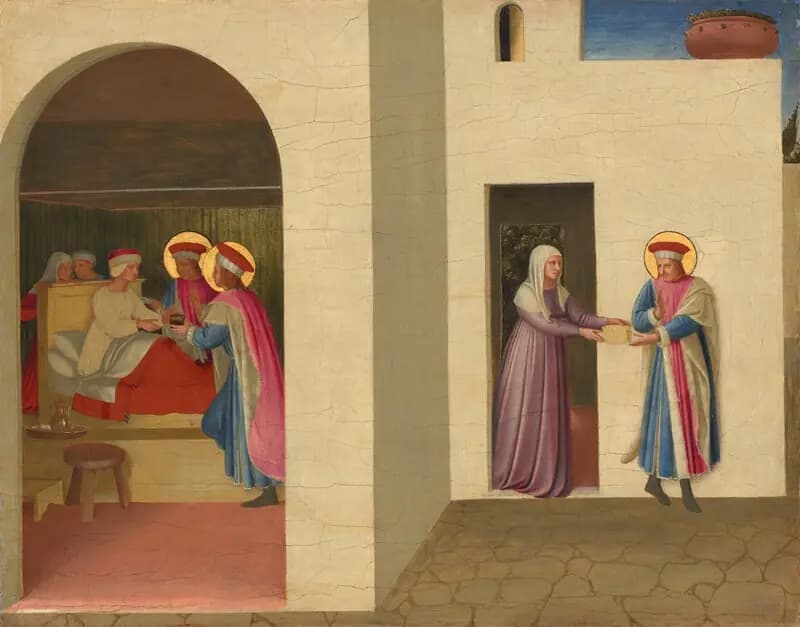
The Healing of Palladia by Saint Cosmas and Saint DamianНациональная галерея искусства, Вашингтон. Samuel H. Kress Collection · Источник изображения · Open Access NGA: изображение без ограничений использования (openaccess=1). The Healing of Palladia by Saint Cosmas and Saint Damian
Атрибуция источника: Fra Angelico
История бытования по музейному каталогу
High altar of the church of San Marco, Florence, from about 1440 until about 1677.[1] Possibly in the passageway to the sacristy of the same church, by 1758,[2] or in the _Spezieria_ of the Convent of San Marco (recorded here in the early 19th century).[3] possibly in the Galleria dell'Accademia, Florence, after 1810-1812, and from here (if not directly from the _Spezieria_) in private hands.[4] James-Alexander, comte de Pourtalès-Gorgier [1776-1855], Paris, by 1841; (his sale, Hôtel Pourtalès-Gorgier, Paris, 27 March-4 April 1865, no. 86, as by Masaccio); probably Edmond [1822-1896] and Jules Huot [1830-1870] de Goncourt, Paris.[5] (Julius Böhler); (acquired 15 February 1923 by Kunsthandel AG Lucerne);[6] purchased 9 June 1923 by Albert Keller [1879-1939], New York; (purchased 27 February 1939 by Duveen Brothers, Inc., London and New York);[7] sold 1944 to the Samuel H. Kress Foundation, New York;[8] gift 1952 to NGA. [1] Vasari, in the second edition of his _Lives_ (1568), states that along with the main image, the predella of the altarpiece on the high altar of San Marco, representing "storie del martirio di San Cosimo e Damiano e degli altri" ("stories of the martyrdom of Saints Cosmas and Damian and of others"), is also the work of Fra Angelico; see Giorgio Vasari, _Opere_, ed. Gaetano Milanesi, 9 vols., Florence, 1878-1885: 2(1878): 508-509 (2nd ed. 1906, reprinted 1981, 1998). Another equally rare elaboration of the legend of the two saints was realized in Angelico's workshop in the so-called Annalena altarpiece (its main panel is now in the Museo di San Marco along with six elements of the predella; a seventh from the same series belongs to the Kunsthaus, Zurich; see John Pope-Hennessy, _Fra Angelico_, 2nd ed., London and New York, 1974: 211-212). The predellas of these two works have been confused in the literature (see note 4), but the one formerly completing the Annalena altarpiece cannot be related to the San Marco high altar because of the smaller size of the single scenes. It is now generally thought to be the work of an assistant, who has been identified as Zanobi Strozzi; see Licia Ragghianti Collobi, "Zanobi Strozzi Pittore," Part I: _CdA_ 22 (1950): 463-464. The San Marco altarpiece was probably removed for a restoration of the church that was to take place in 1678-1679. On the restoration, see Giuseppe Richa, _Notizie istoriche delle chiese fiorentine_, 10 vols., Florence, 1754-1762: 7(1758): 136. Already Giovanni Cinelli in his edition of Francesco Bocchi, _Le bellezze della città di Firenze_, Florence (1591), 1677: 16, reported that the old altarpiece had been moved to the Convent. [2] This location is indicated for the first time by Richa, _Notizie istoriche_, vol. 7 (1758): 143, and then by others up to Vincenzo Follini and Marco Rastrelli, _Firenze antica e moderna illustrate_, 8 vols., Florence, 1789-1802: 3(1791): 225; however, none mentions the predella. The old altarpiece was probably transferred to the passageway immediately after it was removed from the church, and it might have remained there until the suppression of the Dominican order in 1810. [3] Father Vincenzo Marchese, in his Memorie dei più insigni Pittori, Scultori e Architetti Domenicani, 2nd ed., 2 vols., Florence, 1854: 1:249, reports that "innanzi l'abolizione dei Conventi in Firenze erano nella Farmacia di San Marco sette tavolette dell'angelico rappresentanti...il martirio de'Santi Cosma e Damiano, e un'altra con la Deposizione di Croce dello stesso pittore" ("before the abolition of the Convents in Florence there were in the Pharmacy of San Marco seven panels by Angelico representing...the martyrdom of Saints Cosimo and Damian, and another with the Deposition from the Cross by the same painter"). It could be that among the "bellissimi quadri" ("beautiful pictures") that Cambiagi Gaetano (_L'Antiquario fiorentino o sia guida per osservar con metodo le cose notabili della città di Firenze_, Florence, 1765: 38) said could be seen in the _Spezieria_, there were also elements of the predella, already separated from the main altarpiece and divided into individual panels. The transfer of the panels into the _Spezieria_ is recorded also by a label glued to the back of the _Deposition_ in the Alte Pinakothek in Munich (WAF 38a) which reads: "Copia. Il quadro di Fra Angelico che si trova presso lo Speziale di St. M.co"; see _Briefwechsel zwischen Ludwig I von Bayern und Georg von Dillis_, 1807-1841, ed. by R. Messerer, Munich, 1966: 356. [4] Neither the panel now in Washington nor its companions were ever in the Saint Luke chapel in Santissima Annunziata, where in the early nineteenth century there were six panels with stories of the same saints; these, belonging to the Annalena altarpiece, entered the Gallereia dell'Accademia in Florence in 1854 (Galerie des petits tableaux, no. 22; see _Description des objets d'Art de la Royal Académie des Beaux-Arts de Florence_, 12th ed., Florence, 1854: 29) and were subsequently transferred to the Museo di San Marco. The author of the _Descrizione dell'Ie e R.e Accademia delle Belle Arti di Firenze_ , Florence, 1817: 22 n. 1; Maselli and Montani, 1832-1838, 307, n. 15; and other writers erroneously thought that six Cosmas and Damian panels then in Santissima Annunziata had originally belonged to the high altar of San Marco. The series that concerns us here probably stayed in the _Spezieria_ of San Marco only a short time. Already in 1813 the _Deposition_ now in Munich was sold by a group of persons who seem to have owned it jointly ("Das Bild von Fra Angelico... welches 14 Patronen hat.." ("the picture by Angelico, the property of fourteen persons"), as Georg von Dillis explained to the purchaser, Prince Ludwig of Bavaria; see Briefwechsel..., ed. Messerer, 1966: 356). The above-mentioned _Descrizione..._ (1817: 22, 24) reports that in the Galleria di Quadri Piccoli of the Accademia delle Belle Arti there were three "istorie di cinque Martiri" ("histories of five martyrs"), while the second edition of the same work (1827: 28) mentions only two, as do all the subsequent editions of the catalogue. These are _The Healing of the Deacon Justinian by Cosmas and Damian_ and _The Burial of the Two Saints and Their Three Younger Brothers_, now part of the collection of the Museo di San Marco. The third panel can probably be identified as _The Beheading of the Saints_ (Louvre, RF 340); on its back is a label dated 10 October 1817, according to which the work was transferred to the Accademia from San Marco and then given in exchange to a Prof. Nicola Tacchinardi (see Thomas Bodkin, "A Fra Angelico Predella," _The Burlington Magazine_ 58 [1931]: 188, 194). As for the remaining five panels, we have no record of their transfer to the Accademia, and like the _Deposition_, they apparently came onto the Florentine art market directly from the _Spezieria_ of San Marco. Marchese (1854: 249) states that this was the provenance of the four panels in the Alte Pinakothek in Munich (WAF 36-38 and WAF 38a) and identifies them as "quattro quadretti dell'Angelico, rappresentanti storie del martirio dei santi Cosma e Damniano, ch'erano a San Marco...in Germania" ("four little paintings by Angelico, representing stories of the martyrdom of Saints Cosimo and Damiano, which were in San Marco [and now are] in Germany"), which were apparently restored in Florence in 1817 by Luigi Scotti. Of the paintings in the series now in Munich, _The Saints before Lycias_, _Lycias Possessed by Devils_, and _The Saints Crucified_ reached their current destination only in 1827, and thus ten years earlier could still have been in Florence; see C. Syre, "Wirken Sie was Sie vermögen! Die Erwerbungen italienischer Gemälde in der Korrispondenz mit den Kunstagenten," _'Ihm, welcher der Andacht Tempel baut.' Festschrift zum Jubilaümsjahr 1986_, Munich, 1986: 49. The fourth painting restored by Scotti in 1817 must therefore have been a different one from the _Deposition_ by Fra Angelico, which was already in Munich in 1813. It might perhaps be _The Saints Saved from Fire_ now in the National Gallery in Dublin (no. 249), which in 1848 was still in Florence, in the collection of Francesco Lombardi and Ugo Baldi (see Giorgio Vasari, _Le vite de' più eccellenti pittori, scultori e architetti_, 14 vols., Florence, 1568, ed. Le Monnier, 1846-1879: 4[1848]: 28-29 note 4); but it could also be the Washington painting, which is mentioned for the first time in Paris, in the Pourtalès-Gorgier collection, only in 1841 (see Léon-Jean-Joseph Dubois, _Description des tableaux faisant partie des collections de M. le Comte de Pourtalès-Gorgier_, Paris, 1841: 3, no. 3, as by Masaccio). [5] A handwritten note with the name of the purchaser in the sale catalogue has been read as "de Zincourt" (Fern Rusk Shapley, _Catalogue of the Italian Paintings_, 2 vols., Washington, D.C., 1979: 1:9), although with a question mark. Ellis Waterhouse (written communication to the Gallery, 22 July 1980) suggests instead the reading "de Goncourt," referring, obviously, to the two Parisian novelists, critics, and collectors, who were great admirers of quattrocento painting. [6] See stock card L-3993, Karteikarte Luzern, Bóhler Archiv, Zentralinstitut für Kunstgeschichte, Munich (permalink http://boehler.zikg.eu/content/63176081ace99). Although the incoming date is noted as 15 February 1922, an annotation on the Böhler Archive website clarifies that 1923 was meant. “L Bohler” is given as the source of the painting, but the Böhler Archive interprets this as Julius Böhler, owner of the Kunsthandel AG Lucerne together with Fritz Steinmeyer. The bank Koenigs Amsterdam was also involved in the transaction. The stock card also provides the sale date to Keller. [7] Duveen Brothers Records, accession number 960015, Getty Research Institute, Los Angeles, box 222, folder 23, reel 77. [8] The painting has been hanging in the National Gallery since 1945, when it was still part of the Kress collection (see _Paintings and Sculpture from the Kress Collection_, National Gallery of Art, Washington, D.C., 1945 (reprinted 1947, 1959): 32). See also The Kress Collection Digital Archive, https://kress.nga.gov/Detail/objects/2188.
c. 1438/1440 · tempera and oil on poplar panel · painted surface: 36.2 × 46.3 cm (14 1/4 × 18 1/4 in.) framed: 50.17 × 59.69 × 8.89 cm (19 3/4 × 23 1/2 × 3 1/2 in.) support: 38.1 × 47.5 cm (15 × 18 11/16 in.) · National Gallery of Art, Washington · 1952.5.3
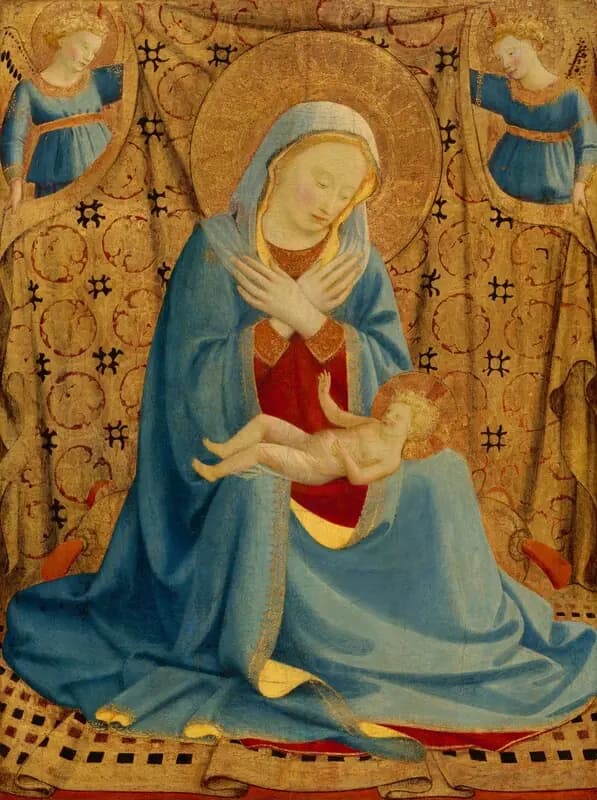
The Madonna of HumilityНациональная галерея искусства, Вашингтон. Andrew W. Mellon Collection · Источник изображения · Open Access NGA: изображение без ограничений использования (openaccess=1). The Madonna of Humility
Атрибуция источника: Fra Angelico
История бытования по музейному каталогу
Anonymous collection or dealer, Italy; acquired in the late 19th century by Edward Steinkopff [1837-1906], Lydhurst, Waringlid, Haywards Heath, Sussex;[1] by inheritance to his daughter, Mary Margaret Steinkopff Stewart-Mackenzie [later Baroness Seaforth, d. 1933], Brahan Castle, Highland, Scotland. family of the barons of Castelmuro, by 1935;[2] (Robert Frank, Ltd., London);[3] (Rudolf Heinemann [Pinakos, Inc], Lugano) half share with (M. Knoedler & Co., New York and London); purchased 30 December 1936 by The A.W. Mellon Educational and Charitable Trust, Pittsburgh;[4] gift 1937 to NGA. [1] The date of Edward Steinkopff's death is given in the Knoedler prospectus, in NGA curatorial files. A sale of the collection of "the late Edward Steinkopff" took place on 26 February 1909 at Christie's in London. Steinkopff's daughter (and only child) was married in 1899 to James Alexander Francis Humberston Stewart-Mackenzie, who was created the 1st baron Seaforth in 1921 and who died in 1923. [2] A photograph in the archives of the Museo di Castello Sforzesco in Milan (no. 2430 D; a print is also preserved in the photographic collection of the Kunsthistorisches Institut in Florence) shows the NGA painting repainted, probably after suffering a radical cleaning most likely having occurred at the time of the change in ownership in the mid-1930s. The photograph probably dates before 28 April 1936, when the director of the museum in Milan, Giorgio Nicodemi, wrote a letter (in NGA curatorial files), documenting the fact that the painting, which he hoped would be donated to the Castello Sforzesco, had already been shown to him. According to a note attached to the negative of the photograph in the photographic archive of the museum, the painting, owned by the family of the barons of Castelmuro, was at that time (1935) exhibited at the Museo Navale in Milan. [3] See Knoedler stock book no. 8, p. 156 and Knoedler sales book no. 13, p. 366, M. Knoedler and Co. records, Getty Research Institute, Los Angeles (copies NGA curatorial files). According to a letter from R. Heinemann, Lugano, to C. Henschel of the firm M. Knoedler & Co., New York (copy in NGA curatorial files), the painting was shipped to New York on 29 April 1936. [4] The date of purchase is given in the Mellon collection records, in NGA curatorial files.
c. 1430 · tempera on panel · painted surface: 60.7 x 45.2 cm (23 7/8 x 17 13/16 in.) support: 62.8 x 47.2 cm (24 3/4 x 18 9/16 in.) · National Gallery of Art, Washington · 1937.1.5
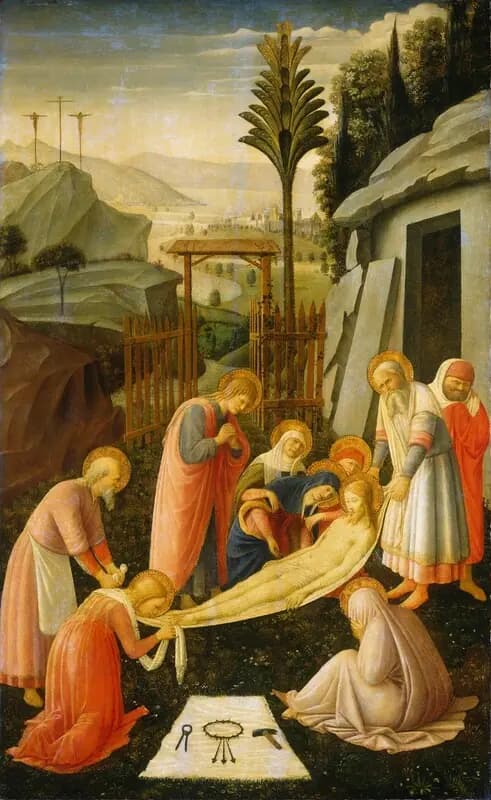
The Entombment of ChristНациональная галерея искусства, Вашингтон. Samuel H. Kress Collection · Источник изображения · Open Access NGA: изображение без ограничений использования (openaccess=1). The Entombment of Christ
Предположительная атрибуция
Атрибуция источника: Attributed to Fra Angelico
История бытования по музейному каталогу
Possibly the Medici family, Florence, by 1492.[1] (Stefano Bardini [1836-1922], Florence). (Professor Luigi Grassi [1858-1937], Florence); purchased January 1923 by (Duveen Brothers, Inc., London and New York).[2] Henry Goldman [1857-1937], New York, by 1924.[3] (Duveen Brothers, Inc., London and New York); sold March 1937 to the Samuel H. Kress Foundation, New York;[4] gift 1939 to NGA. [1] See Eugene Müntz, _Les Collections des Médicis au XVe siècle_, Paris, 1888: 64; among the belongings in Lorenzo de' Medici's chamber is "una tavoletta dipintovi Nostro Signore morto chon molti santi che lo portano al sepolcro, di mano di fra Giovanni" ("a little panel with painted on it Our dead Lord with many saints who are carrying him to the sepulchre, from the hand of Fra Giovanni"). Although the description is by no means precise, the relative rarity of the subject strongly suggests identification with NGA 1939.1.260. [2] The date of passage of the work to Stefano Bardini is not known (see Fiorenza Scalia and Cristina De Benedictis, _Il Museo Bardini à Florence_, Milan, 1984: 125). The provenance from the Bardini and Grassi collections is indicated by Frida Schottmüller, _Fra Angelico da Fiesole. Des Meisters Gemälde_, Berlin and Leipzig, 1924: no. 180, 266. Duveen Brothers Records list the painting as "ex Bardini" and itemize a commission paid to "Tolentino" (X Book, Reel 422, Duveen Brothers Records, accession number 960015, Research Library, The Getty Research Institute, Los Angeles). [3] The panel was shipped to New York in the spring of 1923, and exhibited there in 1924 as part of the Goldman collection. A letter from Bernard Berenson to Henry Goldman, dated 27 February 1924 (copy in NGA curatorial files), in which the scholar congratulates the collector on the acquisition of "that beautiful Fra Angelico," would indicate the panel was a recent addition. It was likely purchased from Duveen Brothers. [4] The Duveen Brothers letter confirming the sale of twenty-four paintings, including NGA 1939.1.260, is dated 9 March 1937; provenance is given as "Henry Goldman Collection" (copy in NGA curatorial files; Box 474, Folder 5, Duveen Brothers Records, accession number 960015, Research Library, The Getty Research Institute, Los Angeles). See also The Kress Collection Digital Archive, https://kress.nga.gov/Detail/objects/2163.
c. 1450 · tempera on poplar panel · overall: 88.9 x 54.9 cm (35 x 21 5/8 in.) · Национальная галерея искусства, Вашингтон · 1939.1.260
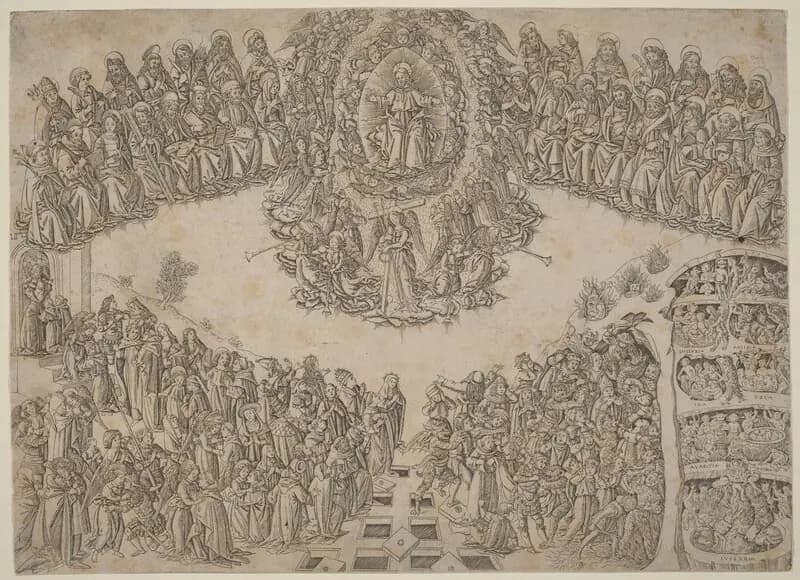
The Last JudgmentНациональная галерея искусства, Вашингтон. Rosenwald Collection · Источник изображения · Open Access NGA: изображение без ограничений использования (openaccess=1). The Last Judgment
Пометка «по оригиналу» (after)
Атрибуция источника: Francesco di Lorenzo Rosselli after Fra Angelico
История бытования по музейному каталогу
Friedrich August II, King of Saxony [1797-1854], Dresden; (sale, C.G. Boerner, Leipzig, May 7-9, 1928, no. 66); purchased by Lessing J. Rosenwald [1891-1979], Jenkintown, PA (Lugt 1760b); gift to NGA, 1943.
c. 1480/1490 · engraving · sheet: 35.6 x 49 cm (14 x 19 5/16 in.) · Национальная галерея искусства, Вашингтон · 1943.3.1347
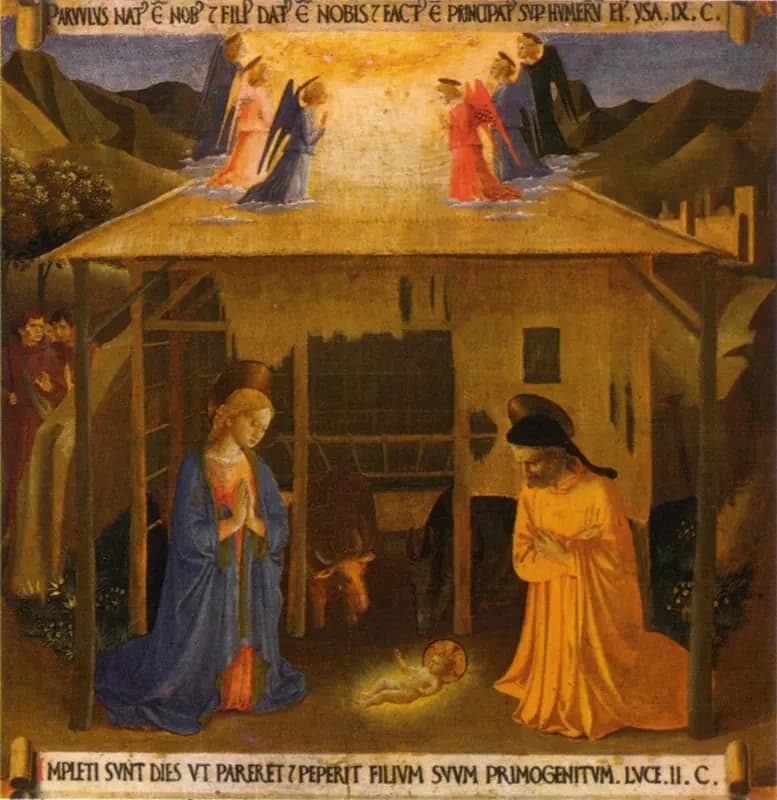
NativityFra Angelico; John Pope-Hennessy, Beato Angelico, Scala, Firenze 1981. · Источник изображения · Public domain Nativity
Атрибуция источника: Fra Angelico
Собрание не указано источником.
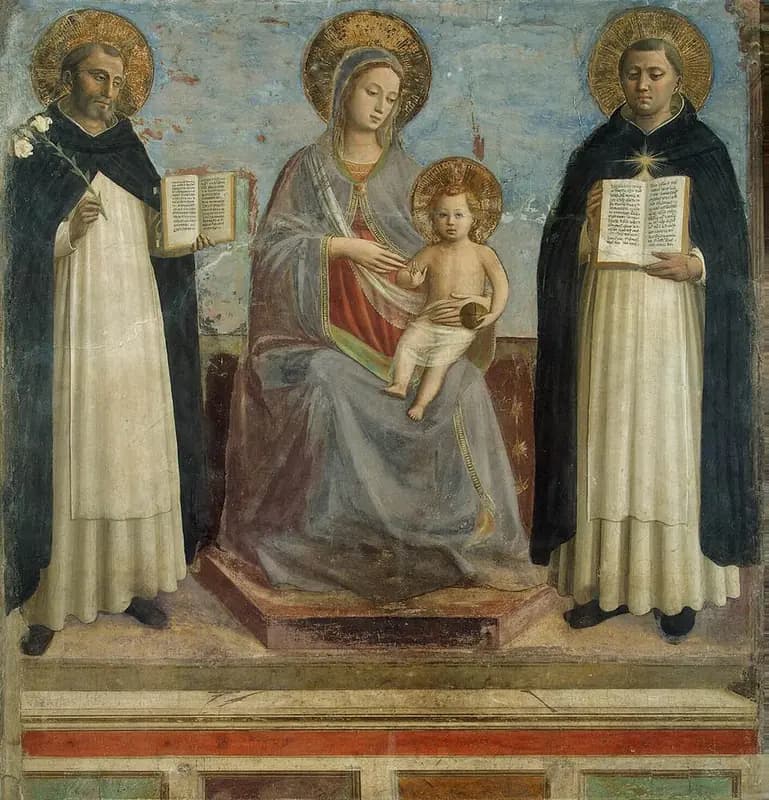
Virgin and Child with Sts Dominic and Thomas AquinasFra Angelico; http://www.wga.hu/cgi-bin/highlight.cgi?file=html/a/angelico/14/0fresco.html&find=Dominic · Источник изображения · Public domain Virgin and Child with Sts Dominic and Thomas Aquinas
Атрибуция источника: Fra Angelico
Собрание не указано источником.
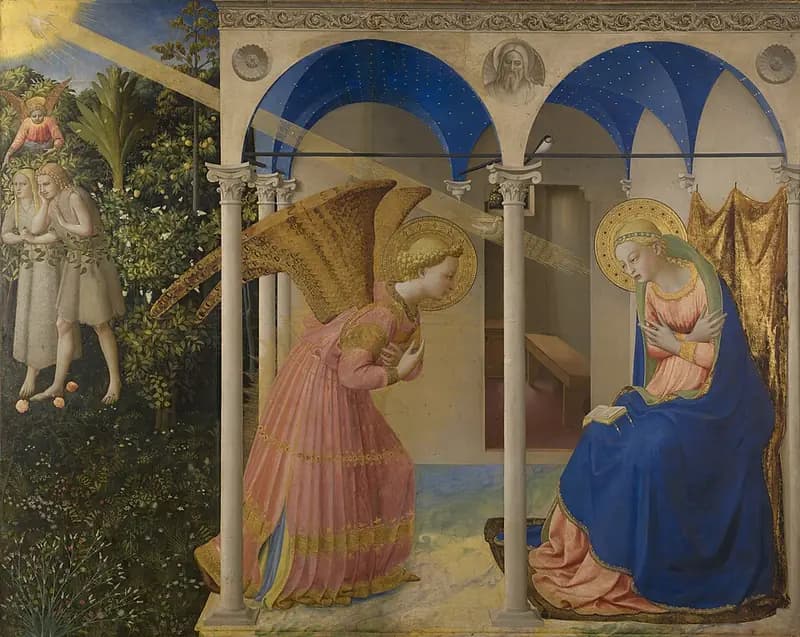
AnnunciationFra Angelico; Based on same source tiles as File:La Anunciación, by Fra Angelico, from Prado in Google Earth.jpg but cropped. JPEG compression quality Photoshop 9. · Источник изображения · Public domain Annunciation
Атрибуция источника: Fra Angelico
Собрание не указано источником.
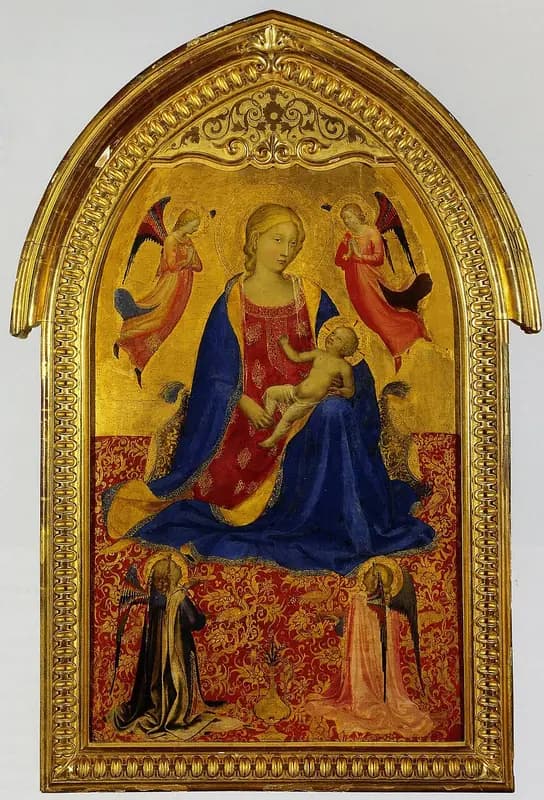
Madonna of HumilityFra Angelico; Web Gallery of Art : Image Info about artwork · Источник изображения · Public domain Madonna of Humility
Атрибуция источника: Fra Angelico
Собрание не указано источником.
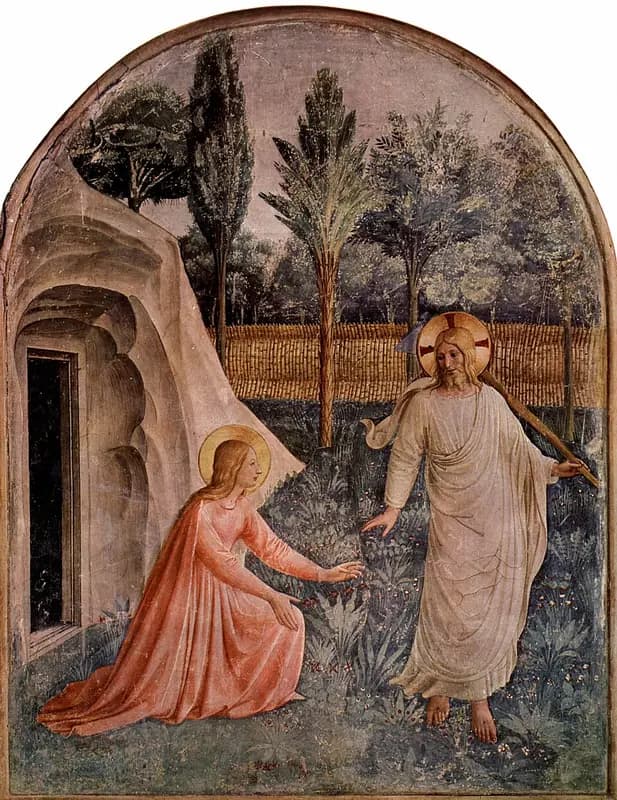
Noli Me Tangere - Do not hold me.Fra Angelico; The Yorck Project (2002) 10.000 Meisterwerke der Malerei (DVD-ROM), distributed by DIRECTMEDIA Publishing GmbH. ISBN : 3936122202 . · Источник изображения · Public domain Noli Me Tangere - Do not hold me.
Атрибуция источника: Fra Angelico
Собрание не указано источником.
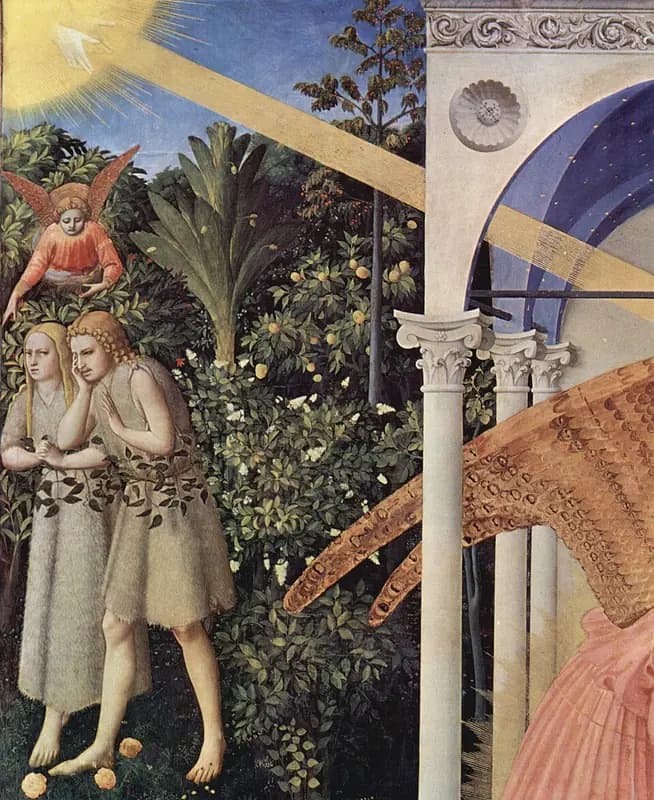
Verkündigung an Maria, Altarretabel mit 5 Predellatafeln aus dem Marienleben, Haupttafel, Szene: Verkündigung, Detail: Adam und Eva Vertreibung aus dem ParadiesFra Angelico; The Yorck Project (2002) 10.000 Meisterwerke der Malerei (DVD-ROM), distributed by DIRECTMEDIA Publishing GmbH. ISBN : 3936122202 . · Источник изображения · Public domain Verkündigung an Maria, Altarretabel mit 5 Predellatafeln aus dem Marienleben, Haupttafel, Szene: Verkündigung, Detail: Adam und Eva Vertreibung aus dem Paradies
Атрибуция источника: Fra Angelico
Собрание не указано источником.
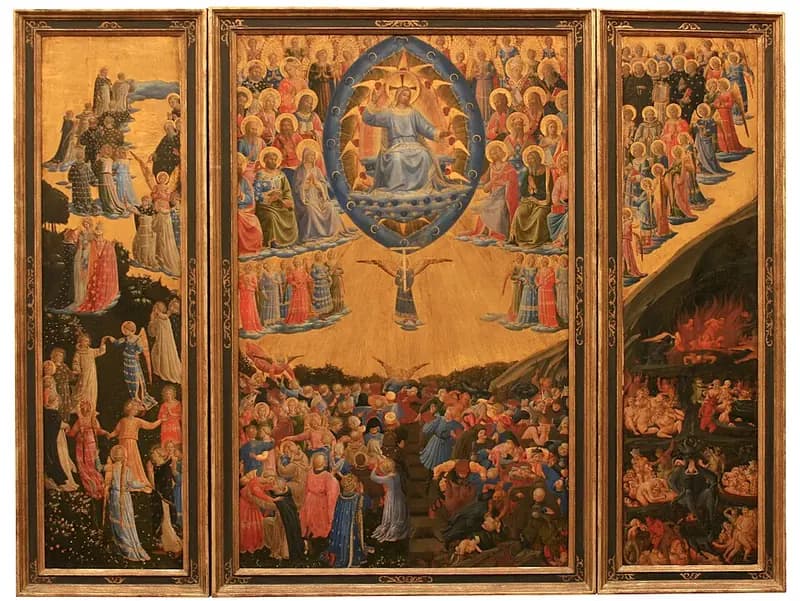
Fra Angelico JungsteGericht berlinFra Angelico; picture took at Gemaelde Galerie · Источник изображения · Public domain Fra Angelico JungsteGericht berlin
Атрибуция источника: Fra Angelico
Собрание не указано источником.
The Crucifixion
Атрибуция источника: Artist — Fra Angelico (Guido di Pietro)
possibly ca. 1440 · Tempera transferred to canvas, laid down on wood, gold ground · 13 3/8 x 19 3/4 in. (34 x 50.2 cm); set in panel 15 3/4 x 21 1/4 in. (40 x 54 cm) · The Metropolitan Museum of Art, New York · 14.40.628
Cortona Triptych
Собрание не указано источником.
Капелла Никколина
Собрание не указано источником.
Fiesole Altarpiece
Собрание не указано источником.
Алтарь Сан-Марко
Собрание не указано источником.
Благовещение
Собрание не указано источником.
The Healing of Palladia by Saints Cosmas and Damian
Собрание не указано источником.
Saint Anthony Abbot Shunning the Mass of Gold
Собрание не указано источником.
Story of saint Nicholas
Собрание не указано источником.
Дарохранительница с изображением Христа и ангелов
Собрание не указано источником.
Blessing Redeemer
Собрание не указано источником.


Дата подготовки справки: 11 ноября 2026 г..
Литература для дальнейшего исследования
- Boskovits, Miklós, and David Alan Brown, et al. Italian Paintings of the Fifteenth Century. The Systematic Catalogue of the National Gallery of Art. Washington, D.C., 2003: 8. Источник библиографической записи
- Bonsanti, Giorgio. Beato Angelico. Catalogo completo. Florence, 1998. Источник библиографической записи
- Spike, John T. Fra Angelico. New York, London, and Paris, 1996. Источник библиографической записи
- Немецкая академия зодчества, ваяния и живописи Источник библиографической записи
- Жизнеописания наиболее знаменитых живописцев, ваятелей и зодчих Источник библиографической записи
- Большая советская энциклопедия, 1926—1947 Источник библиографической записи
- Цифровая библиотека Европейской библиотеки по информации и культуре Источник библиографической записи
- Нуттоллова энциклопедия Источник библиографической записи
- Энциклопедический словарь Брокгауза и Ефрона, 1890—1907 Источник библиографической записи
- Малый энциклопедический словарь Брокгауза и Ефрона Источник библиографической записи
- Leben und Werke des Fra Giovanni Angelico de Fiesole Источник библиографической записи
- Fra Giovanni Angelico da Fiesole. Sein Leben und seine Werke Источник библиографической записи
- Fra Angelico Источник библиографической записи
- Британская энциклопедия, 1910—1911 Источник библиографической записи
- The New Student's Reference Work Источник библиографической записи
- Энциклопедический словарь Гранат Источник библиографической записи
- Армянская советская энциклопедия, том 1 Источник библиографической записи
- Fra Angelico at San Marco Источник библиографической записи
- Angelico Источник библиографической записи
Источники исследования
- The Metropolitan Museum of Art — открытые данные коллекции (CC0)
- National Gallery of Art — открытые данные коллекции (CC0)
- Wikidata — сведения об образовании, профессиональных связях и собраниях
- Википедия — полный текст статьи
- Национальная галерея искусства: открытые каталожные данные (CC0)
- Метрополитен-музей: открытые каталожные данные (CC0)
Условия использования метаданных приведены в источниках. Лицензия каждого изображения указана у репродукции.
Произведения
Справочные примеры творчества. Эти произведения не предлагаются к продаже нашим салоном.

Cortona Triptych
1437 · Diocesan Museum in Cortona
Если у вас есть произведение этого автора
Для предварительного обсуждения подготовьте общий вид предмета, фотографии подписи, оборота или основания, размеры и сведения о происхождении. Музейные записи помогут уточнить творческий контекст автора.
Сотрудники салона рассмотрят материалы и обсудят необходимые дальнейшие исследования. На оценку влияют авторство, техника, время создания, сохранность и история владения.
Источники
Биографический текст подготовлен редакцией по указанным исследованиям и каталогам; справочные сведения и изображения сопровождаются отдельными источниками. Исторические сведения и атрибуция могут уточняться; исходные записи доступны по ссылкам.
- Биографические сведения — Wikidata
- Запись произведения — Wikidata
- Дополнительный источник: www.metmuseum.org
- Дополнительный источник: www.nationalgallery.org.uk
- Дополнительный источник: ru.wikipedia.org
Структурированные данные Wikidata — CC0. Лицензия каждого изображения указана под ним. Портрет может быть живописным изображением или исторической фотографией.
Справочные фрагменты из статей Википедии и их авторов доступны на условиях CC BY-SA 4.0. Выполнены отбор, сокращение и редакционная обработка; ссылки на статьи приведены у соответствующих материалов. Лицензии изображений указаны отдельно.
 WhatsApp
 Telegram
 MAX