
Произведения этого художника в общем каталоге
Биография и творчество
Бернардино Луини — итальянский живописец и рисовальщик ломбардского Возрождения. Сведения о его жизни фрагментарны; по свидетельству Джованни Паоло Ломаццо, он учился у Джан Стефано Скотто. Его искусство сложилось на пересечении местной миланской традиции и новых решений Леонардо да Винчи и Рафаэля. Особенно заметно влияние Леонардо в типах лиц, светотени и построении камерных религиозных композиций.
Луини работал в Милане, Саронно, Лугано и других городах Ломбардии, создавая как фресковые циклы, так и картины на дереве. К ранним произведениям относится полиптих для церкви Маджанико, написанный вскоре после 1510 года. Среди известных станковых работ — «Христос среди учителей» и «Мадонна с младенцем и святым Иоанном». В 1529–1532 годах художник исполнил монументальную фреску Страстей Христовых в Санта-Мария-дельи-Анджели в Лугано. Его произведения высоко ценил кардинал Федерико Борромео, собиравший оригиналы и заказывавший копии. Впоследствии живопись Луини сохраняла популярность у европейских коллекционеров.
Место рождения: Runo. Место смерти: Лугано, Милан.
В подборке представлено произведение «Villa La Pelucca frescoes» (1520). Собрание: Пинакотека Брера. Подпись и источник изображения приведены ниже: они позволяют перейти к исходной записи и уточнить сведения о работе.
Подготовлено редакцией салона по материалам указанных источников. Открыть основной источник биографии.
Обновлено
Примечание к справке и источникам: В справочных и исследовательских источниках есть разночтения; в подписи отражена неопределённость. Точные спорные даты или места в биографии не утверждаются.
- Годы жизни
- около 1480–1482 — 1532
- Место рождения
- Runo
- Место смерти
- Лугано; Милан
Хронология
1500 — Переселился в Милан. Источник
Собрания и коллекции
- National Gallery of Art, Washington
- Штеделевский художественный институт
- Прадо
- Музей Тиссена-Борнемисы
- Национальная галерея искусства
- Национальная галерея Канады
- Уффици
- Nivaagaard Museum
- Национальная галерея Ирландии
- Музей изящных искусств Бостона
- Национальный музей в Варшаве
- Пинакотека Брера
- Лондонская национальная галерея
- Пинакотека Амброзиана
- Музей Вальрафа-Рихарца
- Художественный музей Уолтерса
- Бруклинский музей
- Государственный музей искусств
- Художественный музей Филадельфии
- Эрмитаж
- Художественный музей Индианаполиса
- Музей истории искусств
- Музей изящных искусств
- Национальная картинная галерея Армении
- Баварские государственные собрания картин
- Музей Изабеллы Стюарт Гарднер
- Музей изобразительных искусств
- Музей Фицуильяма
- Смитсоновский музей американского искусства
- Гарвардский художественный музей
- Нью-Йоркское историческое общество
- Собрание Уоллеса
- Галерея Альбертина
- Musée des Beaux-Arts de Menton
- Детройтский институт искусств
- Художественный музей Кливленда
- Музей Конде
- Художественный музей Фогга
- Музей фюрера
- Национальный музей искусств Азербайджана
- Берлинская картинная галерея
- Bryan Gallery of Christian Art
- Musée des beaux-arts de Nîmes
- Музей Виктории и Альберта
- Эпсли-хаус
- Музей Ринглинг
- York Art Gallery
- Коллекция печатных изданий
- Музей Бойманса-ван Бёнингена
- Галерея Курто
- Музей изящных искусств Дижона
- Museo d'Arte Antica
- San Maurizio al Monastero Maggiore
- Национальный музей изящных искусств
- Государственный музей изобразительных искусств имени А. С. Пушкина
- Музей Феша
- Музеи Эремитани
- Музей Соумайя
- Государственный музей изящных искусств в Гаване
- Pinacoteca del Castello Sforzesco
- Национальный музей искусств Румынии
- Коллекция Лихтенштейнов
- Музей Польди-Пеццоли
- Национальные музей и галерея Каподимонте
- Художественный музей Сан-Диего
- Национальная галерея искусства, Вашингтон
- Метрополитен-музей, Нью-Йорк
Сведения о собраниях приведены по указанным источникам. Наличие в коллекции не означает, что произведение находится в открытой экспозиции. Доступность уточняйте у владельца собрания.
Произведения и каталожные записи
В справочнике 33 каталожных записей, связанных с художником. Здесь показана подборка; открыть все записи в каталоге.
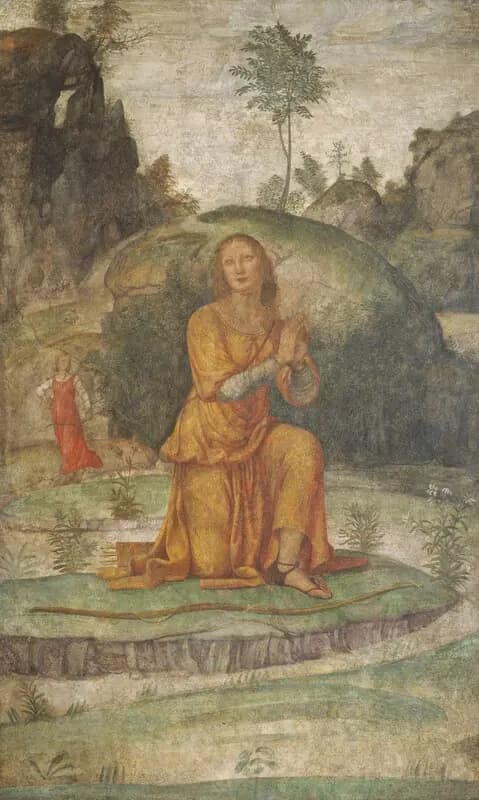
Procris' Prayer to DianaНациональная галерея искусства, Вашингтон. Samuel H. Kress Collection · Источник изображения · Open Access NGA: изображение без ограничений использования (openaccess=1). Procris' Prayer to Diana
Атрибуция источника: Bernardino Luini
История бытования по музейному каталогу
Commissioned c. 1522 by Gerolamo Rabia for either the Casa Rabia, Milan, or his country house, La Pelucca, near Monza.[1] Michele Cavaleri, Milan; sold 1873 to Enrico (Henri) Cernuschi [1821-1896], Paris and Menton, until at least 1895.[2] (Charles Sedelmeyer, Paris), by 1897.[3] Rodolphe Kann [d. 1905], Paris, by 1900;[4] his estate; sold 1907 to (Duveen Brothers, Inc., London, New York, and Paris); sold 1942 to the Samuel H. Kress Foundation, New York;[5] gift 1943 to NGA. [1] See the discussion in Fern Rusk Shapley, _Catalogue of the Italian Paintings_, 2 vols., Washington, D.C., 1979: 1:285-288. If the frescoes were in the Casa Rabia, on the Piazza San Sepolcro in Milan, the house passed out of the family about 1530, but the paintings remained in place since they were not removed until about 1800. Among the subsequent owners of the house were the Palletta and Silva families. [2] The ownership of the frescoes by Cavaleri and Cernuschi, as well as other information about the provenance is discussed in detail by Luca Beltrami, _Luini, materiale de studio_, Milan, 1911: 188-198. Cavaleri was a Milanese lawyer who began collecting around 1845 and from 1870 on opened to the public what by then had come to be called the Cavaleri Museum. The owner hoped that the collection would be purchased by the city of Milan, but when negotiations fell through, he sold the entire collection to Cernuschi on 13 April 1873 (see Alessandra Mottola Molfino, "Collezionismo e mercato artistico a Milano," in _Zenale e Leonardo. Tradizione e rinnovamento della pittura lombarda_, Milan, 1982: 247-248). Cernuschi was a Milanese emigrant to France, and as he otherwise collected mainly objects of Asian Art (see Caroline Gyss-Vermande, "Cernuschi, Henri," in _Dictionary of Art_, 34 vols., New York, 1996: 6:345), it is likely he obtained his Italian paintings from the Cavaleri collection. [3] Charles Sedelmeyer, [catalogue], Paris, 1897: nos. 52-60. [4] _Gemälde-Sammlung des Herrn Rudolf Kann in Paris. 100 Photogravuren mit Text von Wilhelm Bode_, Vienna, 1900. [5] Fern Rusk Shapley, _Paintings from the Samuel H. Kress Collection: Italian Schools, XV-XVI Century_, London, 1968: 141-142. See also The Kress Collection Digital Archive, https://kress.nga.gov/Detail/objects/1736.
c. 1520/1522 · fresco · overall: 228.6 x 140.3 cm (90 x 55 1/4 in.) · National Gallery of Art, Washington · 1943.4.52
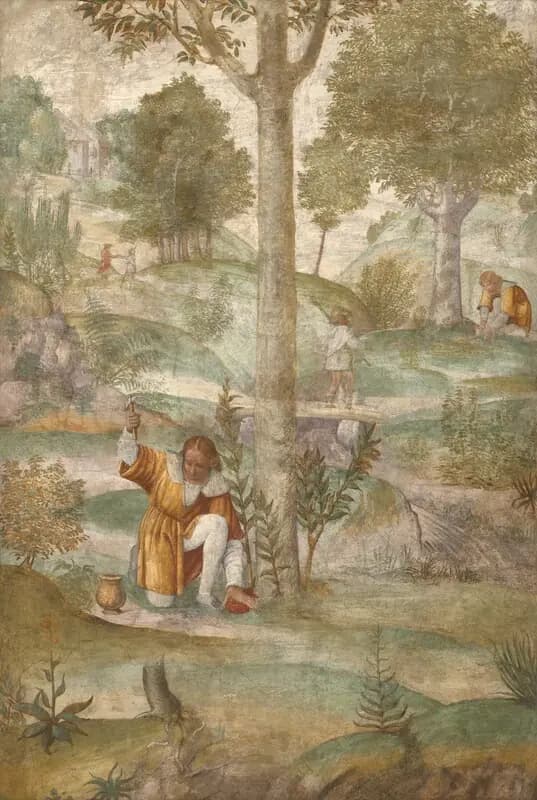
Cephalus Hiding the JewelsНациональная галерея искусства, Вашингтон. Samuel H. Kress Collection · Источник изображения · Open Access NGA: изображение без ограничений использования (openaccess=1). Cephalus Hiding the Jewels
Атрибуция источника: Bernardino Luini
История бытования по музейному каталогу
Commissioned c. 1522 by Gerolamo Rabia for either the Casa Rabia, Milan, or his country house, La Pelucca, near Monza.[1] Michele Cavaleri, Milan; sold 1873 to Enrico (Henri) Cernuschi [1821-1896], Paris and Menton, until at least 1895.[2] (Charles Sedelmeyer, Paris), by 1897.[3] Rodolphe Kann [d. 1905], Paris, by 1900;[4] his estate; sold 1907 to (Duveen Brothers, Inc., London, New York, and Paris); sold 1942 to the Samuel H. Kress Foundation, New York;[5] gift 1943 to NGA. [1] See the discussion in Fern Rusk Shapley, _Catalogue of the Italian Paintings_, 2 vols., Washington, D.C., 1979: 1:285-288. If the frescoes were in the Casa Rabia, on the Piazza San Sepolcro in Milan, the house passed out of the family about 1530, but the paintings remained in place since they were not removed until about 1800. Among the subsequent owners of the house were the Palletta and Silva families. [2] The ownership of the frescoes by Cavaleri and Cernuschi, as well as other information about the provenance is discussed in detail by Luca Beltrami, _Luini, materiale de studio_, Milan, 1911: 188-198. Cavaleri was a Milanese lawyer who began collecting around 1845 and from 1870 on opened to the public what by then had come to be called the Cavaleri Museum. The owner hoped that the collection would be purchased by the city of Milan, but when negotiations fell through, he sold the entire collection to Cernuschi on 13 April 1873 (see Alessandra Mottola Molfino, "Collezionismo e mercato artistico a Milano," in _Zenale e Leonardo. Tradizione e rinnovamento della pittura lombarda_, Milan, 1982: 247-248). Cernuschi was a Milanese emigrant to France, and as he otherwise collected mainly objects of Asian Art (see Caroline Gyss-Vermande, "Cernuschi, Henri," in _Dictionary of Art_, 34 vols., New York, 1996: 6:345), it is likely he obtained his Italian paintings from the Cavaleri collection. [3] Charles Sedelmeyer, [catalogue], Paris, 1897: nos. 52-60. [4] _Gemälde-Sammlung des Herrn Rudolf Kann in Paris. 100 Photogravuren mit Text von Wilhelm Bode_, Vienna, 1900. [5] Fern Rusk Shapley, _Paintings from the Samuel H. Kress Collection: Italian Schools, XV-XVI Century_, London, 1968: 141-142. See also The Kress Collection Digital Archive, https://kress.nga.gov/Detail/objects/466.
c. 1520/1522 · fresco · overall: 221.6 x 150.2 cm (87 1/4 x 59 1/8 in.) · National Gallery of Art, Washington · 1943.4.53
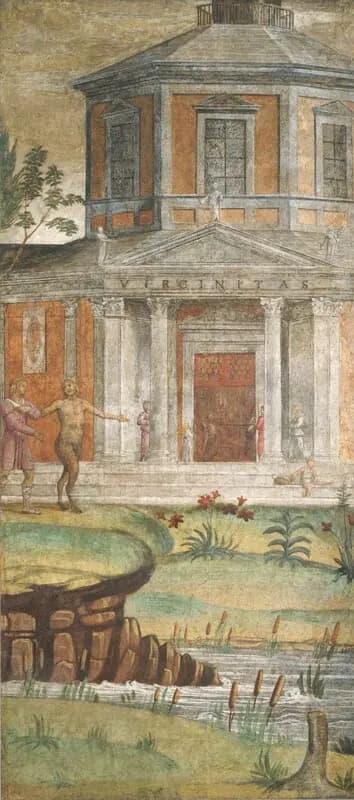
Cephalus and Pan at the Temple of DianaНациональная галерея искусства, Вашингтон. Samuel H. Kress Collection · Источник изображения · Open Access NGA: изображение без ограничений использования (openaccess=1). Cephalus and Pan at the Temple of Diana
Атрибуция источника: Bernardino Luini
История бытования по музейному каталогу
Commissioned c. 1522 by Gerolamo Rabia for either the Casa Rabia, Milan, or his country house, La Pelucca, near Monza.[1] Michele Cavaleri, Milan; sold 1873 to Enrico (Henri) Cernuschi [1821-1896], Paris and Menton, until at least 1895.[2] (Charles Sedelmeyer, Paris), by 1897.[3] Rodolphe Kann [d. 1905], Paris, by 1900;[4] his estate; sold 1907 to (Duveen Brothers, Inc., London, New York, and Paris); sold 1942 to the Samuel H. Kress Foundation, New York;[5] gift 1943 to NGA. [1] See the discussion in Fern Rusk Shapley, _Catalogue of the Italian Paintings_, 2 vols., Washington, D.C., 1979: 1:285-288. If the frescoes were in the Casa Rabia, on the Piazza San Sepolcro in Milan, the house passed out of the family about 1530, but the paintings remained in place since they were not removed until about 1800. Among the subsequent owners of the house were the Palletta and Silva families. [2] The ownership of the frescoes by Cavaleri and Cernuschi, as well as other information about the provenance is discussed in detail by Luca Beltrami, _Luini, materiale de studio_, Milan, 1911: 188-198. Cavaleri was a Milanese lawyer who began collecting around 1845 and from 1870 on opened to the public what by then had come to be called the Cavaleri Museum. The owner hoped that the collection would be purchased by the city of Milan, but when negotiations fell through, he sold the entire collection to Cernuschi on 13 April 1873 (see Alessandra Mottola Molfino, "Collezionismo e mercato artistico a Milano," in _Zenale e Leonardo. Tradizione e rinnovamento della pittura lombarda_, Milan, 1982: 247-248). Cernuschi was a Milanese emigrant to France, and as he otherwise collected mainly objects of Asian Art (see Caroline Gyss-Vermande, "Cernuschi, Henri," in _Dictionary of Art_, 34 vols., New York, 1996: 6:345), it is likely he obtained his Italian paintings from the Cavaleri collection. [3] Charles Sedelmeyer, [catalogue], Paris, 1897: nos. 52-60. [4] _Gemälde-Sammlung des Herrn Rudolf Kann in Paris. 100 Photogravuren mit Text von Wilhelm Bode_, Vienna, 1900. [5] Fern Rusk Shapley, _Paintings from the Samuel H. Kress Collection: Italian Schools, XV-XVI Century_, London, 1968: 141-142. See also The Kress Collection Digital Archive, https://kress.nga.gov/Detail/objects/464.
c. 1520/1522 · fresco · overall: 226 x 103.5 cm (89 x 40 3/4 in.) · National Gallery of Art, Washington · 1943.4.54
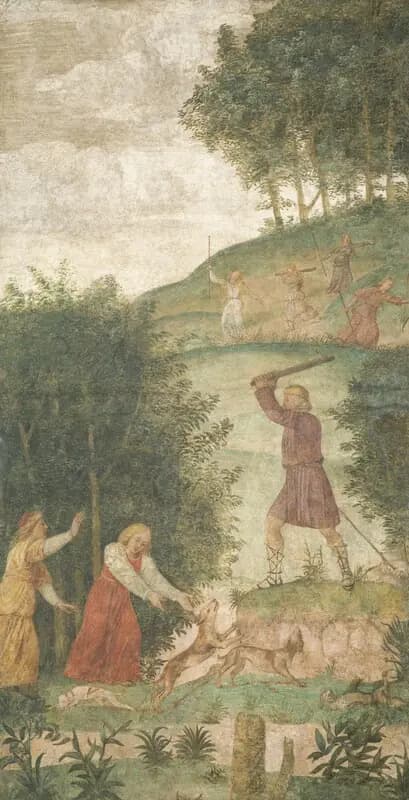
Cephalus Punished at the HuntНациональная галерея искусства, Вашингтон. Samuel H. Kress Collection · Источник изображения · Open Access NGA: изображение без ограничений использования (openaccess=1). Cephalus Punished at the Hunt
Атрибуция источника: Bernardino Luini
История бытования по музейному каталогу
Commissioned c. 1522 by Gerolamo Rabia for either the Casa Rabia, Milan, or his country house, La Pelucca, near Monza.[1] Michele Cavaleri, Milan; sold 1873 to Enrico (Henri) Cernuschi [1821-1896], Paris and Menton, until at least 1895.[2] (Charles Sedelmeyer, Paris), by 1897.[3] Rodolphe Kann [d. 1905], Paris, by 1900;[4] his estate; sold 1907 to (Duveen Brothers, Inc., London, New York, and Paris); sold 1942 to the Samuel H. Kress Foundation, New York;[5] gift 1943 to NGA. [1] See the discussion in Fern Rusk Shapley, _Catalogue of the Italian Paintings_, 2 vols., Washington, D.C., 1979: 1:285-288. If the frescoes were in the Casa Rabia, on the Piazza San Sepolcro in Milan, the house passed out of the family about 1530, but the paintings remained in place since they were not removed until about 1800. Among the subsequent owners of the house were the Palletta and Silva families. [2] The ownership of the frescoes by Cavaleri and Cernuschi, as well as other information about the provenance is discussed in detail by Luca Beltrami, _Luini, materiale de studio_, Milan, 1911: 188-198. Cavaleri was a Milanese lawyer who began collecting around 1845 and from 1870 on opened to the public what by then had come to be called the Cavaleri Museum. The owner hoped that the collection would be purchased by the city of Milan, but when negotiations fell through, he sold the entire collection to Cernuschi on 13 April 1873 (see Alessandra Mottola Molfino, "Collezionismo e mercato artistico a Milano," in _Zenale e Leonardo. Tradizione e rinnovamento della pittura lombarda_, Milan, 1982: 247-248). Cernuschi was a Milanese emigrant to France, and as he otherwise collected mainly objects of Asian Art (see Caroline Gyss-Vermande, "Cernuschi, Henri," in _Dictionary of Art_, 34 vols., New York, 1996: 6:345), it is likely he obtained his Italian paintings from the Cavaleri collection. [3] Charles Sedelmeyer, [catalogue], Paris, 1897: nos. 52-60. [4] _Gemälde-Sammlung des Herrn Rudolf Kann in Paris. 100 Photogravuren mit Text von Wilhelm Bode_, Vienna, 1900. [5] Fern Rusk Shapley, _Paintings from the Samuel H. Kress Collection: Italian Schools, XV-XVI Century_, London, 1968: 141-142.See also The Kress Collection Digital Archive, https://kress.nga.gov/Detail/objects/467.
c. 1520/1522 · fresco · overall: 211.4 x 110.3 cm (83 1/4 x 43 7/16 in.) · National Gallery of Art, Washington · 1943.4.55
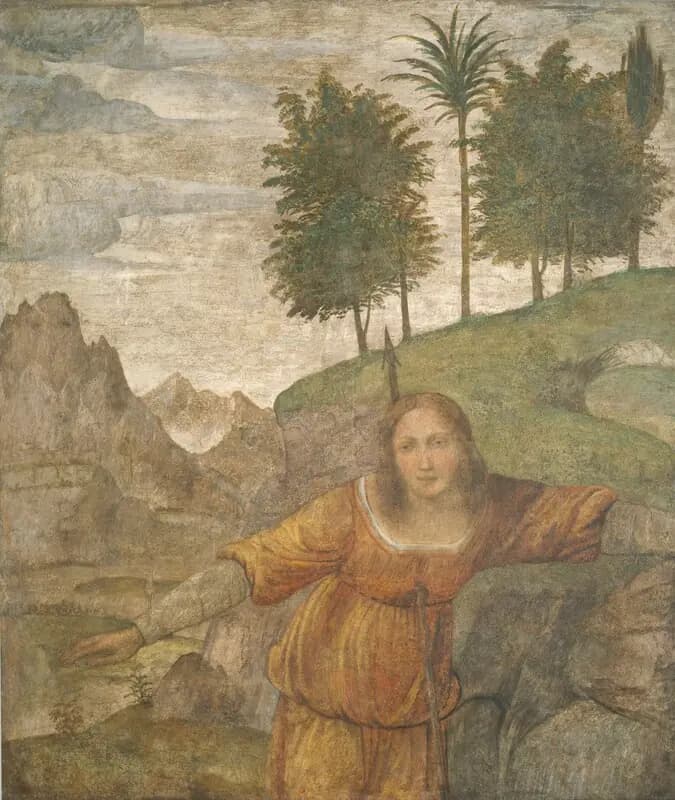
Procris Pierced by Cephalus' JavelinНациональная галерея искусства, Вашингтон. Samuel H. Kress Collection · Источник изображения · Open Access NGA: изображение без ограничений использования (openaccess=1). Procris Pierced by Cephalus' Javelin
Атрибуция источника: Bernardino Luini
История бытования по музейному каталогу
Commissioned c. 1522 by Gerolamo Rabia for either the Casa Rabia, Milan, or his country house, La Pelucca, near Monza.[1] Michele Cavaleri, Milan; sold 1873 to Enrico (Henri) Cernuschi [1821-1896], Paris and Menton, until at least 1895.[2] (Charles Sedelmeyer, Paris), by 1897.[3] Rodolphe Kann [d. 1905], Paris, by 1900;[4] his estate; sold 1907 to (Duveen Brothers, Inc., London, New York, and Paris); sold 1942 to the Samuel H. Kress Foundation, New York;[5] gift 1943 to NGA. [1] See the discussion in Fern Rusk Shapley, _Catalogue of the Italian Paintings_, 2 vols., Washington, D.C., 1979: 1:285-288. If the frescoes were in the Casa Rabia, on the Piazza San Sepolcro in Milan, the house passed out of the family about 1530, but the paintings remained in place since they were not removed until about 1800. Among the subsequent owners of the house were the Palletta and Silva families. [2] The ownership of the frescoes by Cavaleri and Cernuschi, as well as other information about the provenance is discussed in detail by Luca Beltrami, _Luini, materiale de studio_, Milan, 1911: 188-198. Cavaleri was a Milanese lawyer who began collecting around 1845 and from 1870 on opened to the public what by then had come to be called the Cavaleri Museum. The owner hoped that the collection would be purchased by the city of Milan, but when negotiations fell through, he sold the entire collection to Cernuschi on 13 April 1873 (see Alessandra Mottola Molfino, "Collezionismo e mercato artistico a Milano," in _Zenale e Leonardo. Tradizione e rinnovamento della pittura lombarda_, Milan, 1982: 247-248). Cernuschi was a Milanese emigrant to France, and as he otherwise collected mainly objects of Asian Art (see Caroline Gyss-Vermande, "Cernuschi, Henri," in _Dictionary of Art_, 34 vols., New York, 1996: 6:345), it is likely he obtained his Italian paintings from the Cavaleri collection. [3] Charles Sedelmeyer, [catalogue], Paris, 1897: nos. 52-60. [4] _Gemälde-Sammlung des Herrn Rudolf Kann in Paris. 100 Photogravuren mit Text von Wilhelm Bode_, Vienna, 1900. [5] Fern Rusk Shapley, _Paintings from the Samuel H. Kress Collection: Italian Schools, XV-XVI Century_, London, 1968: 141-142. See also The Kress Collection Digital Archive, https://kress.nga.gov/Detail/objects/1735.
c. 1520/1522 · fresco · overall: 144.1 x 123.2 cm (56 3/4 x 48 1/2 in.) · National Gallery of Art, Washington · 1943.4.56
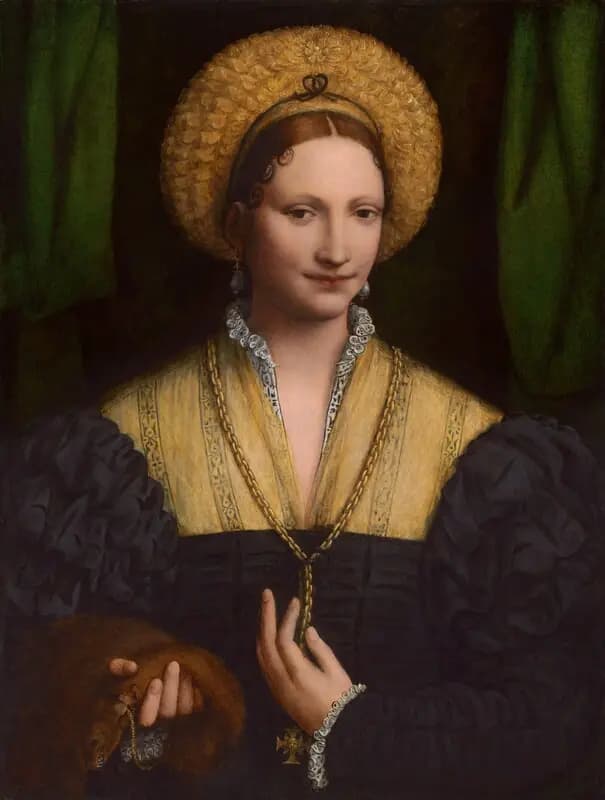
Portrait of a LadyНациональная галерея искусства, Вашингтон. Andrew W. Mellon Collection · Источник изображения · Open Access NGA: изображение без ограничений использования (openaccess=1). Portrait of a Lady
Атрибуция источника: Bernardino Luini
История бытования по музейному каталогу
Possibly Queen Isabel II of Spain [abdicated 1870, d. 1904]; possibly from her to Frederick Richards Leyland, Liverpool;[1] (his sale, Christie, Manson & Woods, London, 28 May 1892, no. 103); (Charles Fairfax Murray, London and Florence); Robert Henry [1850-1929] and Evelyn Holford [1856-1943] Benson, London and Buckhurst Park, Sussex, by 1893; sold 1927 to (Duveen Brothers, Inc., London, New York, and Paris);[2] purchased April 1928 by Andrew W. Mellon, Pittsburgh and Washington, D.C.; deeded 30 March 1932 to The A.W. Mellon Educational and Charitable Trust, Pittsburgh;[3] gift 1937 to NGA. [1] Fern Rusk Shapley, _Catalogue of the Italian Paintings_, Washington, National Gallery of Art, 1979, vol. 1, p. 282. [2] According to _Duveen Pictures in Public Collections of America_, New York, 1941. [3] Mellon/Mellon Trust purchase date and/or date deeded to Mellon Trust is according to Mellon collection files in NGA curatorial records and David Finley's notebook (donated to the National Gallery of Art in 1977, now in the Gallery Archives).
1520/1525 · oil on panel · overall: 77 × 57.5 cm (30 5/16 × 22 5/8 in.) framed: 98.11 × 78.42 × 6.99 cm (38 5/8 × 30 7/8 × 2 3/4 in.) · Национальная галерея искусства, Вашингтон · 1937.1.37
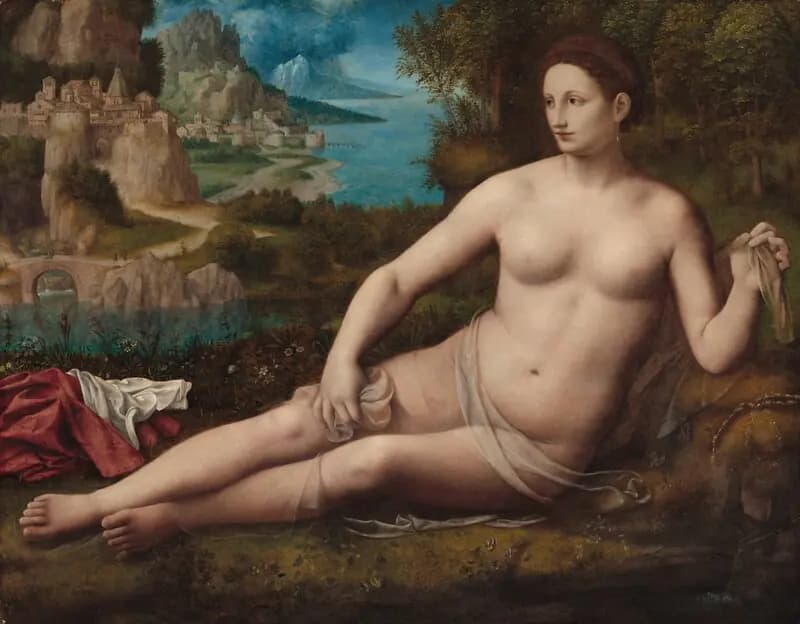
VenusНациональная галерея искусства, Вашингтон. Samuel H. Kress Collection · Источник изображения · Open Access NGA: изображение без ограничений использования (openaccess=1). Venus
Атрибуция источника: Bernardino Luini
История бытования по музейному каталогу
Probably Lord Kingsdale, England.[1] Probably Sir John Charles Robinson [1824-1913], London;[2] probably (sale, Robinson, Fisher and Harding, London, 19 March 1925, no. 5). Ing. Gianfranceschi, Bergamo; sold to Anna Barbato, Naples; (Gino Longhi, Bergamo and Naples), by 1926.[3] (Count Alessandro Contini Bonacossi, Florence and Rome); sold June 1933 to the Samuel H. Kress Foundation, New York;[4] gift 1939 to NGA. [1] The bill of sale for several paintings being sold by Count Alessandro Contini Bonacossi to the Kress Foundation, including this one, describes the painting as "formerly in the Collection of Lord Kingsdale, Eng." (copy in NGA curatorial files). There is no name spelled "Kingsdale" in _Burke's Peerage_. The closest possibility is "Kingsale," and the two persons with the title "Lord Kingsale" that might be relevant were Michael William de Courcy, 25th lord Kingsale (1822-1895), and his son, Michael Constantine de Courcy, 26th lord Kingsale (1855-1931). [2] Robinson's name appears in 1925 sale catalogue, which includes neither dimensions or reproduction, so it is not certain the painting described is the NGA one. [3] K.R.S., "A Fine Luini Found at Bergamo," _The Art News_ (6 November 1926): 1. The article states that Barbato and Longhi "are now together its [the painting's] actual proprietors." [4] See note 1; the bill of sale is dated 23 June 1933. See also The Kress Collection Digital Archive, https://kress.nga.gov/Detail/objects/2417.
c. 1530 · oil on panel · overall: 106.7 x 135.9 cm (42 x 53 1/2 in.) framed: 138.4 x 167.2 x 9.2 cm (54 1/2 x 65 13/16 x 3 5/8 in.) · Национальная галерея искусства, Вашингтон · 1939.1.120
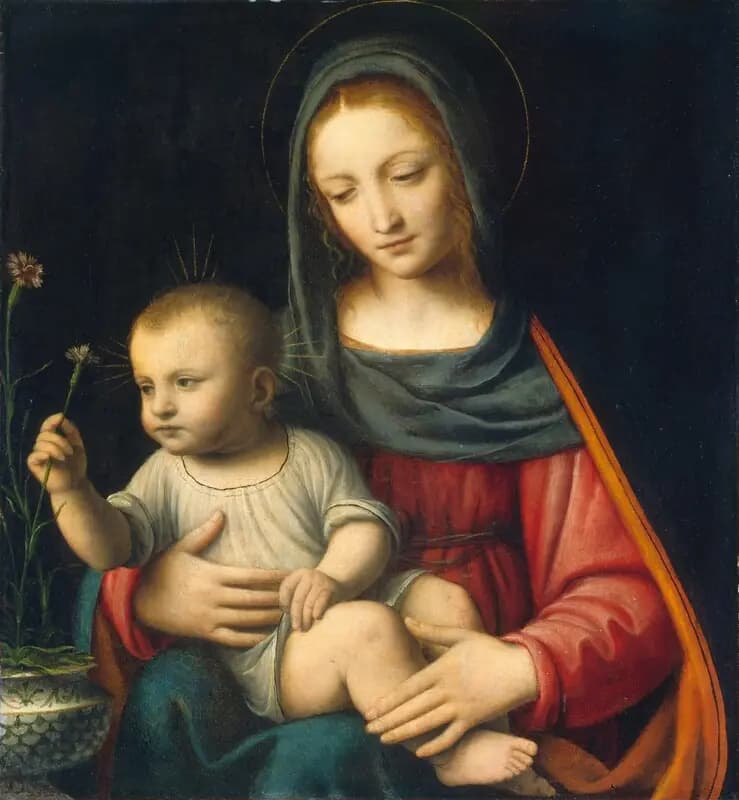
The Madonna of the CarnationНациональная галерея искусства, Вашингтон. Samuel H. Kress Collection · Источник изображения · Open Access NGA: изображение без ограничений использования (openaccess=1). The Madonna of the Carnation
Атрибуция источника: Bernardino Luini
История бытования по музейному каталогу
Duke of Leuchtenberg, Munich and Saint Petersburg, by 1852;[1] sold 1933 through (Heinemann Galerie, Munich) to (Count Alessandro Contini Bonacossi, Florence);[2] sold December 1934 to the Samuel H. Kress Foundation, New York;[3] gift 1939 to NGA. [1] See J.D. Passavant, _The Leuchtenberg Gallery. Collection of Pictures...of ...the Duke of Leuchtenberg at Munich_, Frankfurt and London, 1852: no. 44, repro.; A. Néoustroïeff, "I quadri italiani nella collezione del duca G.N. von Leuchtenberg di Pietroburgo," _Arte_ (1903): 338 (fig. 10), 341. [2] Heinemann Galerie no. 18999 (sold paintings card; copy in NGA curatorial files). [3] The bill from Contini Bonacossi to the Kress Foundation for five paintings, including _Madonna and Child_ by Bernardino Luini "from the Coll. of Prince Leuchtenberg, Petrograd," is dated 27 December 1934 (copy in NGA curatorial files). See also The Kress Collection Digital Archive, https://kress.nga.gov/Detail/objects/2224.
c. 1515 · oil on panel · overall: 43.8 x 40.3 cm (17 1/4 x 15 7/8 in.) · Национальная галерея искусства, Вашингтон · 1939.1.152
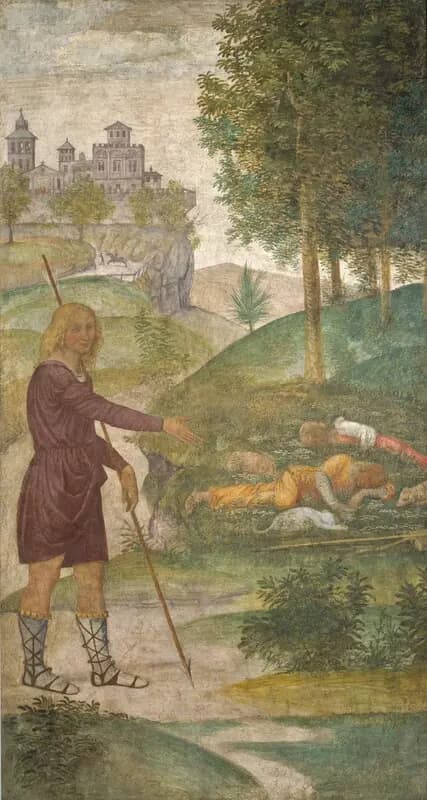
Cephalus and the NymphsНациональная галерея искусства, Вашингтон. Samuel H. Kress Collection · Источник изображения · Open Access NGA: изображение без ограничений использования (openaccess=1). Cephalus and the Nymphs
Атрибуция источника: Bernardino Luini
История бытования по музейному каталогу
Commissioned c. 1522 by Gerolamo Rabia for either the Casa Rabia, Milan, or his country house, La Pelucca, near Monza.[1] Michele Cavaleri, Milan; sold 1873 to Enrico (Henri) Cernuschi [1821-1896], Paris and Menton, until at least 1895.[2] (Charles Sedelmeyer, Paris), by 1897.[3] Rodolphe Kann [d. 1905], Paris, by 1900;[4] his estate; sold 1907 to (Duveen Brothers, Inc., London, New York, and Paris); sold 1942 to the Samuel H. Kress Foundation, New York;[5] gift 1943 to NGA. [1] See the discussion in Fern Rusk Shapley, _Catalogue of the Italian Paintings_, 2 vols., Washington, D.C., 1979: 1:285-288. If the frescoes were in the Casa Rabia, on the Piazza San Sepolcro in Milan, the house passed out of the family about 1530, but the paintings remained in place since they were not removed until about 1800. Among the subsequent owners of the house were the Palletta and Silva families. [2] The ownership of the frescoes by Cavaleri and Cernuschi, as well as other information about the provenance is discussed in detail by Luca Beltrami, _Luini, materiale de studio_, Milan, 1911: 188-198. Cavaleri was a Milanese lawyer who began collecting around 1845 and from 1870 on opened to the public what by then had come to be called the Cavaleri Museum. The owner hoped that the collection would be purchased by the city of Milan, but when negotiations fell through, he sold the entire collection to Cernuschi on 13 April 1873 (see Alessandra Mottola Molfino, "Collezionismo e mercato artistico a Milano," in _Zenale e Leonardo. Tradizione e rinnovamento della pittura lombarda_, Milan, 1982: 247-248). Cernuschi was a Milanese emigrant to France, and as he otherwise collected mainly objects of Asian Art (see Caroline Gyss-Vermande, "Cernuschi, Henri," in _Dictionary of Art_, 34 vols., New York, 1996: 6:345), it is likely he obtained his Italian paintings from the Cavaleri collection. [3] Charles Sedelmeyer, [catalogue], Paris, 1897: nos. 52-60. [4] _Gemälde-Sammlung des Herrn Rudolf Kann in Paris. 100 Photogravuren mit Text von Wilhelm Bode_, Vienna, 1900. [5] Fern Rusk Shapley, _Paintings from the Samuel H. Kress Collection: Italian Schools, XV-XVI Century_, London, 1968: 141-142. The Kress Collection Digital Archive, https://kress.nga.gov/Detail/objects/465.
c. 1520/1522 · fresco · overall: 228 x 124.5 cm (89 3/4 x 49 in.) · Национальная галерея искусства, Вашингтон · 1943.4.57
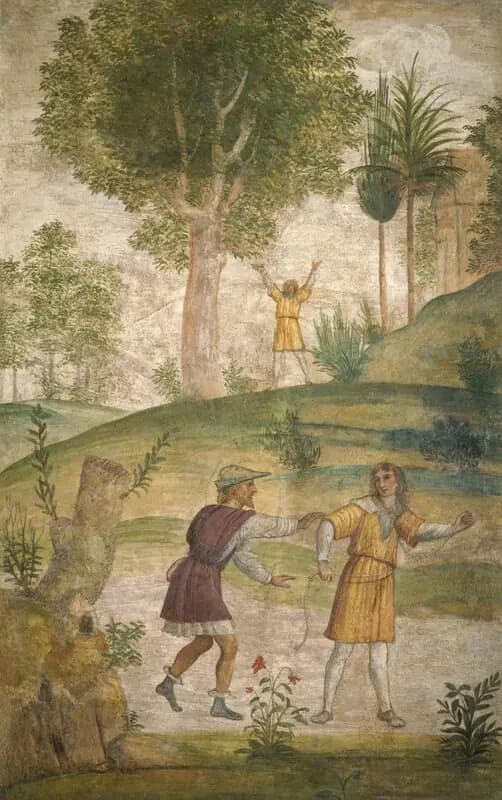
The Despair of CephalusНациональная галерея искусства, Вашингтон. Samuel H. Kress Collection · Источник изображения · Open Access NGA: изображение без ограничений использования (openaccess=1). The Despair of Cephalus
Атрибуция источника: Bernardino Luini
История бытования по музейному каталогу
Commissioned c. 1522 by Gerolamo Rabia for either the Casa Rabia, Milan, or his country house, La Pelucca, near Monza.[1] Michele Cavaleri, Milan; sold 1873 to Enrico (Henri) Cernuschi [1821-1896], Paris and Menton, until at least 1895.[2] (Charles Sedelmeyer, Paris), by 1897.[3] Rodolphe Kann [d. 1905], Paris, by 1900;[4] his estate; sold 1907 to (Duveen Brothers, Inc., London, New York, and Paris); sold 1942 to the Samuel H. Kress Foundation, New York;[5] gift 1943 to NGA. [1] See the discussion in Fern Rusk Shapley, _Catalogue of the Italian Paintings_, 2 vols., Washington, D.C., 1979: 1:285-288. If the frescoes were in the Casa Rabia, on the Piazza San Sepolcro in Milan, the house passed out of the family about 1530, but the paintings remained in place since they were not removed until about 1800. Among the subsequent owners of the house were the Palletta and Silva families. [2] The ownership of the frescoes by Cavaleri and Cernuschi, as well as other information about the provenance is discussed in detail by Luca Beltrami, _Luini, materiale de studio_, Milan, 1911: 188-198. Cavaleri was a Milanese lawyer who began collecting around 1845 and from 1870 on opened to the public what by then had come to be called the Cavaleri Museum. The owner hoped that the collection would be purchased by the city of Milan, but when negotiations fell through, he sold the entire collection to Cernuschi on 13 April 1873 (see Alessandra Mottola Molfino, "Collezionismo e mercato artistico a Milano," in _Zenale e Leonardo. Tradizione e rinnovamento della pittura lombarda_, Milan, 1982: 247-248). Cernuschi was a Milanese emigrant to France, and as he otherwise collected mainly objects of Asian Art (see Caroline Gyss-Vermande, "Cernuschi, Henri," in _Dictionary of Art_, 34 vols., New York, 1996: 6:345), it is likely he obtained his Italian paintings from the Cavaleri collection. [3] Charles Sedelmeyer, [catalogue], Paris, 1897: nos. 52-60. [4] _Gemälde-Sammlung des Herrn Rudolf Kann in Paris. 100 Photogravuren mit Text von Wilhelm Bode_, Vienna, 1900. [5] Fern Rusk Shapley, _Paintings from the Samuel H. Kress Collection: Italian Schools, XV-XVI Century_, London, 1968: 141-142. See also The Kress Collection Digital Archive, https://kress.nga.gov/Detail/objects/2143.
c. 1520/1522 · fresco · overall: 181.9 x 118.4 cm (71 5/8 x 46 5/8 in.) · Национальная галерея искусства, Вашингтон · 1943.4.58
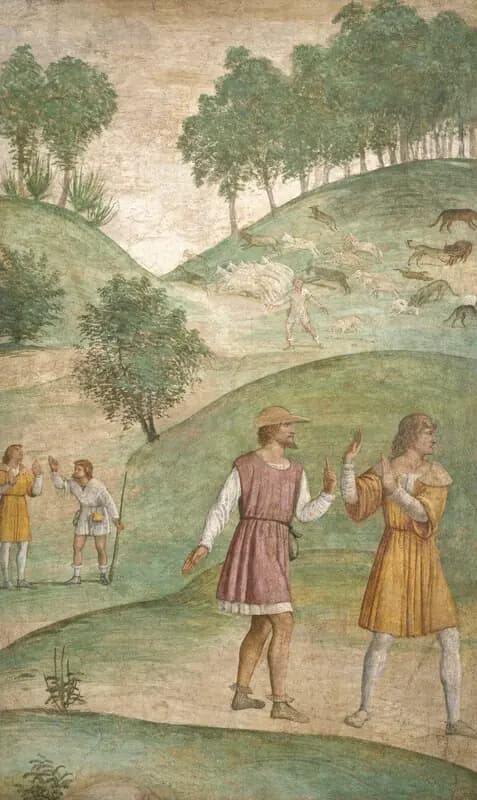
The Misfortunes of CephalusНациональная галерея искусства, Вашингтон. Samuel H. Kress Collection · Источник изображения · Open Access NGA: изображение без ограничений использования (openaccess=1). The Misfortunes of Cephalus
Атрибуция источника: Bernardino Luini
История бытования по музейному каталогу
Commissioned c. 1522 by Gerolamo Rabia for either the Casa Rabia, Milan, or his country house, La Pelucca, near Monza.[1] Michele Cavaleri, Milan; sold 1873 to Enrico (Henri) Cernuschi [1821-1896], Paris and Menton, until at least 1895.[2] (Charles Sedelmeyer, Paris), by 1897.[3] Rodolphe Kann [d. 1905], Paris, by 1900;[4] his estate; sold 1907 to (Duveen Brothers, Inc., London, New York, and Paris); sold 1942 to the Samuel H. Kress Foundation, New York;[5] gift 1943 to NGA. [1] See the discussion in Fern Rusk Shapley, _Catalogue of the Italian Paintings_, 2 vols., Washington, D.C., 1979: 1:285-288. If the frescoes were in the Casa Rabia, on the Piazza San Sepolcro in Milan, the house passed out of the family about 1530, but the paintings remained in place since they were not removed until about 1800. Among the subsequent owners of the house were the Palletta and Silva families. [2] The ownership of the frescoes by Cavaleri and Cernuschi, as well as other information about the provenance is discussed in detail by Luca Beltrami, _Luini, materiale de studio_, Milan, 1911: 188-198. Cavaleri was a Milanese lawyer who began collecting around 1845 and from 1870 on opened to the public what by then had come to be called the Cavaleri Museum. The owner hoped that the collection would be purchased by the city of Milan, but when negotiations fell through, he sold the entire collection to Cernuschi on 13 April 1873 (see Alessandra Mottola Molfino, "Collezionismo e mercato artistico a Milano," in _Zenale e Leonardo. Tradizione e rinnovamento della pittura lombarda_, Milan, 1982: 247-248). Cernuschi was a Milanese emigrant to France, and as he otherwise collected mainly objects of Asian Art (see Caroline Gyss-Vermande, "Cernuschi, Henri," in _Dictionary of Art_, 34 vols., New York, 1996: 6:345), it is likely he obtained his Italian paintings from the Cavaleri collection. [3] Charles Sedelmeyer, [catalogue], Paris, 1897: nos. 52-60. [4] _Gemälde-Sammlung des Herrn Rudolf Kann in Paris. 100 Photogravuren mit Text von Wilhelm Bode_, Vienna, 1900. [5] Fern Rusk Shapley, _Paintings from the Samuel H. Kress Collection: Italian Schools, XV-XVI Century_, London, 1968: 141-142. See also The Kress Collection Digital Archive, https://kress.nga.gov/Detail/objects/2244.
c. 1520/1522 · fresco · overall: 176.2 x 107.3 cm (69 3/8 x 42 1/4 in.) · Национальная галерея искусства, Вашингтон · 1943.4.59
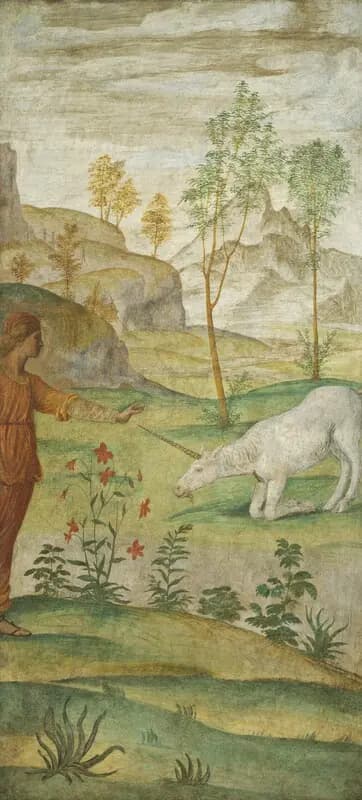
Procris and the UnicornНациональная галерея искусства, Вашингтон. Samuel H. Kress Collection · Источник изображения · Open Access NGA: изображение без ограничений использования (openaccess=1). Procris and the Unicorn
Атрибуция источника: Bernardino Luini
История бытования по музейному каталогу
Commissioned c. 1522 by Gerolamo Rabia for either the Casa Rabia, Milan, or his country house, La Pelucca, near Monza.[1] Michele Cavaleri, Milan; sold 1873 to Enrico (Henri) Cernuschi [1821-1896], Paris and Menton, until at least 1895.[2] (Charles Sedelmeyer, Paris), by 1897.[3] Rodolphe Kann [d. 1905], Paris, by 1900;[4] his estate; sold 1907 to (Duveen Brothers, Inc., London, New York, and Paris); sold 1942 to the Samuel H. Kress Foundation, New York;[5] gift 1943 to NGA. [1] See the discussion in Fern Rusk Shapley, _Catalogue of the Italian Paintings_, 2 vols., Washington, D.C., 1979: 1:285-288. If the frescoes were in the Casa Rabia, on the Piazza San Sepolcro in Milan, the house passed out of the family about 1530, but the paintings remained in place since they were not removed until about 1800. Among the subsequent owners of the house were the Palletta and Silva families. [2] The ownership of the frescoes by Cavaleri and Cernuschi, as well as other information about the provenance is discussed in detail by Luca Beltrami, _Luini, materiale de studio_, Milan, 1911: 188-198. Cavaleri was a Milanese lawyer who began collecting around 1845 and from 1870 on opened to the public what by then had come to be called the Cavaleri Museum. The owner hoped that the collection would be purchased by the city of Milan, but when negotiations fell through, he sold the entire collection to Cernuschi on 13 April 1873 (see Alessandra Mottola Molfino, "Collezionismo e mercato artistico a Milano," in _Zenale e Leonardo. Tradizione e rinnovamento della pittura lombarda_, Milan, 1982: 247-248). Cernuschi was a Milanese emigrant to France, and as he otherwise collected mainly objects of Asian Art (see Caroline Gyss-Vermande, "Cernuschi, Henri," in _Dictionary of Art_, 34 vols., New York, 1996: 6:345), it is likely he obtained his Italian paintings from the Cavaleri collection. [3] Charles Sedelmeyer, [catalogue], Paris, 1897: nos. 52-60. [4] _Gemälde-Sammlung des Herrn Rudolf Kann in Paris. 100 Photogravuren mit Text von Wilhelm Bode_, Vienna, 1900. [5] Fern Rusk Shapley, _Paintings from the Samuel H. Kress Collection: Italian Schools, XV-XVI Century_, London, 1968: 141-142. See also The Kress Collection Digital Archive, https://kress.nga.gov/Detail/objects/1734.
c. 1520/1522 · fresco · overall: 228.6 x 108 cm (90 x 42 1/2 in.) · Национальная галерея искусства, Вашингтон · 1943.4.60
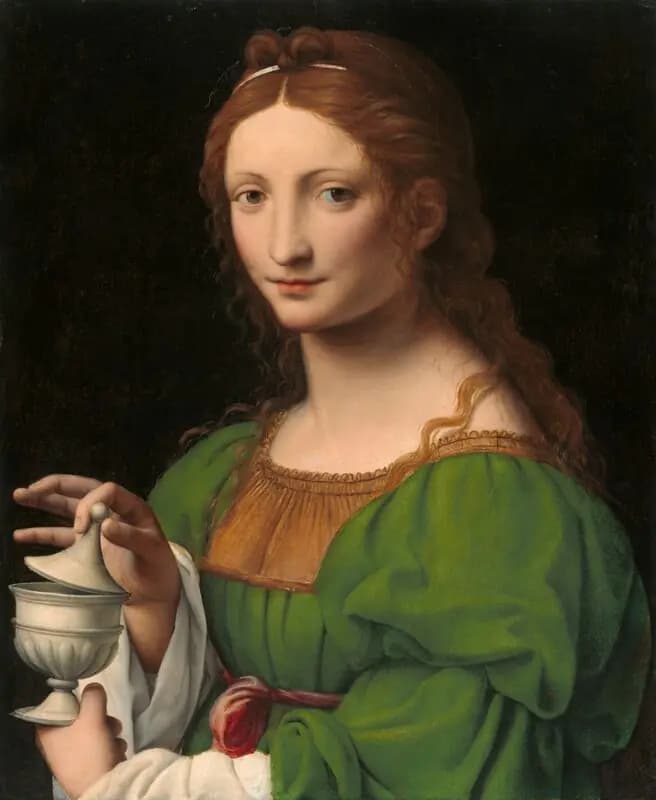
The MagdalenНациональная галерея искусства, Вашингтон. Samuel H. Kress Collection · Источник изображения · Open Access NGA: изображение без ограничений использования (openaccess=1). The Magdalen
Атрибуция источника: Bernardino Luini
История бытования по музейному каталогу
Federico Borromeo [1564-1631], by 1607; Biblioteca and Pinacoteca Ambrosiana, Milan, until 1796;[1] Lucien Bonaparte [d. 1840], Prince de Canino, Paris and Rome, by 1812;[2] (Exhibited for private sale of Lucian Bonaparte collection, London, 6 February 1815, no. 23, as by Leonardo); (Bonaparte sale, Stanley, London, 15 May 1816, no. 165, as by Leonardo). Henry Petty-FitzMaurice, 4th Marquess of Lansdowne [1816-1866], Bowood Hall, Wiltshire, by 1844;[3] by inheritance to Henry Charles Keith Petty-FitzMaurice [1845-1927], 5th Marquess of Landsdowne, Bowood Hall; by inheritance to Henry William Edmund Petty-FitzMaurice [1872-1936], 6th Marquess of Landsdowne, Bowood Hall; acquired 25 April 1952 by (Thomas Agnew and Sons, London); sold 29 April 1952 to(Rudolf Heinemann, New York);[4] on joint account 1952 with (M. Knoedler and Co., London and New York); sold 1957 to the Samuel H. Kress Foundation, New York;[5] gift 1961 to NGA. [1] For the early provenance of the picture, see Pamela M. Jones, "Bernardino Luini's 'Magdelene' from the collection of Federico Borromeo: Religious Contemplation and Iconographic Sources," in _Studies in the History of Art_ 24 (1990): 67-7 [2] _Choix de Gravures a l'eau forte d'apres les Peintures Originales et les Marbres de la Galerie de Lucien Bonaparte_, Londres, 1812. [3] Included in Mrs. Anna Jameson, _Companion to the Most Celebrated Private Galleries of Art in London_, London, 1844: 313-314. [4] Stockbook no. 0718, Thomas Agnew & Sons, London. [5] M. Knoedler & Co. Records, accession number 2012.M.54, Research Library, Getty Research Institute, Los Angeles: Stock book no. 10, p. 78, no. A4905; Sales book no. 17, p. 314. Receipt from Knoedler dated 2 January 1957. (See copies of Knoedler documents in NGA curatorial files and The Kress Collection Digital Archive, https://kress.nga.gov/Detail/objects/2226).
c. 1525 · oil on panel · overall: 58.8 x 47.8 cm (23 1/8 x 18 13/16 in.) framed: 75.4 x 65.3 x 7 cm (29 11/16 x 25 11/16 x 2 3/4 in.) · Национальная галерея искусства, Вашингтон · 1961.9.56
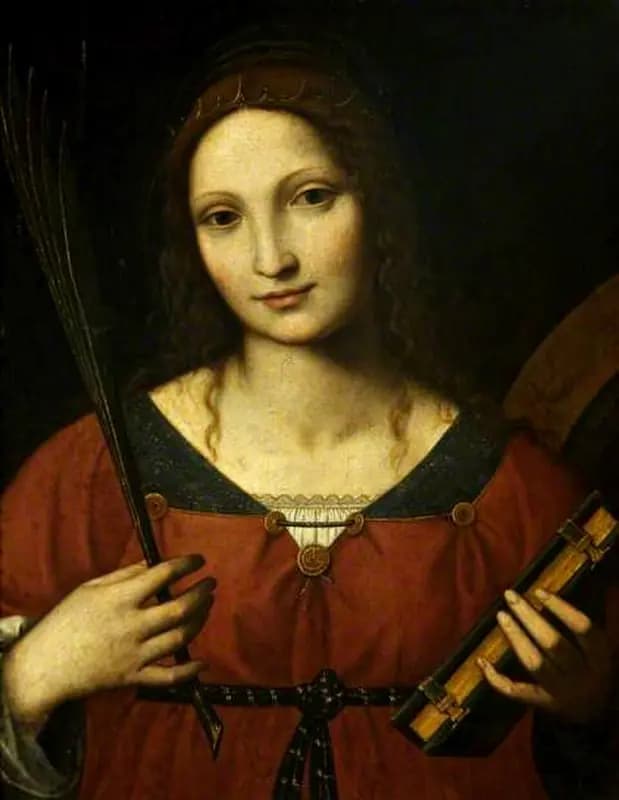
Saint CatherineBernardino Luini; Unknown source · Источник изображения · Public domain Saint Catherine
Атрибуция источника: Bernardino Luini
Собрание не указано источником.
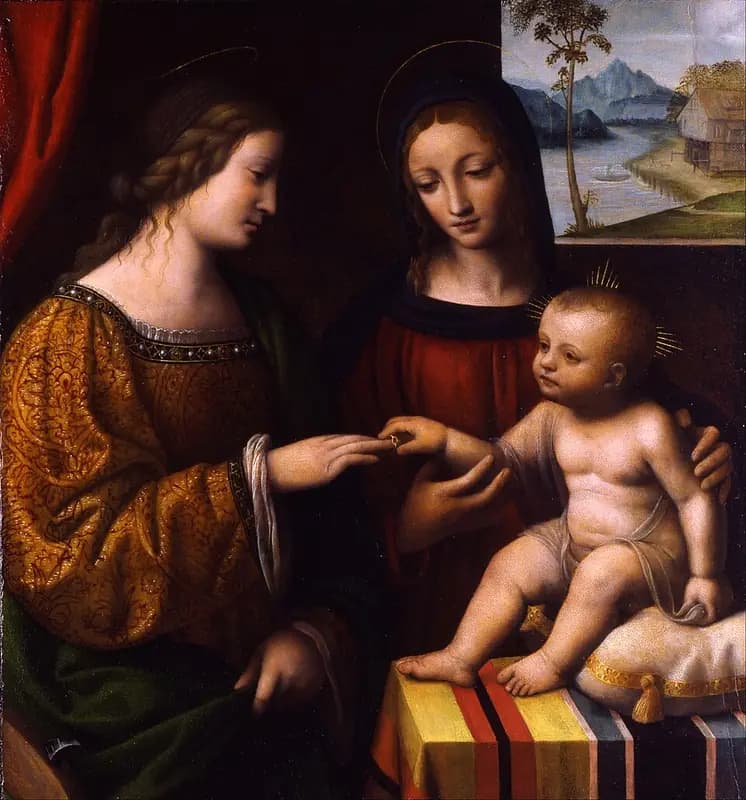
The Mystical Marriage of Saint CatherineBernardino Luini; uQEtMNCYK6aS7g at Google Cultural Institute maximum zoom level · Источник изображения · Public domain The Mystical Marriage of Saint Catherine
Атрибуция источника: Bernardino Luini
Собрание не указано источником.
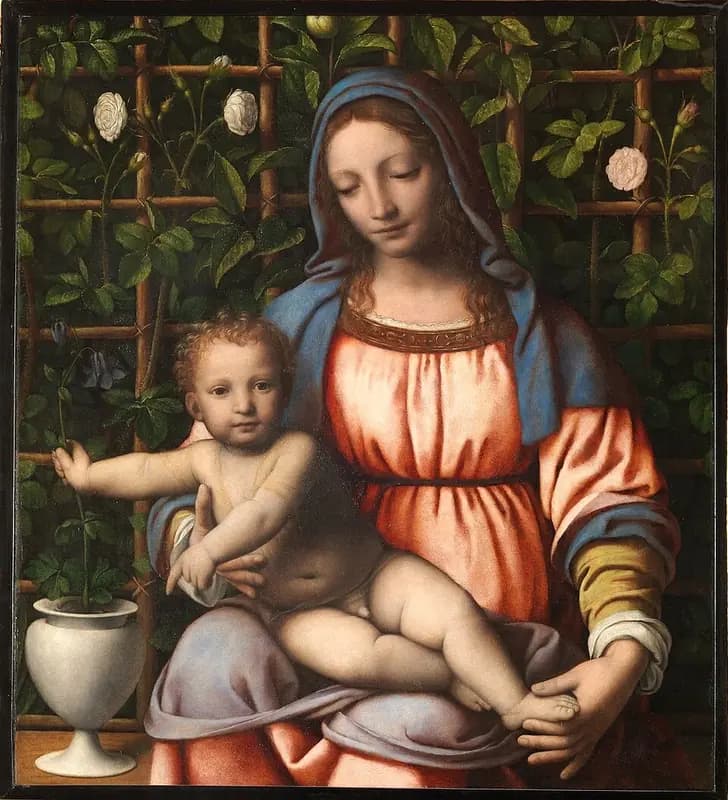
Madonna of the RosesBernardino Luini; The Yorck Project (2002) 10.000 Meisterwerke der Malerei (DVD-ROM), distributed by DIRECTMEDIA Publishing GmbH. ISBN : 3936122202 . · Источник изображения · Public domain Madonna of the Roses
Атрибуция источника: Bernardino Luini
Собрание не указано источником.
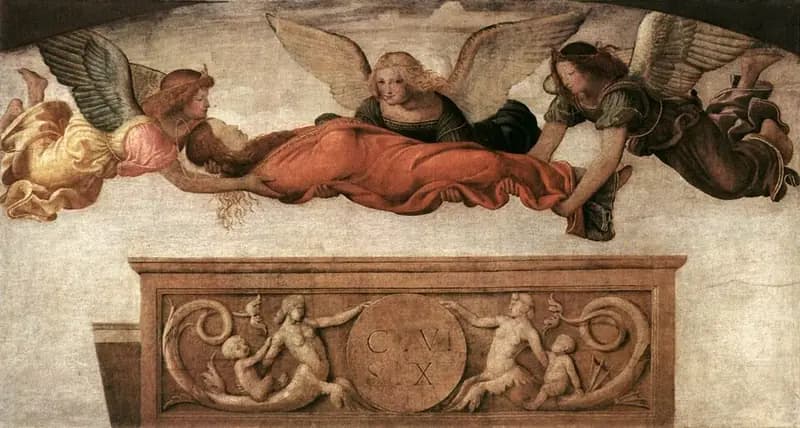
St Catherine Carried to her Tomb by AngelsBernardino Luini; Web Gallery of Art : Image Info about artwork · Источник изображения · Public domain St Catherine Carried to her Tomb by Angels
Атрибуция источника: Bernardino Luini
Собрание не указано источником.
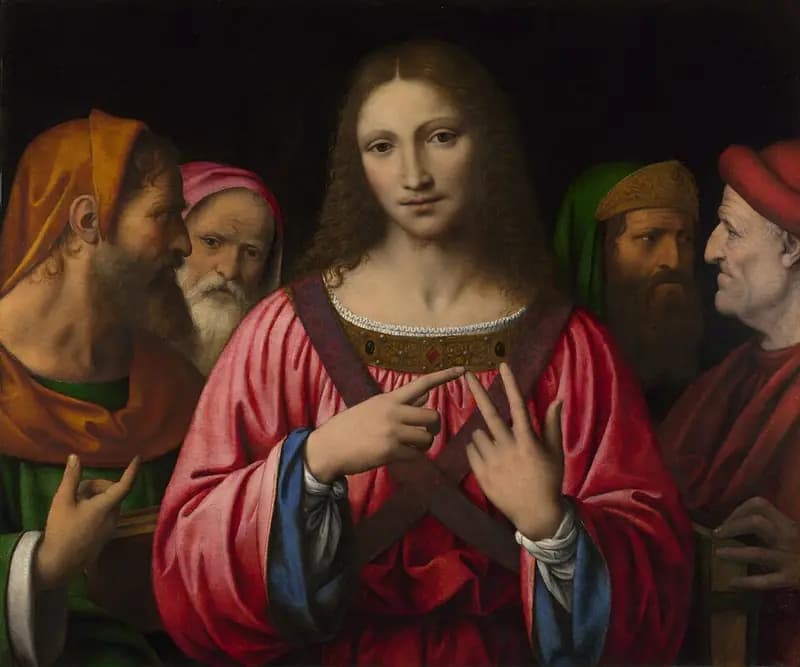
Christ among the DoctorsBernardino Luini; National Gallery, London - online catalogue . · Источник изображения · Public domain Christ among the Doctors
Атрибуция источника: Bernardino Luini
Собрание не указано источником.
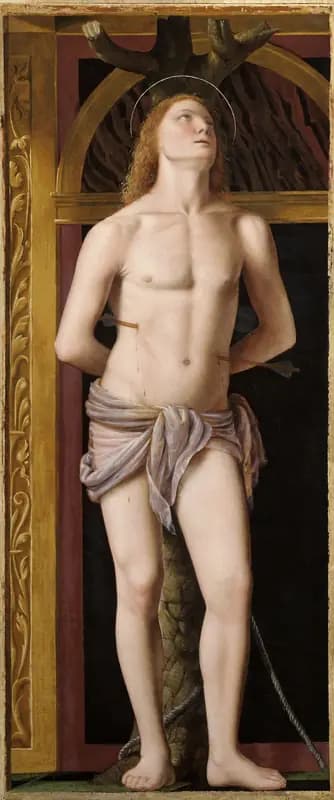
Saint SebastianBernardino Luini; Collezione Borromeo all'Isola Bella · Источник изображения · Public domain Saint Sebastian
Атрибуция источника: Bernardino Luini
Собрание не указано источником.
Villa La Pelucca frescoes
Собрание не указано источником.
Christ among the Doctors
Собрание не указано источником.
Саломея с головой Иоанна Крестителя (картина Луини)
Собрание не указано источником.
Salome with the Head of John the Baptist
Собрание не указано источником.
Besozzi Chapel
Собрание не указано источником.


Дата подготовки справки: 11 ноября 2026 г..
Литература для дальнейшего исследования
- Католическая энциклопедия, 1913 Источник библиографической записи
- Цифровая библиотека Европейской библиотеки по информации и культуре Источник библиографической записи
- Энциклопедический словарь Брокгауза и Ефрона, 1890—1907 Источник библиографической записи
- Нуттоллова энциклопедия Источник библиографической записи
- Британская энциклопедия, 1910—1911 Источник библиографической записи
- The New Student's Reference Work Источник библиографической записи
- Большая советская энциклопедия, 1926—1947 Источник библиографической записи
Источники исследования
- National Gallery of Art — открытые данные коллекции (CC0)
- Wikidata — сведения об образовании, профессиональных связях и собраниях
- Википедия — полный текст статьи
- Национальная галерея искусства: открытые каталожные данные (CC0)
- Метрополитен-музей: открытые каталожные данные (CC0)
Условия использования метаданных приведены в источниках. Лицензия каждого изображения указана у репродукции.
Произведения
Справочные примеры творчества. Эти произведения не предлагаются к продаже нашим салоном.

Если у вас есть произведение этого автора
Для предварительного обсуждения подготовьте общий вид предмета, фотографии подписи, оборота или основания, размеры и сведения о происхождении. Музейные записи помогут уточнить творческий контекст автора.
Сотрудники салона рассмотрят материалы и обсудят необходимые дальнейшие исследования. На оценку влияют авторство, техника, время создания, сохранность и история владения.
Источники
Биографический текст подготовлен редакцией по указанным исследованиям и каталогам; справочные сведения и изображения сопровождаются отдельными источниками. Исторические сведения и атрибуция могут уточняться; исходные записи доступны по ссылкам.
- Биографические сведения — Wikidata
- Запись произведения — Wikidata
- Дополнительный источник: www.museothyssen.org
- Дополнительный источник: www.nationalgallery.org.uk
- Дополнительный источник: ru.wikipedia.org
Структурированные данные Wikidata — CC0. Лицензия каждого изображения указана под ним. Портрет может быть живописным изображением или исторической фотографией.
Справочные фрагменты из статей Википедии и их авторов доступны на условиях CC BY-SA 4.0. Выполнены отбор, сокращение и редакционная обработка; ссылки на статьи приведены у соответствующих материалов. Лицензии изображений указаны отдельно.
 WhatsApp
 Telegram
 MAX